check

check

check

check
check
check
check
check

check

check
In the intricate world of industrial automation, the reliability and accuracy of a single component can dictate the efficiency of an entire production line. Among the myriad of sensors available, the ML100-8-H series photoelectric switch stands out as a paragon of precision and durability. Specifically, models like the ML100-8-H-100, ML100-8-H-115, ML100-8-H-127, and ML100-8-H-162 are engineered to meet the rigorous demands of modern manufacturing, logistics, and packaging systems. This article delves into the core features, applications, and distinct advantages of these versatile sensors.
At its heart, a photoelectric switch operates by emitting a beam of light (visible red, infrared, or laser) and detecting its presence or absence. The ML100-8-H series utilizes this principle with exceptional finesse. The "H" in its designation often refers to a specific housing material or design offering enhanced environmental resistance, while the numerical suffixes like 100, 115, 127, and 162 typically denote different sensing ranges or output configurations. This allows engineers to select the exact model tailored to their spatial constraints and detection distance requirements, from close-proximity tasks to monitoring over a meter away.
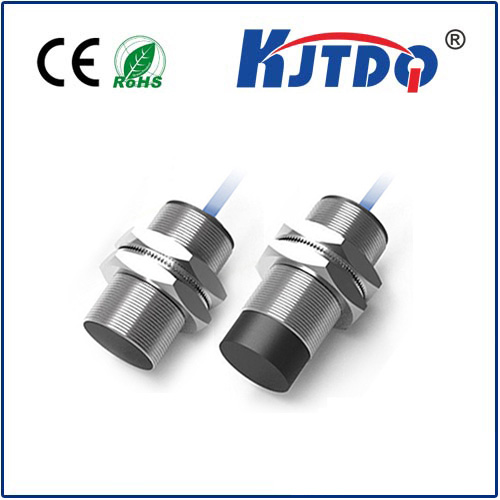
One of the defining characteristics of the ML100-8-H series is its robust construction. Designed to thrive in challenging industrial environments, these switches often feature housings made from high-grade materials like nickel-plated brass or stainless steel, providing excellent resistance to corrosion, dust, and moisture. Many variants come with an IP67 protection rating, meaning they are completely protected against dust ingress and can withstand temporary immersion in water. This resilience ensures uninterrupted operation in settings such as food processing plants, automotive assembly lines, or outdoor material handling, where exposure to washdowns, oil mist, or particulate matter is common.
The technological core of these switches is equally impressive. They frequently incorporate advanced optical systems with precise lenses that produce a well-defined, stable beam. This minimizes the effects of background interference and allows for reliable detection of even small, low-contrast, or transparent objects—a common challenge in packaging applications involving glass or clear plastics. The response time is remarkably fast, enabling these sensors to keep pace with high-speed conveyor systems without missing a beat. Furthermore, models within this series often offer both light-on and dark-on operation modes, as well as selectable output types (e.g., NPN or PNP transistor outputs), providing seamless integration with a wide array of programmable logic controllers (PLCs) and other control systems.
Practical applications for the ML100-8-H-100/115/127/162 are vast and varied. In automated packaging, they are indispensable for precise object counting, label detection, and ensuring proper fill levels. Within assembly robotics, they provide critical position feedback for robotic arms, confirm the presence of components, and act as safety interlocks. On conveyor belts, they reliably detect jams, monitor product flow, and trigger sorting mechanisms. The specific sensing range of each model allows for optimal placement: the shorter-range variants excel in tight spaces for precise positioning, while the longer-range models are perfect for monitoring larger bins or detecting objects on wide conveyors.
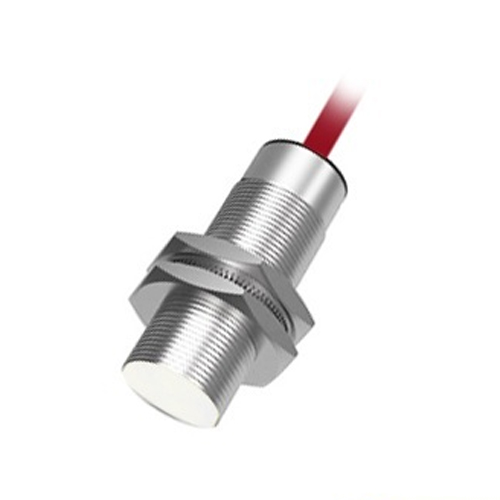
Installation and maintenance are streamlined for user convenience. Many models feature built-in sensitivity adjustment potentiometers and clear LED indicators for operational status (power and output), simplifying setup and troubleshooting. Their compact, cylindrical design facilitates easy mounting in space-limited areas. When selecting the appropriate model from the ML100-8-H series, key considerations include the required sensing distance, the size and material of the target object, the ambient environmental conditions (light, dust, temperature), and the electrical interface needed for the control cabinet.
In conclusion, the ML100-8-H-100, ML100-8-H-115, ML100-8-H-127, and ML100-8-H-162 photoelectric switches represent a blend of robust engineering, optical precision, and application flexibility. They are not merely components but reliable partners in achieving seamless automation, enhancing productivity, and minimizing downtime. For system integrators and plant managers seeking a dependable sensing solution that delivers consistent performance under pressure, this series offers a compelling and technically superior choice, proving that in the realm of industrial detection, precision built to last is the ultimate key to operational excellence.