check

check

check

check

check

check

HIGH-TEMPERATURE LIMIT SWITCH
How to Ensure Stable Position Detection in Extreme Thermal Environments?
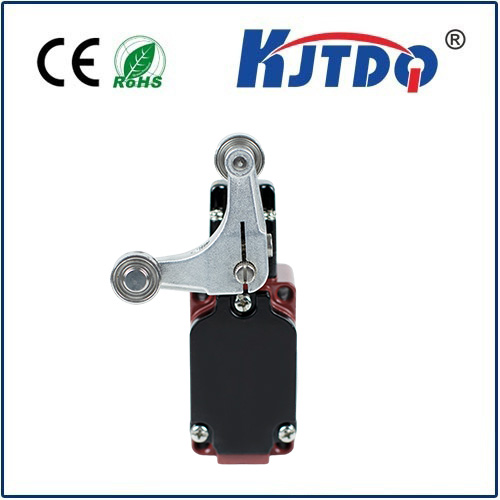
KJT High-Temperature Limit Switches guard critical positions on high-temperature industrial machinery.
Introduction:
Industrial environments across steelmaking, metallurgy, glass manufacturing, and ceramics face continuous high temperatures, severe thermal radiation, and challenging mechanical conditions. Standard limit switches installed in such environments quickly suffer from electrical contact oxidation, insulation degradation, and mechanical deformation.
To address stroke, travel-stop, and position-confirmation needs in extreme heat, KJT high-temperature limit switches offer temperature ratings of 200°C, 350°C, and 550°C, delivering crisp, reliable position feedback to machine control systems.
200°C: Medium-to-high temperature applications
350°C: High-temperature furnace and casting equipment
550°C: Severe, extreme-heat metallurgical environments
HIGH TEMPERATURE IS A PRIMARY SELECTION CRITERION
The working principle of a mechanical limit switch is straightforward:
Machine Moves ➔ Actuates Operating Head ➔ Contacts Snap Over ➔ Outputs Position Signal
However, when deployed inside a high-temperature zone, the challenge is no longer just whether the actuator trips. Sustained thermal stress constantly degrades internal contacts, electrical insulation, sealing gaskets, and return springs. Equipment such as industrial furnaces, hot-rolling mills, and thermal transfer lines demands position switches specifically engineered from the ground up for high-temperature service.
Selecting a high-temperature limit switch should not focus solely on peak temperature tolerance. Ambient temperature, actuation mechanics, mechanical envelope, electrical parameters, and ingress protection must be evaluated comprehensively:
| Selection Dimension | Key Considerations |
| Ambient Temperature | Match the switch’s rating (200°C / 350°C / 550°C) to the continuous peak process temperature |
| Actuator Style | Select roller lever, straight plunger, or flexible rod to match the mechanical travel path |
| Mounting Space | Select the body style and head orientation suited to physical space and stroke travel |
| Electrical Parameters | Verify contact ratings, load current, voltage type (AC/DC), and contact configuration (NO/NC) |
| Protection Rating | Confirm ingress protection against ambient dust, slag, oil mist, and steam |
Technical Note: Physical dimensions, contact ratings, and IP ratings vary between product models. Refer to specific model datasheets when finalizing engineering designs.
A limit switch’s fundamental duty is executing a repeatable, positive mechanical-to-electrical state transition. For high-temperature service, contact alloys, high-performance ceramic insulations, and thermal-expansion-compensated mechanisms work together to guarantee long-term operational repeatability:
Position Reached: Instant, positive contact actuation;
Position Released: Crisp, positive mechanical return;
System Interlock: Clear, unambiguous status output without contact welding or floating.
In automated machinery, high-temperature limit switches are positioned at critical physical waypoints along the motion path to confirm status through mechanical contact. Rather than isolated mechanical switches, they serve as foundational status nodes within the control logic:
Machine Stroke Arrival: Confirms whether an actuator or carriage has reached its target position;
Mechanism Home Reset: Confirms whether moving assemblies have retracted to their home position;
Damper & Valve Position: Confirms full-open or full-closed status on flue gas dampers and valves;
Safety Overtravel: Detects whether moving components have breached safe physical limits;
Signal Handshake: Relays definitive digital inputs back to the PLC control system;
Thermal Interlocking: Participates in emergency trip circuits and automated interlocking for high-heat machinery.
For room-temperature machinery, limit switch selection typically revolves around mounting footprint, actuator style, and contact arrangement. In extreme thermal applications, ambient temperature must be the foremost selection gate.
With tiered temperature ratings, robust actuator heads, and versatile mounting configurations, KJT High-Temperature Limit Switches provide targeted limit and travel detection for high-temperature equipment.
Step 01: Mechanical movement occurs, changing the physical target position.
Step 02: Status is confirmed as the switch snaps cleanly.
Step 03: The signal is returned, and the automation system executes the next logic step.
KJT High-Temperature Limit Switches:
Ensuring every position arrival in extreme thermal environments receives definitive confirmation.