check

check

check

check

check

check
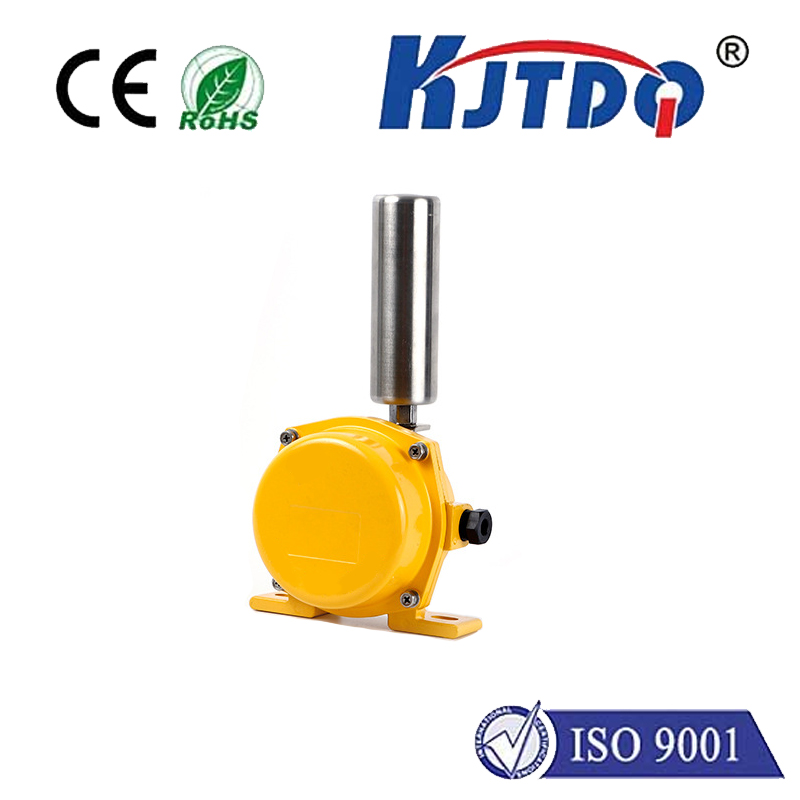
In the fast-paced world of industrial automation and material handling, safety and operational reliability are non-negotiable. The DIPTHSLDH-S Pull Cord Switch stands as a critical sentinel in this environment, a specialized emergency stop device designed to halt conveyor belt systems instantly in case of an emergency. This robust switch is engineered for durability and precise functionality, making it an indispensable component for mining operations, power plants, packaging lines, and any facility utilizing long conveyor systems.
The core principle of the DIPTHSLDH-S is elegantly straightforward yet profoundly effective. Installed along the length of a conveyor belt, typically on both sides, it features a prominently accessible pull cord or cable. In the event of a material spillage, belt misalignment, equipment entanglement, or any personnel emergency, a simple pull on this cord activates the switch. This action immediately sends a stop signal to the conveyor's motor control circuit, bringing the entire system to a swift and complete halt. This rapid response is crucial for preventing equipment damage, minimizing material loss, and, most importantly, protecting worker safety by stopping hazardous motion without delay.
What sets the DIPTHSLDH-S model apart are its construction and design features tailored for harsh industrial environments. The housing is typically constructed from heavy-duty, corrosion-resistant materials like die-cast aluminum or reinforced polymer, offering protection against dust, moisture, and mechanical impact. Internally, it employs a highly reliable switching mechanism, often with a direct-acting design that ensures a positive break action regardless of the cord's pull angle or speed. Many models come with a manual reset function, requiring an operator to physically reset the switch after activation. This prevents an accidental or automatic restart, ensuring the underlying issue is addressed before operations resume—a fundamental safety protocol.
Installation and maintenance are designed with practicality in mind. The switch is usually mounted on the conveyor structure at regular intervals, ensuring the pull cord is within easy reach of any operator along the belt's path. The cable itself is tensioned appropriately to avoid sagging or false triggers while remaining sensitive enough for emergency activation. Regular testing, as simple as pulling the cord during scheduled downtime to verify the stop command is executed, is a vital part of any plant's preventative maintenance routine. This proactive approach guarantees the DIPTHSLDH-S performs its life-saving function when every second counts.
Beyond emergency stops, the integration of the DIPTHSLDH-S Pull Cord Switch into a plant's broader control and monitoring system adds a layer of operational intelligence. Its status can be linked to central control panels or SCADA systems, providing immediate visual and audible alerts pinpointing the activation zone. This allows for faster response times from maintenance teams and helps in logging incident data for analysis and process improvement. In essence, it transforms a simple safety device into a node within a smarter, more responsive industrial network.
For facility managers and engineers, selecting a component like the DIPTHSLDH-S is an investment in risk mitigation and operational continuity. Its role is passive until the moment it is desperately needed, at which point its value is immeasurable. Compliance with international safety standards (such as ISO 13850, relating to emergency stop functions) is another key consideration, and reputable models are designed and certified to meet these rigorous requirements. Choosing a well-engineered pull cord switch is not merely a procurement decision; it is a clear commitment to fostering a culture of safety on the plant floor.
In conclusion, the DIPTHSLDH-S Pull Cord Switch exemplifies how a fundamentally simple mechanical device can be engineered to provide complex, critical protection. It serves as a reliable and immediate human-machine interface for safety in environments where automated systems operate. By ensuring that any person along a conveyor line has the direct power to stop the system, it empowers workers and safeguards both personnel and capital assets. For any industry relying on conveyor technology, implementing and maintaining such robust emergency stop devices is a cornerstone of responsible and efficient operation.