check

check

check

check

check

check
In the world of electronic control and automation, precision is paramount. The 5V limit switch stands as a fundamental component, enabling accurate position detection and reliable operation in countless applications. Unlike higher-voltage industrial counterparts, the 5V limit switch is specifically designed for low-power, logic-level circuits, making it a cornerstone of modern microcontroller-based projects, compact robotics, and sensitive instrumentation.
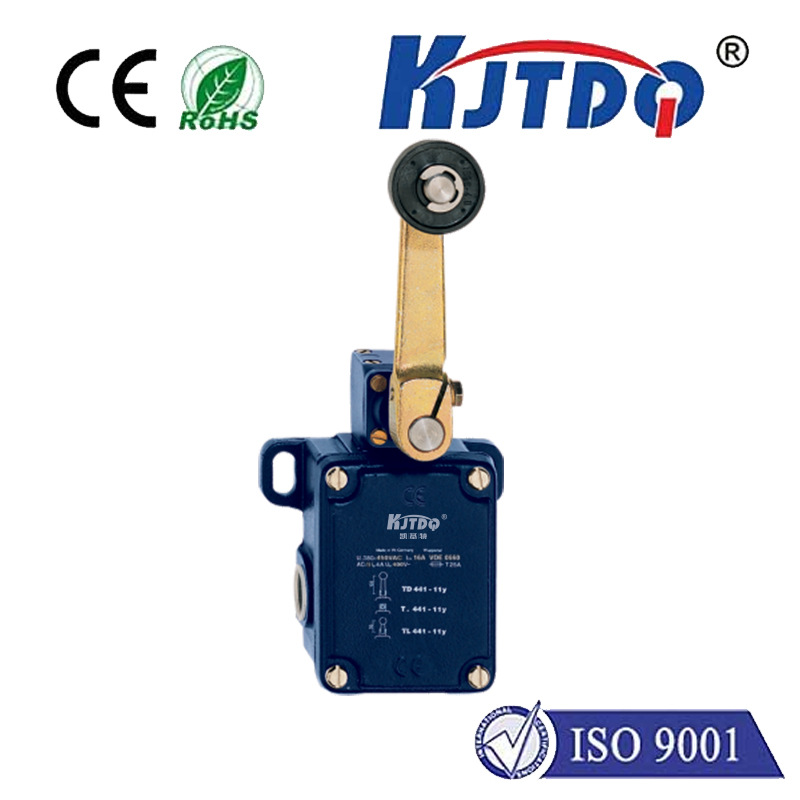
At its core, a 5V limit switch is a simple electromechanical device. It typically consists of an actuator (like a lever, roller, or plunger) mechanically linked to a set of internal contacts. When an object or machine part moves the actuator to its predetermined position, the contacts change state—either opening or closing the circuit. This sends a clean, definitive 5V signal (a logical HIGH or LOW) to a control unit like an Arduino, Raspberry Pi, or PLC input module. This signal tells the system: "The limit has been reached." The beauty of this mechanism lies in its physical certainty; it provides a hardware-based fail-safe that software sensors alone cannot always guarantee.
The advantages of integrating a 5V limit switch into a design are multifaceted. First and foremost is Safety. By defining physical boundaries for moving parts, these switches prevent over-travel that could lead to damage to the machine itself or its workpiece. In a 3D printer, for instance, limit switches at the ends of each axis ensure the print head homes correctly and never crashes into the frame. Reliability is another key benefit. These switches are immune to the environmental noise that can plague analog sensors, providing a crisp, digital signal that controllers interpret without ambiguity. Furthermore, they offer Simplicity and Cost-Effectiveness. Their design is straightforward, leading to robust performance and easy troubleshooting. For hobbyists and professionals alike, their low cost and ease of integration make them an indispensable tool.
When selecting a 5V limit switch, several critical specifications must be considered. The Actuator Type is chosen based on the mechanical interaction needed—a roller lever is ideal for sensing moving objects from the side, while a plunger type is perfect for direct linear pressure. Contact Configuration (Normally Open (NO) or Normally Closed (NC)) dictates the circuit's behavior in its resting state. An NO switch closes the circuit when activated, while an NC switch opens it; NC configurations are often preferred for safety-critical circuits, as a broken wire mimics an "activated" state. Electrical Rating, though low at 5V, still requires attention to current-carrying capacity. Finally, Physical Size and Mounting options must align with the spatial constraints of the application.
Real-world applications for the 5V limit switch are vast and varied. In the realm of DIY Electronics and Robotics, they are used to home robotic arms, define the limits of a CNC router's travel, or detect when a drawer in a smart cabinet is fully closed. Consumer Electronics often hide tiny limit switches inside devices to detect lid closure or tray position. For Prototyping and Product Development, they provide a quick and reliable way to add positional feedback without complex programming. Their role is often understated but always critical, acting as the silent sentinels that ensure mechanical systems operate within their intended physical parameters.
Implementing a 5V limit switch is typically straightforward. The common terminal is connected to the 5V power supply or the microcontroller's input pin (with a pull-up or pull-down resistor as needed), while the other terminal is connected to ground or the signal line. When the actuator is triggered, it completes or breaks the circuit, changing the voltage level at the input pin. The microcontroller's code can then pause a motor, reverse direction, or trigger the next step in a sequence. Best practices include securing wires with strain relief, ensuring consistent actuator engagement, and periodically checking for mechanical wear.
Looking ahead, the fundamental role of the 5V limit switch remains secure even as technology advances. While non-contact sensors like Hall effect or optical sensors gain popularity in specific scenarios, the tactile, positive-action feedback of a mechanical limit switch offers an irreplaceable layer of deterministic security. They complement, rather than compete with, more sophisticated sensors. Future iterations may see even smaller form factors, sealed designs for harsh environments, or integrated logic for smarter edge detection, but their core principle of providing a simple, physical electrical interrupt at a precise point will continue to be vital for safe and precise control system design.