check

check

check

check

check

check
In industrial automation and control systems, precision and reliability are non-negotiable. Among the myriad components that ensure seamless operations, the limit switch stands as a critical sentinel. Specifically, the Salzer limit switch has carved a niche for itself, becoming synonymous with durability and accuracy in demanding environments. This guide delves into the world of Salzer limit switches, exploring their functionality, applications, and the undeniable value they bring to modern industry.
A limit switch is an electromechanical device designed to detect the presence or absence of an object, or to monitor the position of machinery. It operates by having an actuator lever or plunger that, when moved by the target object, triggers a set of electrical contacts to change state—either opening or closing a circuit. This simple yet effective action provides a fundamental signal for control logic, initiating, halting, or altering sequences in automated processes.
Salzer, a renowned name in electrical engineering, manufactures limit switches that excel in this role. What sets them apart is their robust construction. Engineered to withstand harsh conditions—including extreme temperatures, moisture, dust, and mechanical shock—Salzer switches are built for longevity. The housings are typically made from high-grade materials like die-cast aluminum or stainless steel, offering excellent corrosion resistance. This makes them ideal for industries such as manufacturing, material handling, packaging, and automotive assembly, where equipment faces constant wear and tear.
The internal mechanism of a Salzer limit switch is a testament to precision engineering. The contacts are designed for high electrical reliability, ensuring minimal arcing and consistent performance over millions of cycles. Many models feature a positive opening mechanism, a safety-critical design where the contacts are forced open by a non-spring-dependent action, providing a fail-safe operation in accordance with international safety standards. This is crucial in applications where unintended machine movement could lead to hazardous situations.
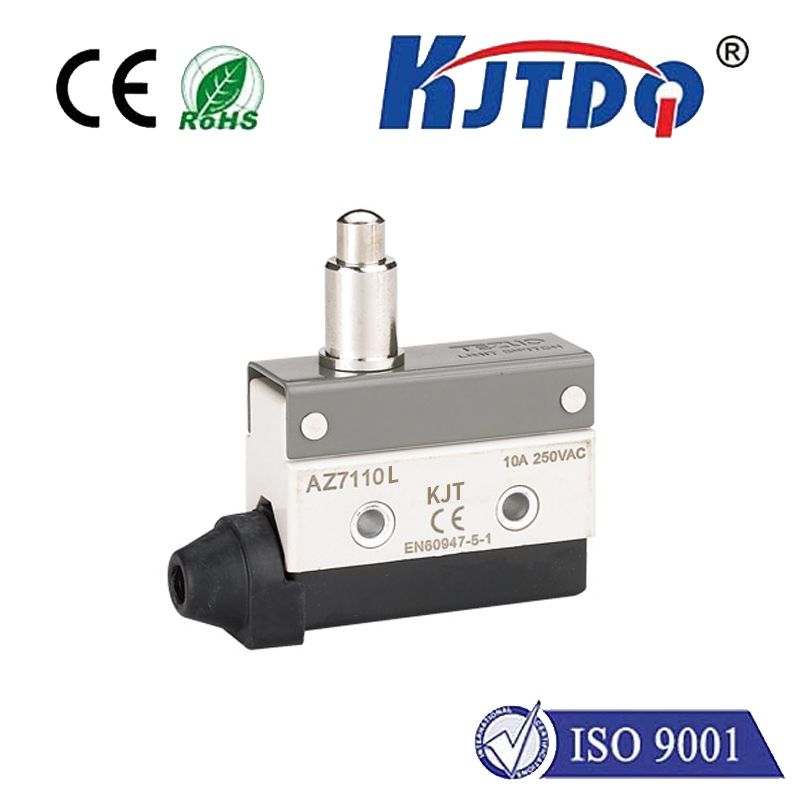
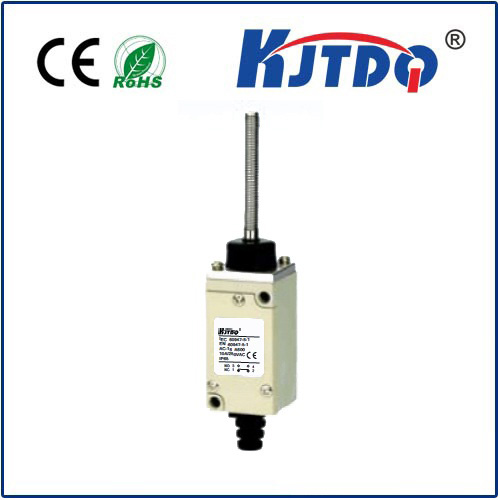
Versatility is another hallmark. Salzer offers a wide range of limit switch types to suit various actuation needs. These include roller lever switches for detecting moving parts on conveyors, plunger types for direct linear movement detection, and whisker or wobble stick switches for delicate object sensing. The actuators can be adjusted or customized, allowing for precise positioning and easy integration into existing systems. Furthermore, they come with different electrical ratings, contact configurations (NO/NC), and connection types, providing flexibility for control panel designers and maintenance engineers.
Installation and maintenance of Salzer limit switches are straightforward, contributing to reduced downtime. Their modular design often allows for easy replacement of components like the actuator head or contact block without dismantling the entire unit. Clear markings and standardized mounting dimensions simplify the integration process. For optimal performance, regular inspection is recommended to check for physical damage, wear on the actuator, and cleanliness of the contacts, ensuring the switch continues to provide accurate signals.
In practice, consider a bottling plant conveyor system. Salzer limit switches are strategically placed to detect when bottles are in position for filling, capping, and labeling. Each detection event sends a signal to the programmable logic controller (PLC), which coordinates the next action in the sequence. The switch’s reliability ensures that no bottle is missed or improperly processed, maintaining high throughput and product quality. Similarly, in heavy machinery like cranes or lifts, these switches serve as end-of-travel detectors, preventing overtravel and potential damage or accidents.
The evolution towards Industry 4.0 and smart manufacturing has also seen limit switches like those from Salzer maintain their relevance. While advanced sensors proliferate, the simplicity, cost-effectiveness, and robustness of electromechanical limit switches make them irreplaceable for many basic position-sensing tasks. They often form the first layer of a larger sensor network, providing critical digital inputs that are the backbone of automated control logic.
Choosing the right limit switch is paramount. Factors such as the operating environment (IP rating for ingress protection), required mechanical life, electrical load, actuation force, and response speed must be considered. Salzer’s extensive catalog, backed by technical support, allows engineers to select a model that precisely matches their application requirements, ensuring system reliability and safety.
In conclusion, the Salzer limit switch is more than just a component; it is a cornerstone of industrial control. Its unwavering reliability under pressure, adaptability to diverse applications, and commitment to safety standards make it a trusted choice for engineers worldwide. In the complex symphony of industrial automation, it plays a simple, yet indispensable note—confirming position, ensuring sequence, and safeguarding both process and personnel. By investing in quality components like Salzer limit switches, industries build a foundation for efficient, uninterrupted, and safe production, driving productivity forward in an increasingly automated world.