check

check

check

check

check

check
In industrial automation and machinery control, the reliability and accuracy of components are paramount. Among these critical components, limit switches play a vital role in detecting the presence or position of an object, ensuring safe and precise operation cycles. A specific variant, the limit switch with an adjustable roller lever, stands out for its enhanced versatility and precision in diverse applications. This article delves into the functionality, benefits, and key considerations for integrating this essential device.
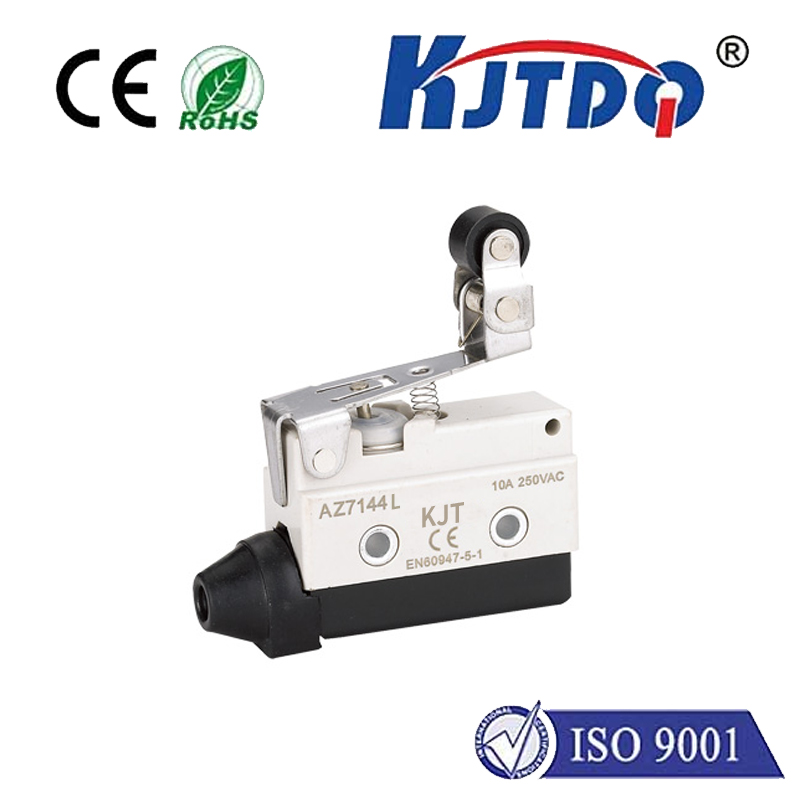
The core function of a limit switch is to act as an electromechanical sensor. It converts mechanical motion into an electrical control signal. When an actuator (like a machine part, door, or conveyor belt) makes contact with the switch's actuator head—in this case, a roller lever—it triggers the internal mechanism to open or close an electrical circuit. This signal can then start, stop, or change the state of a connected machine or process. The adjustable roller lever is the defining feature of this switch type. Unlike fixed actuators, this lever can be precisely positioned. Operators can adjust the lever's angle, length, or the roller's position relative to the switch body. This adjustability allows for fine-tuning the exact point at which the switch activates, accommodating variations in machine setup, wear over time, or different operational sequences without needing physical realignment of the target object itself.
The primary advantage of an adjustable roller lever limit switch is its exceptional adaptability. In manufacturing lines where multiple products with slightly different dimensions are processed, a quick adjustment of the lever can reset the detection point, minimizing downtime. It also compensates for mechanical wear in linkages or cams, maintaining consistent performance over the switch's lifespan. The roller tip reduces friction and wear on both the switch and the actuating object, leading to longer service life for all components. Furthermore, these switches are renowned for their durability. Housed in robust metal or high-grade plastic bodies, they are designed to withstand harsh industrial environments, including exposure to dust, moisture, oil, and significant mechanical shock or vibration. This makes them ideal for use in packaging machinery, material handling systems, automotive assembly lines, and woodworking equipment.
When selecting a limit switch with an adjustable roller lever, several technical specifications require careful attention. The operating force and travel define how much pressure and movement are needed to actuate the switch. The release point is the position where the contacts return to their original state. Precise adjustability allows these parameters to be optimized. Electrical ratings, including voltage, current (AC or DC), and contact configuration (e.g., SPDT - Single Pole Double Throw), must be compatible with the control circuit. The housing's Ingress Protection (IP) rating indicates its resilience against solids and liquids; a rating like IP67 signifies complete protection against dust and temporary immersion in water, crucial for washdown areas in food processing. The mechanical life expectancy, often in millions of cycles, and the electrical life under load are key indicators of longevity. Finally, the type of connection—conduit entry, pre-wired cable, or quick-disconnect plug—affects installation ease and maintenance.
Proper installation and routine maintenance are crucial for optimal performance. During installation, ensure the switch is securely mounted to prevent movement that could alter the actuation point. The adjustable lever should be set so that the target object engages the roller smoothly, avoiding excessive impact that could damage the mechanism. It is good practice to set the activation point so that the lever is depressed to the middle of its allowable travel, providing a safety margin. Regular inspection for loose mounting hardware, signs of physical damage to the lever or roller, and accumulation of debris is recommended. Periodically checking the electrical operation with a multimeter can confirm the switch is signaling correctly. While these switches are built for endurance, the adjustable lever mechanism itself should be checked to ensure locking screws or collars remain tight, preserving the set position.
In conclusion, the limit switch equipped with an adjustable roller lever is a cornerstone of precise and reliable machine control. Its design ingeniously balances robust construction with the flexibility of fine-tuned actuation positioning. By offering a solution that adapts to real-world variations in machinery and processes, it enhances operational efficiency, reduces maintenance needs, and contributes significantly to overall system safety and uptime. For engineers and maintenance professionals seeking dependable position sensing, understanding and utilizing this versatile component is a step toward more resilient and adaptable automation systems.