check

check

check

check

check

check
In the intricate world of industrial control and automation, the reliability of every component is paramount. Among these, the limit switch stands as a fundamental sensor, and its configuration—particularly the Normally Open (NO) contact—is a cornerstone of safe and efficient machine operation. This article delves into the essence of the "limit switch NO," explaining its function, applications, and why it is indispensable in modern systems.
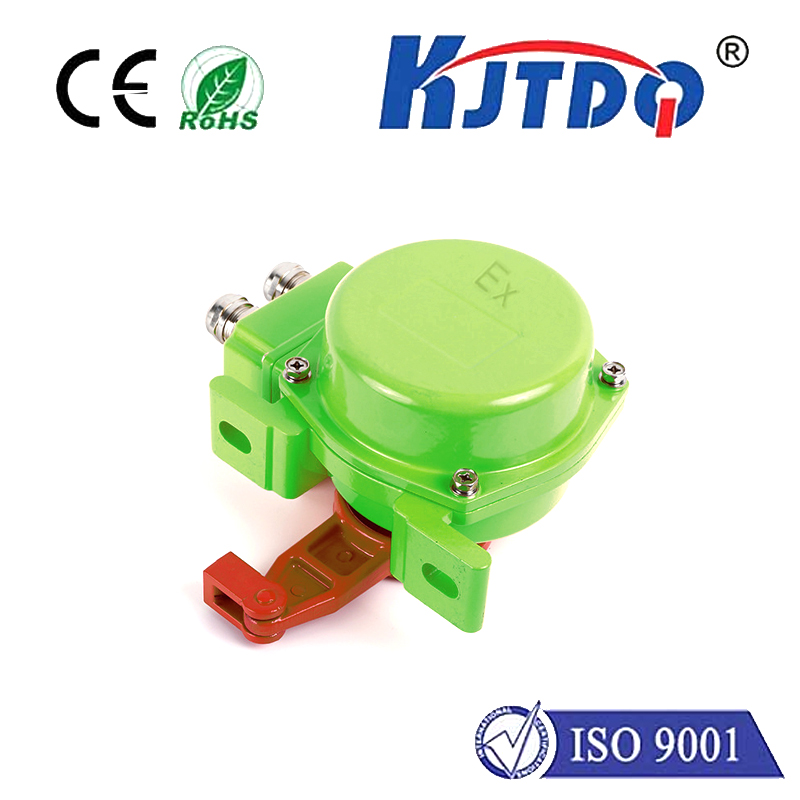
A limit switch is an electromechanical device designed to detect the presence or absence of an object, or to monitor the limits of mechanical motion. It is typically actuated by physical contact with a moving part, such as a machine door, conveyor belt, or robotic arm. The term "NO" or "Normally Open" refers to the state of the switch's electrical contacts when the switch is in its default, unactuated position. In an NO configuration, the circuit is open, meaning no electrical current flows through it. When the switch is actuated (e.g., a lever is pressed by a moving part), the contacts close, completing the circuit and allowing current to flow. This simple action sends a crucial signal to a programmable logic controller (PLC) or other control system.
The primary role of a limit switch NO is to provide a positive, on/off signal for control and safety sequences. For instance, on a safety guard door of a heavy press machine, an NO limit switch might be installed. When the door is securely closed, it actuates the switch, closing the NO contacts. This completed circuit signals the PLC that it is safe to initiate the machine cycle. If the door is opened during operation, the switch returns to its normal open state, breaking the circuit and sending an immediate stop command to the machine, thereby preventing potential injury or damage. This fail-safe principle is why NO contacts are often preferred for critical safety interlocks; the "normal" state (open) is the safe state, and any fault in the wiring or loss of power typically results in an open circuit, triggering a shutdown.
Beyond safety, limit switches with NO contacts are ubiquitous in routine automation for position sensing and sequence control. They are used to halt a conveyor at a precise loading point, reverse the direction of a travel crane at the end of its track, or confirm that a part is correctly seated in a fixture before a welding operation begins. Their robustness, simplicity, and direct physical feedback make them highly reliable in harsh environments where dust, moisture, or vibration might challenge more sensitive proximity sensors.
Choosing the right limit switch—considering factors like actuator type (roller lever, plunger, wobble stick), electrical rating, housing material (metal or plastic), and IP (Ingress Protection) rating—is vital for long-term performance. The NO contact configuration is a key part of this specification. Engineers must design circuits understanding that an NO contact provides an active signal only upon actuation. This is often contrasted with a Normally Closed (NC) contact, which provides a continuous signal that is interrupted upon actuation. The choice between NO and NC depends on the specific logic of the control system and the desired fail-safe behavior.
In summary, the humble limit switch NO is far more than a simple mechanical component. It is a critical interface between the physical motion of machinery and the electronic intelligence that controls it. Its design ensures that machines operate only under correct conditions, safeguarding both equipment and personnel. As automation evolves with smarter technologies like IIoT (Industrial Internet of Things), the basic, reliable signal from a well-placed NO limit switch remains an irreplaceable foundation for complex and safe industrial processes. Proper selection, installation, and maintenance of these devices are essential for maximizing uptime and ensuring operational integrity in any automated facility.