check

check

check

check

check

check
In the intricate world of industrial automation and process control, numerous components work silently to ensure efficiency, safety, and reliability. Among these critical but often overlooked devices is the vacuum limit switch. This specialized sensor plays a pivotal role in systems where monitoring and controlling vacuum pressure is paramount. Unlike standard pressure switches designed for positive pressure, a vacuum limit switch is engineered to operate within sub-atmospheric pressure ranges, acting as a sentinel to protect equipment and maintain process integrity.
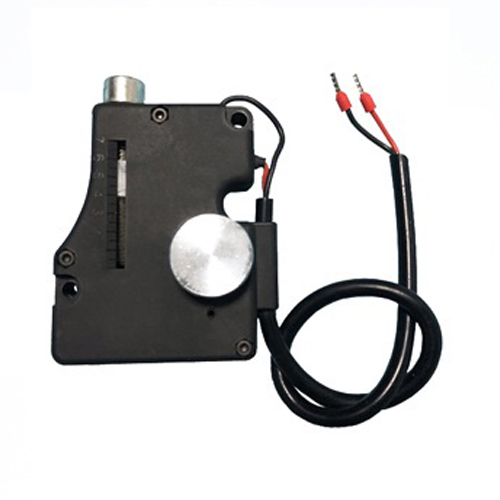
Fundamentally, a vacuum limit switch is an electromechanical device that monitors the level of vacuum within a system. It is designed to change its electrical contact state—either opening or closing a circuit—when the vacuum pressure reaches a pre-set threshold. This action triggers a response in the control system, which could be to start or stop a vacuum pump, activate an alarm, or initiate a safety shutdown sequence. The core mechanism typically involves a diaphragm or a bellows that flexes in response to pressure changes. This physical movement is then translated into the mechanical action of opening or closing electrical contacts.
The applications for vacuum limit switches are diverse and span multiple industries. In the packaging sector, particularly in food and pharmaceutical packaging, they are indispensable. Machines that use vacuum to remove air from packages before sealing rely on these switches to confirm that an adequate vacuum level has been achieved. This ensures product freshness, extends shelf life, and maintains package integrity. Similarly, in semiconductor manufacturing, where processes often occur in cleanrooms under precise vacuum conditions, these switches help maintain the required environment inside deposition or etching chambers. Any deviation can lead to costly defects in microchips.
Another vital application is in medical and laboratory equipment. Autoclaves, sterilizers, and freeze dryers use vacuum switches to monitor cycles accurately. In HVAC systems, particularly in large commercial buildings, vacuum switches can be used to monitor the suction side of systems, helping to prevent compressor damage. Industrial vacuum systems used for material handling or central cleaning systems also employ these switches to signal when collection bins are full or when system performance drops below acceptable levels.
Selecting the right vacuum limit switch requires careful consideration of several technical parameters. The set point, or the specific vacuum level at which the switch should actuate, is the most critical. This is usually specified in units like inches of mercury (inHg), millimeters of mercury (mmHg), or Pascal (Pa). The deadband or reset point, which is the pressure difference between the actuation point and the point where the switch returns to its normal state, is also important to prevent rapid cycling. Other factors include the pressure connection port size and type, the electrical rating of the contacts (voltage and current capacity), the housing material for corrosion resistance, and the overall ingress protection (IP) rating for durability in harsh environments.
Modern advancements have led to the development of electronic vacuum switches, which offer features like digital displays, adjustable set points via software, and analog output signals for continuous monitoring. However, traditional mechanical switches remain popular due to their simplicity, robustness, and inherent safety in fail-safe configurations. Proper installation is crucial; the switch should be mounted in a location representative of the system's vacuum level, away from turbulence or direct pump pulsations. Regular calibration and maintenance are recommended to ensure long-term accuracy and reliability.
In conclusion, the vacuum limit switch is a fundamental component that provides a simple yet effective solution for monitoring sub-atmospheric pressures. Its ability to convert a physical vacuum state into a definitive electrical signal makes it a cornerstone of control and safety logic in countless automated processes. From ensuring your coffee is fresh in its vacuum-sealed bag to guaranteeing the purity of silicon wafers for electronics, this device, though small, is a key contributor to modern industrial efficiency and product quality. Understanding its function and proper application is essential for engineers and technicians designing or maintaining systems where vacuum is a critical parameter.