check

check

check

check

check

check
In industrial automation and electrical control systems, precision and safety are paramount. Among the numerous components ensuring reliable operation, the relay limit switch stands as a critical device. This article delves into the fundamental principles, operational mechanisms, and diverse applications of relay limit switches, providing a comprehensive overview for engineers and technicians.
A relay limit switch is an electromechanical device designed to control the movement of a machine or process by opening or closing an electrical contact when a predetermined physical limit is reached. It combines the functions of a standard limit switch—which detects the presence or absence of an object—with a relay, which acts as an amplifier to control a higher-power circuit. Essentially, the limit switch component senses a mechanical motion or position, and the relay component isolates the low-power sensing circuit from the high-power load circuit, enhancing both control flexibility and system protection.
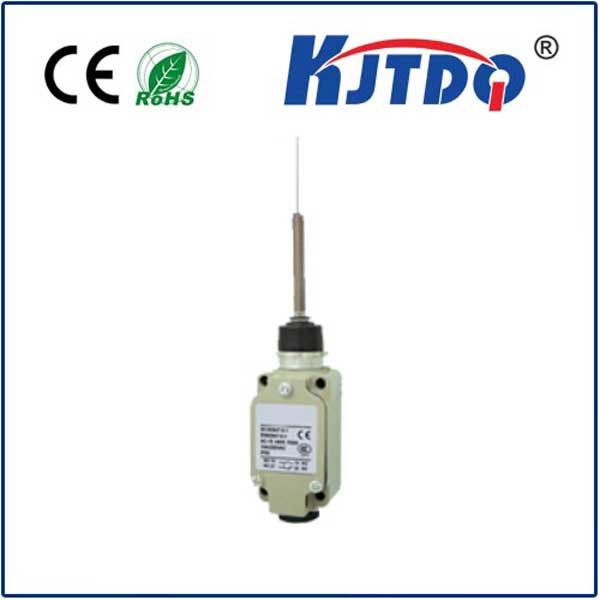
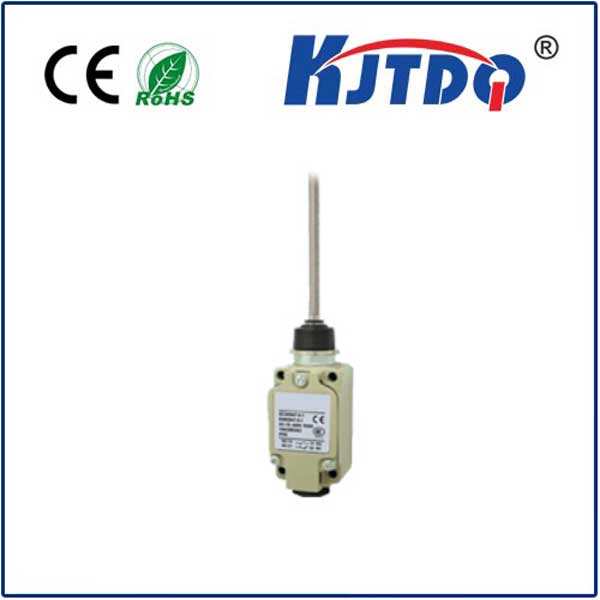
The core working principle is straightforward. The switch typically features an actuator, such as a lever, roller, or plunger, which is physically engaged by the moving part of a machine. When the machine reaches a set point, the actuator is triggered, causing the internal contacts of the limit switch to change state (open or close). This change in the low-current control circuit then energizes or de-energizes the coil of the associated relay. Consequently, the relay's contacts, which are part of a separate, higher-current circuit, switch to control a motor, solenoid, indicator lamp, or another actuator. This two-stage process allows sensitive detection to safely manage substantial electrical loads.
Relay limit switches are predominantly employed for two primary functions: limiting travel and sequencing operations. In travel limitation, they are crucial for preventing over-travel in automated machinery like conveyor systems, CNC machines, or elevator controls. For instance, in a garage door opener, limit switches determine the fully open and fully closed positions, stopping the motor precisely to avoid damage. In sequencing, they ensure that a series of operations occur in a specific, safe order within a manufacturing process, such as in packaging or assembly lines.
The advantages of integrating a relay with a limit switch are significant. Firstly, they provide excellent electrical isolation. The control circuit operating the limit switch can be low-voltage for safety, while the relay handles potentially hazardous high-voltage or high-current loads. This separation protects sensitive control electronics like Programmable Logic Controllers (PLCs). Secondly, they offer versatility. A single, small limit switch signal can be used to control multiple circuits through a multi-pole relay, enabling complex control logic. Thirdly, they enhance durability. The relay bears the brunt of the electrical arcing from switching inductive loads (like motors), prolonging the life of the more precise limit switch contacts.
When selecting a relay limit switch setup, several factors must be considered. The mechanical specifications include the actuator type, operating force, and repeat accuracy to suit the physical motion it must detect. Electrically, the voltage and current ratings of both the limit switch contacts (for the control circuit) and the relay contacts (for the load circuit) must match or exceed the system requirements. Environmental conditions are also critical; switches may need sealed housings rated IP67 or higher for dust and water resistance in harsh industrial settings, or special materials for corrosive atmospheres.
Common configurations include normally open (NO) and normally closed (NC) contacts. A NO contact closes the circuit when the actuator is triggered, while an NC contact opens it. Many switches offer a combination (e.g., SPDT - Single Pole Double Throw) for design flexibility. The relay is typically chosen as a separate component mounted on a DIN rail in a control panel, though some integrated units are available.
In practice, regular maintenance is essential for reliability. This involves periodic inspection for mechanical wear on the actuator, checking for loose connections, and testing the electrical operation. A failing limit switch can lead to machine malfunction, unscheduled downtime, or even safety hazards.
From automated warehouses and robotic arms to HVAC systems and safety interlocks on heavy machinery, relay limit switches form an invisible yet indispensable network of control. They are the unsung heroes that provide the essential "stop," "start," or "change" commands based on physical position, ensuring processes run smoothly, efficiently, and, most importantly, safely. Understanding their function and proper application is key to designing and maintaining robust automated systems.