check

check

check

check

check

check
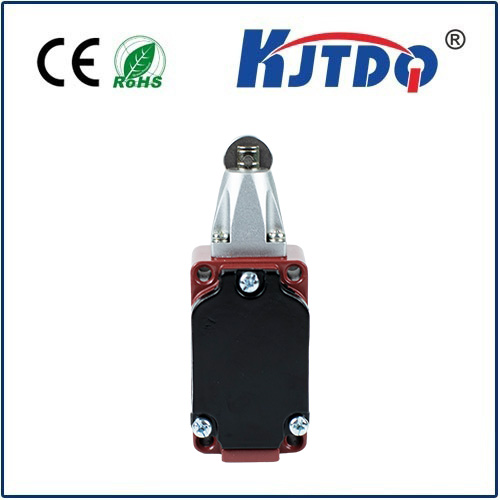
Toggle limit switches are fundamental components in industrial automation and control systems, designed to detect the presence or position of an object. These mechanical switches activate or deactivate circuits when a physical lever, or "toggle," is moved to a predetermined limit. Their primary function is to provide safety interlocks, prevent over-travel of machinery, and ensure precise operational control. In manufacturing environments, toggle limit switches are commonly integrated into conveyor systems, robotic arms, and assembly lines to halt equipment when parts reach specific points, thereby reducing collision risks and enhancing workflow accuracy.
The operational principle relies on a simple yet robust mechanism. When an external force, such as a moving machine part, contacts the toggle actuator, it triggers an internal electrical contact change—either opening or closing a circuit. This action sends a signal to a controller, like a PLC (Programmable Logic Controller), which then executes commands such as stopping a motor or initiating a new process. For instance, in packaging machinery, a toggle limit switch might detect when a product reaches the end of a belt, signaling the system to seal the package. This reliability in sensing physical limits makes them indispensable for repetitive tasks where consistency is critical.
Selecting the appropriate toggle limit switch involves considering factors like environmental conditions, load ratings, and actuator style. Industrial-grade switches are often built with durable materials such as metal housings and sealed contacts to withstand dust, moisture, and temperature fluctuations. In harsh settings like automotive plants or food processing facilities, waterproof or corrosion-resistant models ensure longevity and minimal downtime. Additionally, switches come in various actuator configurations—including roller lever, plunger, and whisker types—to suit different triggering methods. For example, a roller lever actuator is ideal for detecting moving objects with smooth surfaces, while a plunger type suits applications requiring direct linear pressure.
Beyond basic functionality, modern toggle limit switches offer enhanced features for improved performance. Some models include LED indicators for visual status monitoring, allowing operators to quickly identify switch activation. Others are designed with adjustable levers or mounting brackets for flexible installation, catering to custom machinery setups. In safety-critical applications, such as elevator door systems or industrial presses, these switches serve as fail-safes to prevent accidents by cutting power when limits are exceeded. Their mechanical nature provides an advantage over purely electronic sensors in scenarios where electrical noise or interference is a concern, as they deliver consistent physical feedback without signal disruption.
Maintenance and troubleshooting are straightforward due to the switch's simple design. Regular inspections for wear on the actuator or contact points can prevent malfunctions. Common issues, like false triggering or failure to activate, often stem from misalignment or debris accumulation, which can be resolved with cleaning and calibration. For optimal performance, it's recommended to follow manufacturer guidelines on operational cycles and environmental limits. In automated warehouses, for instance, routine checks of toggle limit switches on sorting equipment help maintain efficiency and reduce unexpected stoppages.
The versatility of toggle limit switches extends to diverse sectors, from aerospace to consumer electronics. In renewable energy systems, they monitor the position of solar panels or wind turbine blades, ensuring optimal alignment and safety. In home appliances like washing machines, they control drum movement by detecting rotation limits. As industries advance toward smarter automation, these switches continue to evolve with integrations into IoT (Internet of Things) networks, enabling remote monitoring and data collection for predictive maintenance. However, their core benefit remains unchanged: providing a reliable, cost-effective solution for position sensing and equipment protection.
In summary, toggle limit switches play a vital role in enhancing operational safety and precision across various applications. Their mechanical durability, ease of integration, and adaptability make them a preferred choice for engineers seeking dependable control solutions. By understanding their functions and selection criteria, businesses can optimize system performance while minimizing risks, ultimately supporting efficient and sustainable industrial operations.