check

check

check

check

check

check
In today's rapidly evolving technological landscape, the demand for reliable and efficient security and automation solutions has never been higher. Among the myriad of components driving this innovation, photoelectric sensors stand out for their versatility and precision. Specifically, the integration of infrared (IR) technology within a diffuse sensing model creates a powerful tool for numerous applications. This article delves into the workings and advantages of photoelectric infrared IR sensor diffuse systems, highlighting how products like those from the KJTDQ series are setting new standards in the industry.
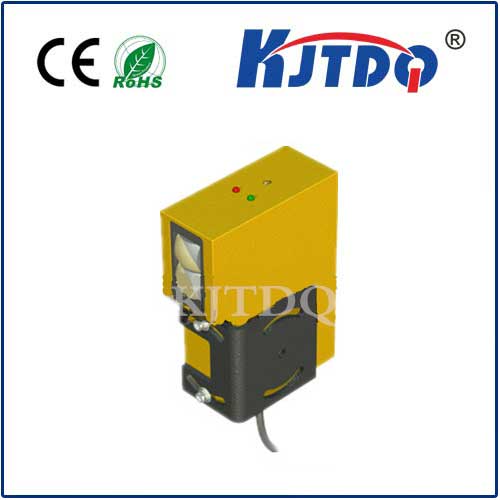
At its core, a photoelectric sensor operates by emitting a light beam and detecting changes in the received light. The diffuse type, also known as a proximity sensor, works by emitting infrared light and measuring the reflection from a target object. Unlike through-beam or retro-reflective sensors that require separate components, a diffuse sensor houses both the emitter and receiver in a single unit. This design simplifies installation and reduces costs, making it an attractive option for many setups. The infrared spectrum is particularly advantageous as it is less susceptible to interference from ambient visible light, ensuring more stable and accurate detection.
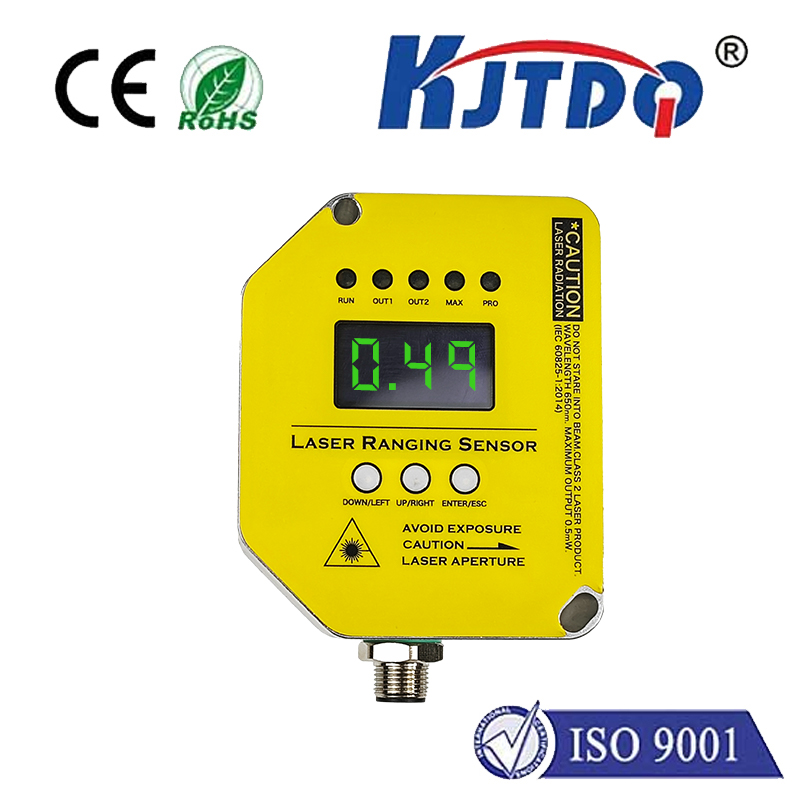
The KJTDQ series exemplifies the practical application of this technology. These sensors are engineered for robustness and high performance in diverse environments. A key feature is their ability to detect objects regardless of color or material, within a specified range. This is crucial in industrial automation, where sensors must reliably identify products on a conveyor belt, from dark plastics to shiny metals, without missing a beat. The diffuse sensing principle allows for this consistent performance by focusing on the intensity of the reflected IR light rather than its visual properties.
Beyond industrial automation, the applications are vast. In security systems, KJTDQ photoelectric IR diffuse sensors can be deployed to create invisible detection zones. They can monitor doorways, windows, or perimeters, triggering alarms when an intrusion is detected by the interruption or presence of a reflected signal. Their insensitivity to ambient light changes means they perform reliably both day and night, a critical requirement for round-the-clock security. Furthermore, in the realm of smart buildings, these sensors contribute to energy efficiency by controlling lighting or HVAC systems based on occupancy, detecting the presence of people in a room through their subtle IR reflections.
One of the most significant technical merits of a high-quality diffuse IR sensor is its range and response time. Advanced models offer adjustable sensing distances and fast switching frequencies, enabling them to keep pace with high-speed production lines. The KJTDQ series often incorporates features like background suppression, which allows the sensor to ignore objects beyond a set distance, or even foreground suppression for specific applications. This level of programmability and precision minimizes false triggers and maximizes operational efficiency.
Durability is another cornerstone. Industrial and security environments can be harsh, with exposure to dust, moisture, and mechanical vibrations. Sensors like those in the KJTDQ line are typically built with rugged housings, often rated with IP67 or similar ingress protection. This ensures they continue to function accurately in challenging conditions, from a dusty warehouse floor to an outdoor access point, providing long-term reliability and reducing maintenance needs.
Choosing the right sensor involves considering factors such as sensing range, target size, material, and environmental conditions. The diffuse photoelectric IR sensor offers a balanced solution for many medium-range detection tasks where simplicity and cost-effectiveness are priorities. For developers and system integrators, the KJTDQ series provides a dependable component that integrates seamlessly into larger systems, supported by clear documentation and consistent performance.
In conclusion, the fusion of photoelectric, infrared, and diffuse sensing technologies creates a remarkably adaptable and reliable detection solution. As automation and security needs grow more sophisticated, the role of precise, robust sensors becomes increasingly vital. Products like the KJTDQ photoelectric infrared IR sensor diffuse units demonstrate how focused engineering can deliver components that are not only functionally superior but also practical for real-world deployment. By enabling accurate, non-contact detection across countless scenarios, they form an invisible yet indispensable layer of modern technological infrastructure, quietly enhancing safety, efficiency, and automation in our daily lives and industries.