check

check

check

check

check

check
In the intricate world of industrial automation, the reliable detection of objects is paramount. Among the various sensing technologies, photoelectric sensors stand out for their versatility, accuracy, and non-contact operation. A critical aspect of integrating these sensors into a control system is understanding their output configuration. This article delves into the specifics of the PNP output type, a common and crucial specification for photoelectric sensors, explaining its function, advantages, and typical applications.
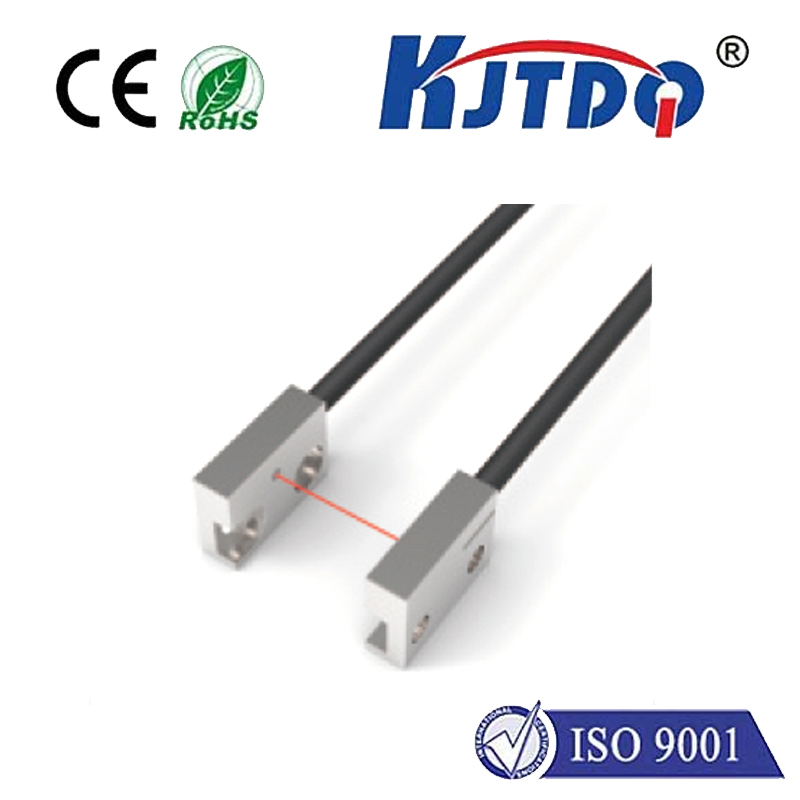
At its core, a photoelectric sensor works by emitting a light beam (visible red, infrared, or laser) and detecting changes in the received light. When an object interrupts or reflects this beam, the sensor's internal circuitry triggers a switching action. This is where the output type comes into play. The terms PNP and NPN refer to the type of transistor used in the sensor's output stage, defining how the sensor interfaces with the load (like a PLC input, relay, or indicator).
A photoelectric sensor with a PNP output is often described as "sourcing" output. In a standard wiring configuration for a DC sensor, you have three wires: brown for positive voltage (typically +24V DC), blue for common negative (0V), and a black (or sometimes white) wire as the switching output. When the sensor is in its inactive state (no object detected), the black output wire is electrically disconnected (open circuit). Upon detection of an object, the PNP transistor activates, connecting the black output wire internally to the positive supply (brown wire). This action "sources" positive current *from* the sensor *to* the connected load. Essentially, the sensor provides the positive voltage to switch the load on.
This behavior contrasts with an NPN (sinking) output, which provides a path to ground when active. The choice between PNP and NPN is not about performance but about compatibility with the control system's input circuitry. In many regions, including Europe and much of Asia, PNP sensors are the standard and are commonly used with PLCs that have PNP-compatible (sinking) inputs. A PNP sensor's output is ideal for directly powering loads that require a positive signal to activate.
The advantages of using a PNP photoelectric sensor are significant. They offer straightforward integration with many modern programmable logic controllers (PLCs) that are designed to accept sourcing signals. Wiring is often considered intuitive: when the sensor detects an object, it sends out a positive signal. This can simplify troubleshooting, as technicians can easily check for the presence of voltage at the output wire upon detection. Furthermore, in systems where multiple sensors need to share a common power supply, PNP configurations can sometimes lead to simpler and cleaner wiring layouts.
Practical applications for PNP output photoelectric sensors are vast across manufacturing and packaging lines. They are extensively used for object detection on conveyor belts, ensuring products are present for the next operation like labeling or sorting. In assembly automation, they verify the correct placement of components. Their non-contact nature makes them perfect for counting bottles, detecting transparent films, or monitoring fill levels in containers. Whether it's a diffuse sensor detecting a cardboard box, a retro-reflective sensor identifying a pallet, or a through-beam sensor ensuring safety at a access point, the PNP output provides a reliable switching signal to the machine's brain—the PLC.
When selecting a photoelectric sensor, specifying PNP or NPN is a fundamental step. Always consult the machine's electrical drawings or the PLC manual to determine the required input type. Mismatching a PNP sensor with an NPN-input PLC, or vice versa, will result in the system not functioning. Additionally, pay close attention to the sensor's other specifications like sensing range, light source, response time, and housing material to ensure it suits the environmental conditions.
In conclusion, the "PNP" in a photoelectric sensor specification is far more than just a technical acronym. It defines a key electrical interface characteristic that ensures seamless communication between the sensor and the control system. By understanding that a PNP output sources positive current upon detection, engineers and technicians can design, install, and maintain more robust and reliable automated systems. Choosing the correct output type, matched with the right sensor technology for the application, is a cornerstone of efficient and trouble-free industrial automation.