check

check

check

check

check

check
In the realm of industrial automation, precision, reliability, and efficiency are non-negotiable. Among the myriad components that form the backbone of modern manufacturing and control systems, the PNP NC proximity sensor stands out as a critical workhorse. This guide delves deep into the world of these sensors, explaining their function, advantages, and key applications, moving beyond basic definitions to provide actionable insights for engineers and procurement specialists.
First, let's decode the terminology. A proximity sensor is a non-contact device that detects the presence or absence of an object within its sensing range. The "PNP" and "NC" specifications define its electrical characteristics and default state. PNP (Positive-Negative-Positive) refers to the switching logic. In a PNP sensor, the output wire switches to a positive voltage (e.g., +24V DC) when an object is detected, sourcing current to the load. This is often called a "sourcing" sensor. "NC" stands for Normally Closed. In its default state without a target present, the NC sensor's output circuit is closed, allowing current to flow. When a target enters the sensing field, the circuit opens, interrupting the current. This is the opposite of a NO (Normally Open) sensor.
The combination of PNP and NC creates a sensor with specific safety and logic benefits. A PNP NC proximity sensor is inherently fail-safe for certain critical applications. If the sensor fails, loses power, or its wiring is cut, the circuit opens, which can be configured to trigger a safety shutdown or alarm. This is crucial in processes where an undetected object or machine failure could lead to hazardous conditions or significant product damage. For instance, in a safety interlock system guarding a robotic cell, an NC configuration ensures that any fault (like a broken wire) defaults to a safe "stop" state.
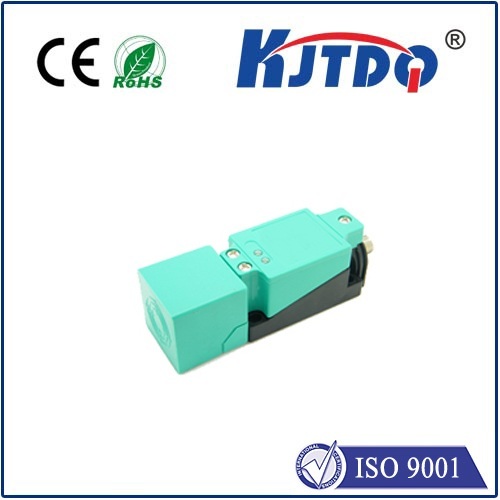
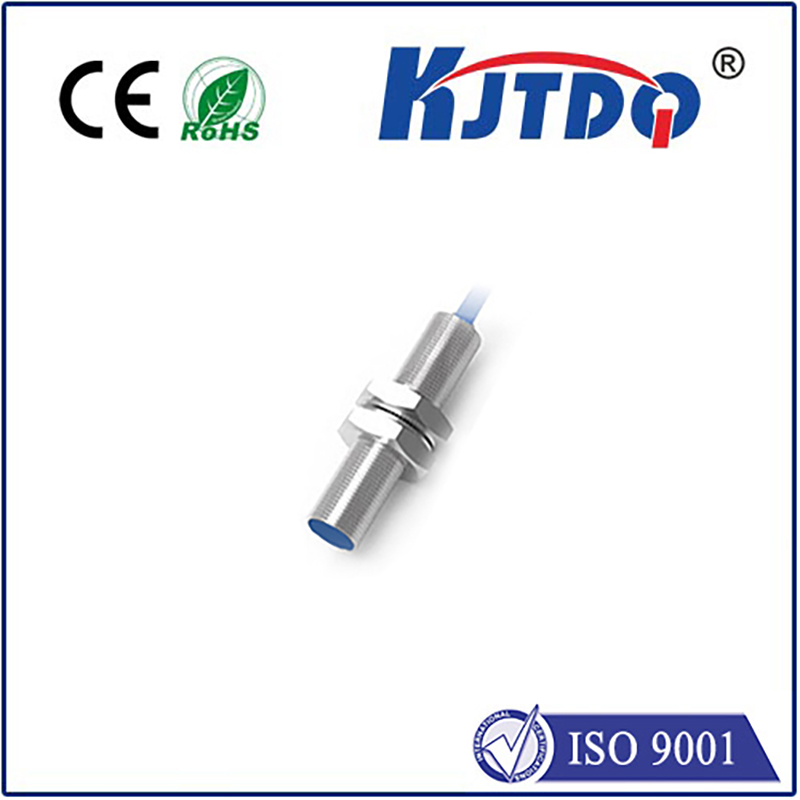
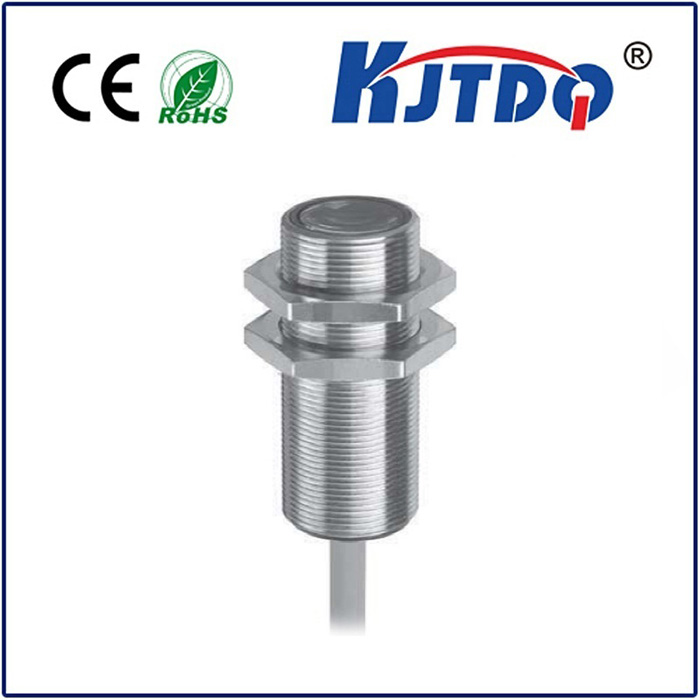
The core technology behind most modern PNP NC proximity sensors is inductive sensing. These sensors generate an electromagnetic field. When a metallic object (ferrous or non-ferrous like aluminum or copper) enters this field, it causes eddy currents on the object's surface, which dampens the oscillation in the sensor's internal LC circuit. This change is detected and triggers the solid-state switch (the PNP transistor) to change state. They are incredibly robust, immune to environmental factors like dust, oil, and moisture (given appropriate IP ratings), and offer long operational life with no moving parts.
Key advantages of using PNP NC inductive proximity sensors are numerous. Their non-contact operation eliminates mechanical wear and tear. They provide high switching speeds, capable of detecting thousands of objects per minute, which is essential for high-speed production lines. Their repeatability—the ability to consistently detect an object at the same distance—is exceptional. Furthermore, their simple two-wire or three-wire DC designs make them relatively easy to integrate into standard PLC (Programmable Logic Controller) input modules designed for PNP sourcing signals.
Application scenarios are vast across industries. In automotive assembly, they verify the presence of metal components like pistons or gears before a machining operation. In packaging machinery, they count metal lids or detect the position of a metallic actuator. On conveyor systems, they are used for precise positioning and jam detection. A classic use of an NC configuration is in monitoring the status of a guard door; the door's metal latch keeps the sensor actuated (circuit open), and if the door opens, the sensor reverts to its NC state (circuit closed), sending a signal to halt the machine.
When selecting a PNP NC proximity sensor, several parameters demand attention. Sensing distance, often rated as "nominal" or "Sn," must be chosen with a safety margin (typically 70-80% of Sn) to account for target material, size, and temperature variations. The housing material (e.g., stainless steel for harsh environments) and IP rating (e.g., IP67 for washdown areas) are critical for durability. The voltage range (commonly 10-30V DC) must match the control system's supply. Lastly, considering the output current rating is vital to ensure it can drive the connected load, such as a PLC input or a small relay.
Installation and wiring are straightforward but require care. Maintain adequate clearance between sensors and between the sensor and metal mounting surfaces to prevent mutual interference. Ensure the target approaches the sensor's sensing face correctly, as the sensing field is not uniform. For a three-wire PNP sensor, the standard color coding is brown for positive (+V), blue for negative (0V or common), and black for the output signal wire. Always refer to the manufacturer's datasheet.
In conclusion, the PNP NC proximity sensor is more than just a simple switch; it is a fundamental pillar of reliable and safe industrial automation logic. Its fail-safe NC characteristic, combined with the prevalent PNP sourcing standard, makes it a preferred choice for critical detection tasks. Understanding its operating principle, benefits, and selection criteria empowers professionals to design more resilient, efficient, and safe automated systems, ensuring smooth operations and minimizing costly downtime.