check

check

check

check

check

check
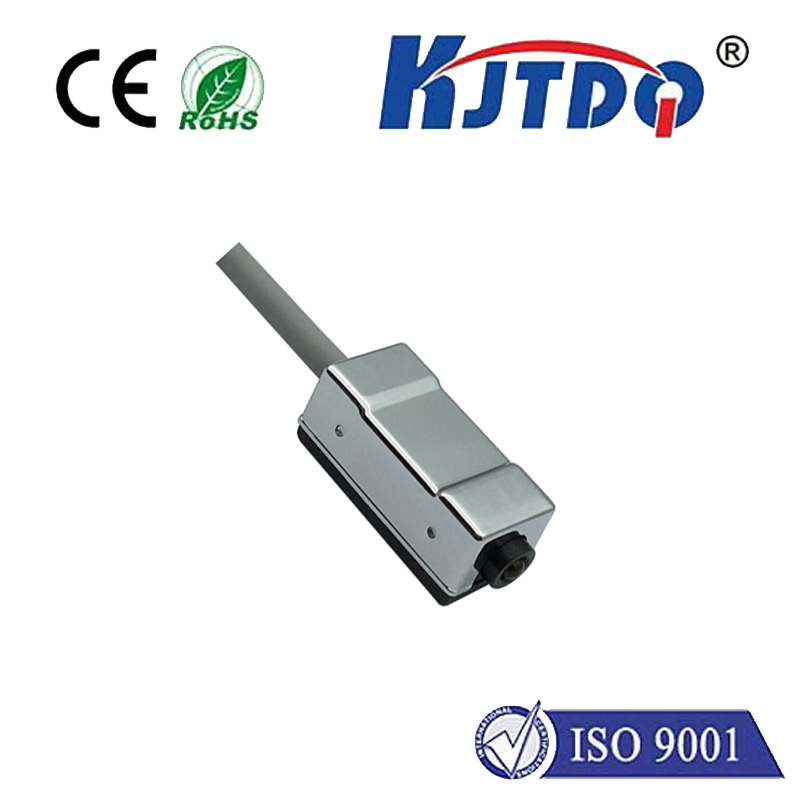
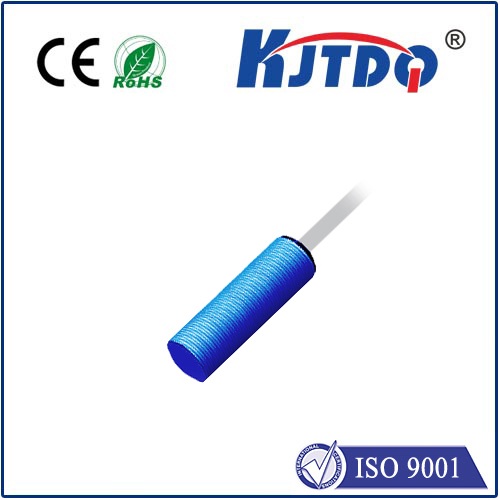
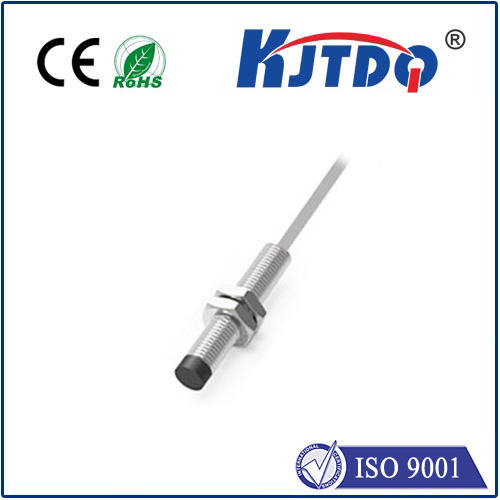
In today's rapidly evolving industrial landscape, the demand for precise, reliable, and efficient sensing technology is paramount. Among the various solutions available, the 24V proximity sensor stands out as a cornerstone of modern automation systems. These devices, operating on a standard 24-volt DC power supply commonly found in industrial environments, offer non-contact detection of metallic objects, ensuring longevity and reducing mechanical wear. The integration of a high-quality 24V proximity sensor, such as those in the KJTDQ series, directly translates to improved operational uptime, enhanced safety protocols, and significant cost savings over traditional mechanical limit switches.
The fundamental principle behind an inductive proximity sensor is electromagnetic induction. When a metallic target enters the sensor's oscillating electromagnetic field, eddy currents are induced within the target. This causes a change in the oscillation amplitude, which is detected by the sensor's circuitry, triggering a solid-state output signal. The 24V DC operating voltage is particularly advantageous. It provides a robust signal level that is less susceptible to electrical noise compared to lower voltages, ensuring stable performance even in electrically noisy factory settings. This reliability is critical for applications involving programmable logic controllers (PLCs) and other sensitive control systems where signal integrity is non-negotiable.
Applications for 24V proximity sensors are vast and varied across different sectors. In automotive manufacturing, they are indispensable for part presence verification on assembly lines, precise positioning of robotic arms, and end-of-stroke detection in pneumatic cylinders. Within the packaging industry, these sensors count products, control filling levels, and monitor conveyor belt speeds. Machine tools utilize them for tool positioning, spindle orientation, and chuck jaw detection. The KJTDQ series, known for its rugged housing and consistent performance, is often specified for these challenging environments where exposure to coolants, metal chips, and constant vibration is routine.
Selecting the right 24V proximity sensor requires careful consideration of several technical parameters. Sensing distance, or the nominal range at which a standard target can be reliably detected, is a primary factor. It is crucial to note that this distance can vary based on the target material's properties and size. The housing material, typically nickel-plated brass, stainless steel, or PBT plastic, must be chosen to withstand the specific environmental conditions, including temperature extremes, chemical exposure, and physical impact. Output configuration is another key decision point; sensors can provide either a normally open (NO) or normally closed (NC) PNP or NPN transistor output, which must be compatible with the input module of the controller. Factors like switching frequency, short-circuit protection, and LED status indication are also important for optimizing system design.
The benefits of implementing a reliable 24V proximity sensor system are substantial. Their non-contact nature eliminates physical wear and tear, leading to a dramatically longer service life and reduced maintenance costs. The high switching speeds enable faster machine cycles, increasing overall throughput. Furthermore, their solid-state design ensures millions of reliable switching operations without failure. For engineers and system integrators, the standardization around 24V DC simplifies wiring, panel design, and inventory management. The KJTDQ models often incorporate advanced features like weld-field immunity, which prevents false triggering in areas with strong magnetic fields from welding equipment, and increased protection ratings (e.g., IP67) against dust and water ingress.
Installation and maintenance, while straightforward, demand attention to detail for optimal performance. Sensors should be mounted securely to prevent vibration-induced misalignment. Adequate clearance must be maintained between adjacent sensors to prevent mutual interference. It is also essential to ensure that only the specified sensing face is exposed to the target, as metallic objects approaching from the sides can sometimes influence the field. Regular checks should include verifying the cleanliness of the sensing face, inspecting cables and connectors for damage, and confirming the stability of the power supply voltage. A well-planned preventative maintenance schedule that includes these checks can prevent unplanned downtime.
As Industry 4.0 and the Industrial Internet of Things (IIoT) gain momentum, the role of the proximity sensor is expanding beyond simple detection. Modern 24V sensors are increasingly equipped with IO-Link communication capability. This digital interface transforms a standard sensor into an intelligent device that can transmit detailed diagnostic data, such as operating temperature, signal strength, and remaining operational life, to higher-level control systems. This predictive maintenance data allows plant managers to address potential issues before they cause a line stoppage, ushering in a new era of smart, data-driven manufacturing. The convergence of robust physical design, exemplified by the KJTDQ series, with smart digital functionality represents the future of industrial sensing.
In conclusion, the 24V proximity sensor is far more than a simple component; it is a critical enabler of industrial efficiency, safety, and intelligence. Its widespread adoption is a testament to its proven reliability and versatility. For any operation seeking to enhance automation performance, reduce operational costs, and build a foundation for future smart factory initiatives, investing in high-quality sensing technology, including robust 24V DC proximity sensors from trusted lines like KJTDQ, is not just an option—it is a strategic imperative for sustained competitive advantage in a demanding global market.