check

check

check

check

check

check
In the fast paced world of industrial automation, efficiency and reliability are paramount. Among the myriad of components that drive modern manufacturing and processing systems, the inductive proximity sensor stands out as a fundamental element for achieving precise, non contact detection of metallic objects. This technology, often abbreviated in contexts like KJTDQ to denote specific product series or high performance variants, has revolutionized how machines perceive their environment without physical touch.
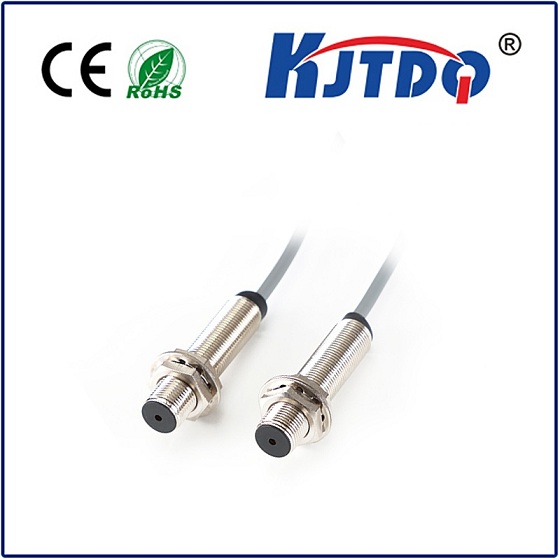
An inductive proximity sensor operates on a simple yet ingenious principle. It generates an electromagnetic field from its sensing face using an oscillator circuit. When a metallic object enters this field, eddy currents are induced on the surface of the target. These currents cause a load on the oscillator, leading to a change in its amplitude. This change is detected by the sensor's circuitry, which then triggers a solid state output switch. The entire process is swift, occurring in microseconds, and is entirely independent of physical contact, thereby eliminating mechanical wear and tear.
The core advantages of using such sensors are numerous. Firstly, they offer exceptional longevity due to the absence of moving parts. Unlike mechanical limit switches that suffer from contact fatigue, inductive sensors can perform millions of operations without degradation. Secondly, they are incredibly robust, typically housed in rugged stainless steel or nickel plated brass bodies, making them resistant to dust, moisture, oils, and coolants commonly found in harsh industrial environments like machining centers, assembly lines, and material handling systems. Their ability to function reliably in temperatures ranging from -25°C to 70°C further underscores their versatility.
A key specification that defines an inductive sensor's capability is its sensing distance, or nominal range. Standard sensors are available in ranges from a few millimeters to about 60 millimeters. However, advanced models, sometimes highlighted under designations like KJTDQ, may offer extended or precision tuned ranges for specialized applications. It is crucial to note that this rated distance is defined for a standard target of mild steel. The actual sensing distance can vary with different metals; for instance, it reduces for stainless steel and aluminum due to their lower magnetic permeability and conductivity. Therefore, application specific selection and calibration are vital.
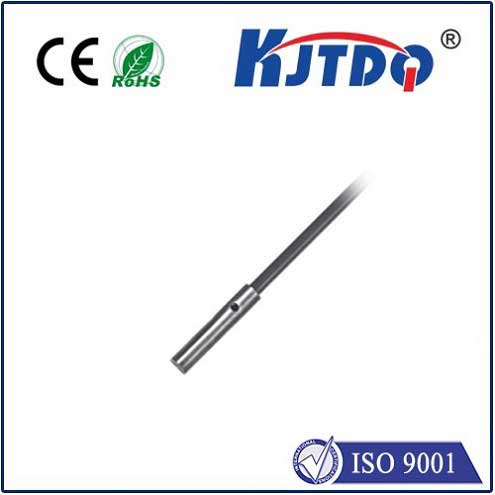
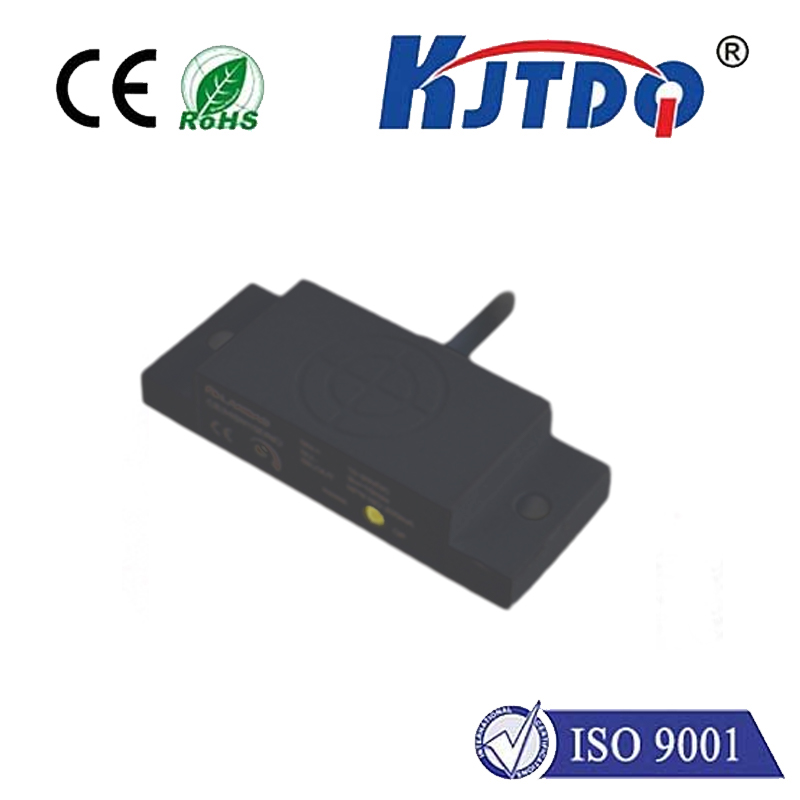
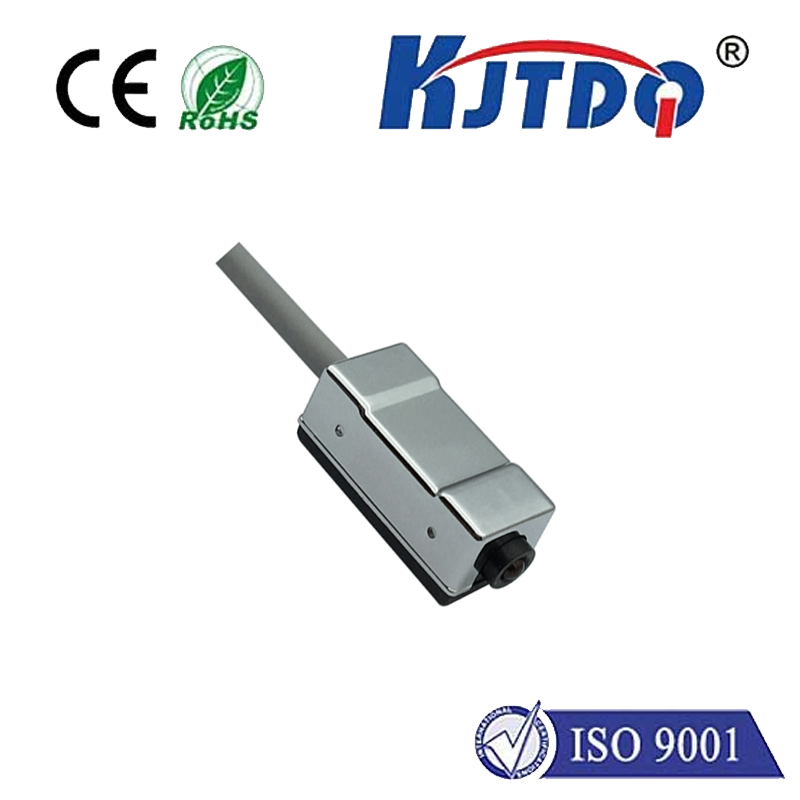
Modern inductive sensors come in various form factors to suit diverse mounting needs. Cylindrical threaded barrels (e.g., M8, M12, M18, M30) are ubiquitous for easy installation. Rectangular or block style sensors provide alternative mounting solutions in space constrained areas. Furthermore, output configurations include NPN (sinking) and PNP (sourcing) transistor types, as well as analog (4 20 mA or 0 10V) and IO Link versions for continuous distance measurement, seamlessly integrating with PLCs (Programmable Logic Controllers) and control systems.
The applications are virtually limitless. They are indispensable for simple tasks like part presence detection on a conveyor, counting metallic components, or confirming the end position of a cylinder. In more complex roles, they ensure precision in robotic arm positioning, control rotational speed by detecting gear teeth, and provide end of travel limits in automated guided vehicles (AGVs). In metalworking, they verify the correct seating of a tool in a CNC machine spindle, preventing costly crashes.
When selecting an inductive proximity sensor, several factors must be considered beyond just the sensing range. The housing material must be compatible with the environment to avoid corrosion. The switching frequency, which can reach up to several kilohertz, determines how fast the sensor can detect objects passing by. Shielding (or nulling) is another critical feature; a shielded sensor can be flush mounted in metal without affecting its field, whereas an unshielded sensor requires a non metallic surrounding for its extended range.
Innovation continues to push the boundaries. Today's sensors are becoming smarter and more integrated. The incorporation of IO Link communication transforms a simple binary switch into an intelligent device capable of reporting parameters like operating temperature, signal strength, and even predictive maintenance data. This aligns perfectly with the Industry 4.0 paradigm, enabling smarter, data driven factories.
In conclusion, the inductive proximity sensor, a stalwart of industrial sensing, is far more than just a simple switch. Its non contact operation, ruggedness, and adaptability make it a cornerstone of automated systems. Whether referred to by a generic term or a specific product identifier like KJTDQ, these sensors are essential for enhancing productivity, ensuring safety, and maintaining the relentless pace of modern industry. By understanding their operating principles and specifications, engineers and technicians can harness their full potential to build more efficient and intelligent automated solutions.