check

check

check

check

check

check
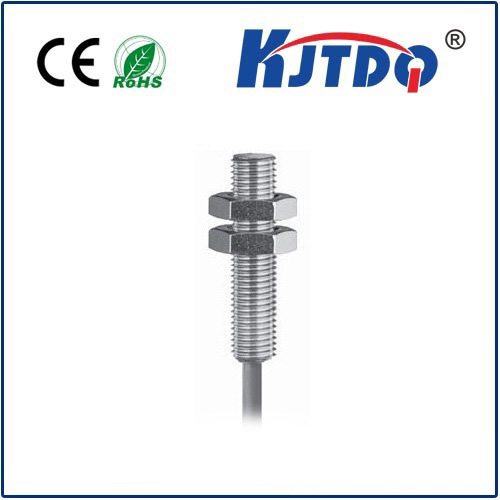
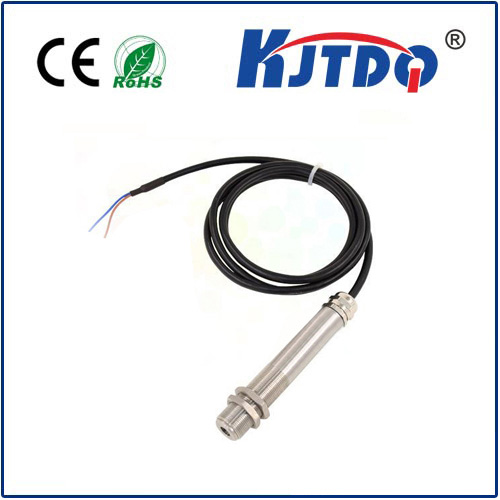
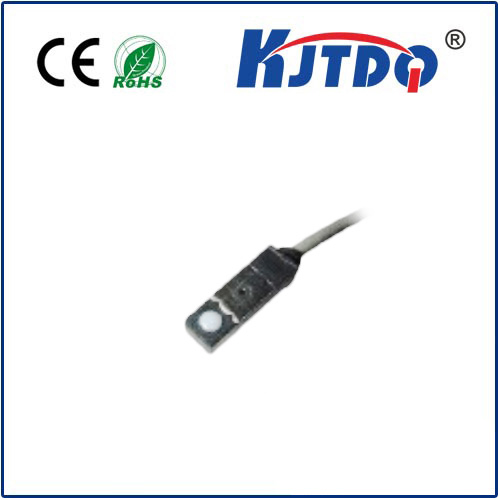
In the realm of industrial automation, precision and reliability are non-negotiable. The Proximity Sensor M4 LJ4A3 stands as a testament to engineering excellence, designed to meet the rigorous demands of modern manufacturing and control systems. This inductive proximity sensor, with its compact M4 threaded cylindrical housing, offers a robust solution for non-contact detection of metallic objects, ensuring seamless operations in diverse applications.
The core functionality of the M4 LJ4A3 lies in its ability to detect the presence or absence of a metal target without physical contact. This is achieved through an electromagnetic field emitted from the sensor's face. When a ferrous or non-ferrous metal object enters this field, it causes a change in the oscillation amplitude, which the sensor's circuitry detects and converts into a clear switching signal. This fundamental principle eliminates mechanical wear and tear, significantly enhancing the sensor's operational lifespan compared to mechanical limit switches. Its compact M4 size allows for installation in space-constrained environments where larger sensors cannot fit, providing designers with greater flexibility in machine layout.
One of the defining features of the LJ4A3 model is its exceptional sensing performance. Despite its miniature form factor, it delivers a stable and repeatable sensing distance. The sensor is typically shielded, meaning it can be mounted flush with a metal surface without false triggering from surrounding materials, a critical advantage in dense control panels or machinery. It commonly operates on a standard DC voltage range, such as 6-36V DC, and provides a solid-state output, either PNP (sourcing) or NPN (sinking), making it compatible with a wide array of programmable logic controllers (PLCs), frequency inverters, and other control units. The output is characterized by fast response times and high switching frequencies, capable of handling rapid production cycles without missing a beat.
Durability is engineered into every aspect of the M4 LJ4A3. Housed in a stainless steel or nickel-plated brass body, it is built to withstand the harsh conditions prevalent in industrial settings. It offers high resistance to vibrations, shocks, and ambient temperature variations. Many variants come with an IP67 or higher ingress protection rating, making them dust-tight and capable of withstanding temporary immersion in water. This resilience ensures consistent performance in challenging environments like automotive assembly lines, packaging machinery, material handling systems, and CNC machine tools.
The application spectrum for this sensor is remarkably broad. It is frequently deployed for precise position detection, such as verifying the presence of a metal part on a conveyor, confirming the end position of a cylinder, or counting metallic items. In robotic arms, these sensors provide crucial feedback for arm positioning and gripper operation. They are also integral in safety interlock systems, ensuring machine guards are correctly in place before operation commences. The non-contact nature makes them ideal for monitoring high-speed rotating components like shafts or gears, where physical contact is impossible or undesirable.
Integrating the Proximity Sensor M4 LJ4A3 into a system is straightforward. Its standard M4 thread allows for easy mounting using a locknut. Correct installation is key: ensuring the correct sensing distance, aligning the sensor face properly with the target, and considering the material and size of the target object for optimal performance. Wiring is simple, typically involving three wires for power, ground, and signal output. Adherence to the manufacturer's datasheet for electrical connections and environmental specifications is paramount for achieving the promised reliability and longevity.
When selecting a sensor for a specific task, the M4 LJ4A3 presents a compelling choice against alternatives like photoelectric or capacitive sensors. Its immunity to environmental factors such as dust, oil, and ambient light—which can plague optical sensors—gives it a decisive edge in dirty or humid industrial environments. Its exclusive response to metals also prevents unwanted triggering by non-metallic materials, ensuring operational accuracy.
In conclusion, the Proximity Sensor M4 LJ4A3 is more than just a component; it is a critical enabler of efficiency and intelligence in automated systems. Its combination of miniature size, robust construction, precise inductive sensing, and environmental resilience makes it an indispensable tool for engineers seeking to enhance machine performance, reduce maintenance downtime, and achieve higher levels of production quality. As industries continue to advance towards smarter, more connected factories, reliable foundational elements like the M4 LJ4A3 will remain at the core of innovative and dependable automation solutions.