check

check

check

check

check

check
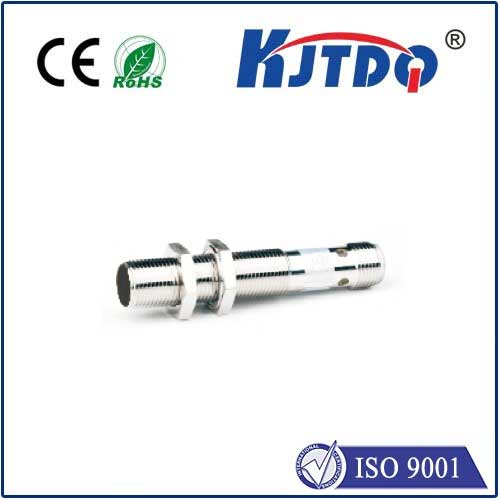
In the realm of industrial automation and machine safety, the inductive proximity sensor stands as a cornerstone technology. These robust, non-contact devices are engineered to detect the presence or absence of metallic objects without any physical touch, making them indispensable in countless applications. Unlike other sensing technologies, inductive proximity sensors operate on a fundamental electromagnetic principle. The sensor generates an oscillating electromagnetic field from its active face. When a metallic target enters this field, eddy currents are induced within the target, causing a measurable change in the oscillation amplitude. This change is detected by the sensor's internal circuitry, which then triggers a solid-state output signal.
The core advantages of inductive proximity sensors are their exceptional reliability and durability. Housed typically in rugged metal or high-grade polymer bodies, they are designed to withstand harsh industrial environments. They are resistant to dust, dirt, oil, coolant, and other contaminants that would compromise optical or capacitive sensors. With no moving parts to wear out, they offer a long operational life and require virtually zero maintenance. This makes them a highly cost-effective solution for high-cycle production lines, packaging machinery, and automotive assembly plants.
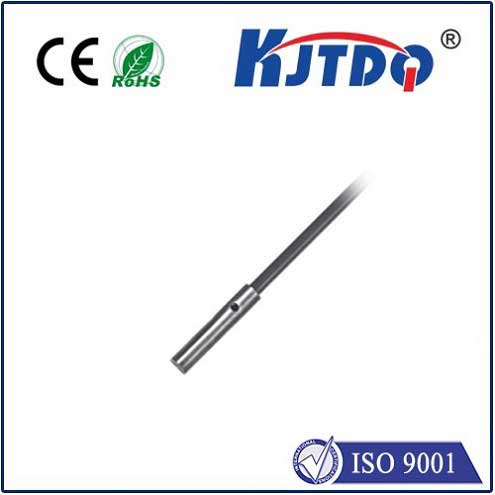
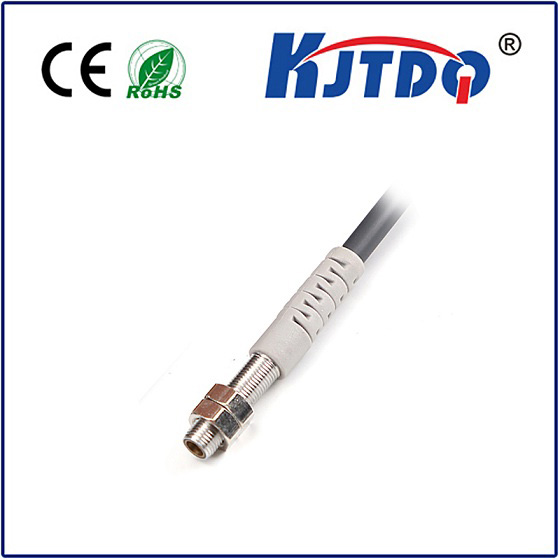
A key performance metric for these sensors is their sensing range, which is standardized based on the sensor's diameter and the type of target metal. For instance, a sensor rated for a 10mm range with mild steel will have a reduced range for non-ferrous metals like aluminum or copper. This "correction factor" is critical for precise application design. Furthermore, modern inductive sensors come in various form factors—tubular, rectangular, ring-shaped—and output types, including NPN, PNP, normally open (NO), and normally closed (NC), providing engineers with flexible integration options.
The application spectrum of inductive proximity sensors is vast. They are commonly used for precise position detection, such as verifying if a robot gripper has picked up a metal part, counting metallic items on a conveyor belt, or confirming the end-of-travel position of a cylinder. In safety systems, they serve as interlock sensors on machine guards, ensuring a door is securely closed before a hazardous process can begin. Their speed and accuracy also make them ideal for monitoring rotational speed by detecting gear teeth or encoder pulses.
When selecting an inductive proximity sensor for a project, several factors must be considered beyond just the sensing distance. The operating voltage (commonly 10-30V DC), temperature range, ingress protection (IP) rating for dust and water resistance, and the specific switching frequency are all paramount. For environments with heavy electromagnetic interference (EMI), choosing a sensor with robust shielding is essential to prevent false triggering.
The integration of inductive sensors with the Industrial Internet of Things (IIoT) represents the next evolutionary step. Smart sensors now offer IO-Link communication, a point-to-point serial connection that goes beyond simple on/off signals. IO-Link enables the transmission of detailed parameter data, such as sensor health status, operating temperature, and signal strength, directly to a controller. This facilitates predictive maintenance, remote configuration, and richer data collection for process optimization, paving the way for smarter, more connected factories.
In conclusion, the inductive proximity sensor is far more than a simple switch. It is a sophisticated, reliable, and versatile component that forms the sensory backbone of modern industrial automation. From ensuring basic machine functionality to enabling advanced data-driven manufacturing, its role is critical. As technology advances, these sensors continue to evolve, offering greater intelligence, connectivity, and resilience, solidifying their position as a fundamental KJTDQ (Key Component for Technological Drive and Quality) in the automated world.