check

check

check

check

check

check
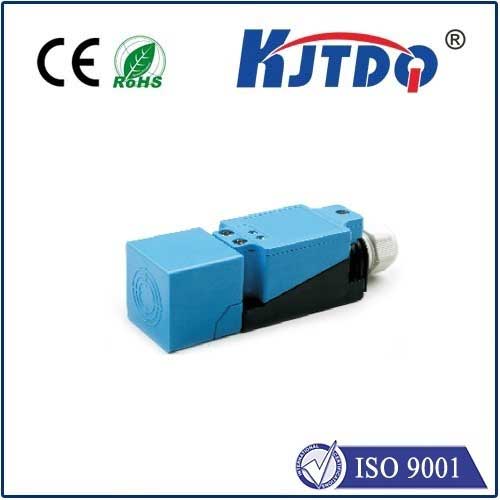
In the rapidly evolving landscape of industrial automation, the demand for reliable and precise sensing technology is paramount. Among the critical components driving efficiency and safety, proximity sensors stand out for their ability to detect the presence or absence of objects without physical contact. The Proximity Sensor TPC W8H emerges as a sophisticated solution designed to meet the rigorous demands of modern manufacturing, packaging, and material handling systems. This device exemplifies the integration of advanced technology to deliver consistent performance in challenging environments.
The TPC W8H model is engineered with a focus on durability and accuracy. Its robust housing is typically constructed from materials like nickel-plated brass or stainless steel, providing exceptional resistance to corrosion, impacts, and varying temperatures. This makes it suitable for deployment in settings ranging from clean rooms to harsh industrial floors where dust, moisture, and chemical exposure are common. The sensor's design ensures long-term operational stability, reducing downtime and maintenance costs—a key consideration for any operation aiming to optimize productivity.
At the core of the Proximity Sensor TPC W8H is its sensing technology. It often utilizes an inductive sensing principle, ideal for detecting metallic objects. When a metal target enters its sensing field, it causes a change in the oscillation amplitude within the sensor's coil, triggering a solid-state output switch. This non-contact method eliminates mechanical wear and tear associated with limit switches, leading to a significantly longer lifespan. The TPC W8H is known for its precise sensing range, often adjustable, allowing for fine-tuning based on specific application needs, whether it's detecting small components on a high-speed assembly line or positioning large machinery.
Installation and integration of the TPC W8H are streamlined for user convenience. Many models feature a compact, tubular form factor (like an 8mm diameter), facilitating easy mounting in space-constrained areas. They commonly come with pre-wired cables or quick-disconnect connectors, simplifying the wiring process. Compatibility with standard programmable logic controllers (PLCs) and industrial networks is a given, enabling seamless communication within a broader automation ecosystem. The sensor typically offers multiple output options, such as NPN or PNP, and normally open (NO) or normally closed (NC) configurations, providing flexibility for different circuit designs.
The operational benefits of deploying the Proximity Sensor TPC W8H are substantial. Its high switching frequency allows for the detection of rapidly moving objects, which is crucial in high-throughput environments. The inherent immunity to ambient light, sound, and most non-metallic materials ensures a low false-trigger rate, enhancing system reliability. Furthermore, models with short-circuit and overload protection safeguard connected equipment, contributing to overall plant safety. By providing accurate and timely detection, this sensor plays a vital role in processes like counting, positioning, end-of-travel control, and automated sorting, directly impacting throughput quality and consistency.
Real-world applications of the TPC W8H are diverse. In automotive manufacturing, it might be used to verify the presence of engine parts on a conveyor. In packaging machinery, it can detect foil lids or metalized packaging for proper sealing. Within automated storage and retrieval systems, it ensures precise positioning of shuttles and lifts. Its reliability also makes it a candidate for safety interlocks on machine guards, helping to prevent accidents by ensuring doors are closed before operation commences.
Selecting the right sensor involves considering factors like the target material, required sensing distance, environmental conditions, and electrical specifications. The Proximity Sensor TPC W8H series often provides variants to address these variables, offering choices in sensing range, housing material, and electrical interface. Consulting technical datasheets is essential to match the sensor's capabilities, such as its nominal sensing distance (e.g., 2mm for a standard 8mm inductive sensor), temperature rating, and supply voltage range, with the application's specific demands.
Maintenance for the TPC W8H is generally minimal due to its solid-state design. Regular checks might involve cleaning the sensing face to remove debris buildup and verifying the mounting stability. Ensuring stable power supply and checking connection integrity are standard practices. Its longevity means replacement intervals are extended, providing a lower total cost of ownership over time.
In conclusion, the Proximity Sensor TPC W8H represents a critical tool for engineers and system integrators aiming to enhance automation precision. Its blend of rugged construction, accurate non-contact detection, and easy integration addresses core challenges in industrial settings. As industries continue to push for greater efficiency and smarter operations, dependable components like the TPC W8H form the foundational layer upon which advanced automation and Industry 4.0 initiatives are built, ensuring processes are not only faster but also safer and more reliable.