check

check

check

check

check

check
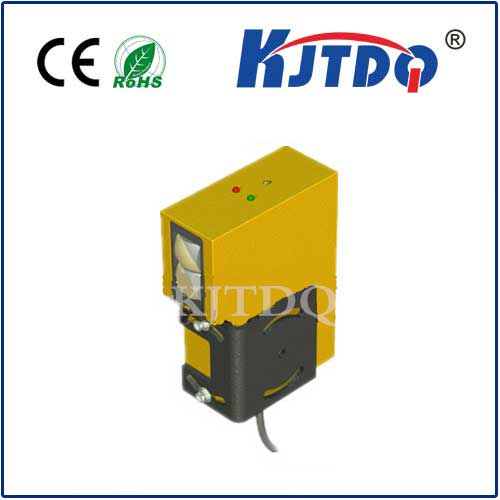
In the realm of automation and smart device design, the U Type infrared proximity sensor stands out as a pivotal component for non-contact detection. Unlike standard sensors, its unique "U" shaped structure houses both the infrared emitter and receiver on opposing arms, creating a precise detection gate. When an object passes through this gate, it interrupts the infrared beam, triggering an immediate and accurate response. This design principle offers distinct advantages, making it a preferred choice in various demanding industrial and commercial scenarios.
The core operation hinges on modulated infrared light. The emitter sends out a specific frequency of IR light, which the receiver is tuned to detect. Ambient light or other IR sources typically operate at different frequencies, allowing the sensor to filter out interference effectively. This modulation-demodulation technique ensures high reliability and stability, even in environments with fluctuating light conditions. The "U" shape provides a well-defined sensing path, leading to consistent performance and reduced false triggers compared to some reflective sensor types.
One of the primary applications of U type infrared sensors is in object counting and sorting on assembly lines. In packaging facilities, they accurately tally products moving on conveyors. Their ability to detect objects regardless of surface color, texture, or material—opaque objects that interrupt the beam—makes them incredibly versatile. They are indispensable in automated sorting systems for logistics, where precision and speed are non-negotiable.
Safety and security systems also heavily rely on this technology. They are integrated into safety curtains for automated machinery, such as press brakes or robotic cells, where breaking the infrared beam instantly halts operation to prevent accidents. Similarly, in access control and automatic doors, the U type sensor reliably detects a person's approach or passage, enabling smooth and safe operation. Their robustness ensures long-term performance in high-traffic areas.
Another significant application is in the realm of liquid level detection within transparent or translucent containers. Positioned on the outside of a tank or bottle, the sensor can detect the presence or absence of liquid by the change in infrared transmission through the container wall. This non-invasive method is crucial in pharmaceutical, beverage, and chemical industries, maintaining sterility and preventing contamination.
When selecting a U type infrared proximity sensor, several technical parameters require careful consideration. Sensing distance, or the gap between the two arms, must match the application's physical constraints. Response time is critical for high-speed counting or rapid machinery. Environmental factors like temperature range, dust, and moisture resistance (often indicated by an IP rating) determine suitability for harsh industrial settings. Furthermore, output types—such as NPN, PNP, or analog—must be compatible with the existing control system, like a PLC.
Installation and alignment are straightforward but vital for optimal function. The sensor must be securely mounted to prevent vibration from misaligning the emitter and receiver. The target object should pass cleanly through the sensing gap without grazing the arms. Regular maintenance involves keeping the optical lenses clean from dust, oil, or debris that could attenuate the infrared signal.
Compared to other sensing technologies like ultrasonic, capacitive, or photoelectric reflective sensors, the U type infrared beam sensor excels in applications requiring precise position detection through a defined aperture. It is less susceptible to the target's surface properties than reflective sensors and offers faster response than ultrasonic sensors for small object detection. Its limitation lies in requiring an object to physically pass between its arms, which defines its specific use case.
The evolution of this technology continues, with modern versions incorporating advanced features. Some models now offer background suppression for even better noise immunity, while others come with adjustable sensitivity or built-in timers for delay functions. The integration of IO-Link communication is also emerging, allowing for digital parameter setting, real-time diagnostics, and seamless data integration into Industry 4.0 frameworks.
In conclusion, the U type infrared proximity sensor is a testament to elegant and effective engineering. Its simple yet robust principle of operation solves complex detection challenges across manufacturing, safety, and process control. By providing reliable, non-contact sensing in a compact form factor, it remains a fundamental building block in creating more efficient, safe, and intelligent automated systems. Understanding its capabilities and proper implementation is key for engineers and designers aiming to enhance their projects with reliable object detection.