check

check

check

check

check

check
In the rapidly evolving landscape of industrial automation, the demand for components that deliver unwavering accuracy, durability, and seamless integration has never been higher. Among the critical elements that form the backbone of modern production lines and machinery are proximity sensors. Specifically, the E2B Series proximity sensors have emerged as a prominent solution, engineered to meet the rigorous demands of diverse industrial environments. This article delves into the core features, applications, and distinct advantages of these sensors, highlighting why they are a preferred choice for engineers and system integrators worldwide.
Proximity sensors are non-contact devices designed to detect the presence or absence of an object within a specific range without physical contact. The E2B Series exemplifies this technology with its robust construction and advanced sensing capabilities. Typically utilizing inductive, capacitive, or magnetic principles, these sensors can detect metallic and, in some variants, non-metallic objects with high precision. The hallmark of the E2B Series lies in its consistent performance under challenging conditions, including exposure to dust, moisture, oil, and electromagnetic interference. This resilience is achieved through high-quality housing materials, often stainless steel or rugged plastics, and sophisticated internal circuitry that ensures stable operation across a wide temperature range.
One of the defining characteristics of the E2B Series is its versatility in sensing distances and output configurations. Available in various sensing ranges, from a few millimeters to several tens of millimeters, these sensors can be tailored to specific application needs. Whether it's detecting the position of a metal gear tooth on a high-speed assembly line or monitoring the level of liquid in a tank through a non-metallic container wall, the E2B Series offers a model suited for the task. Furthermore, they come with multiple output types, including NPN, PNP, analog, and IO-Link compatible versions. The integration of IO-Link communication, a key feature in modern Industry 4.0 setups, allows for advanced parameter setting, real-time diagnostics, and seamless data exchange with higher-level control systems, facilitating predictive maintenance and reducing downtime.
The application spectrum for E2B Series proximity sensors is remarkably broad. In automotive manufacturing, they are indispensable for robotic welding arms, ensuring precise part positioning. In packaging machinery, they count products on conveyor belts reliably. In material handling, they detect pallet positions for automated storage and retrieval systems. Their use extends to food and beverage processing, where models with hygienic designs and resistance to washdown chemicals are crucial. The sensors' ability to function without physical contact eliminates wear and tear, granting them a significantly longer operational lifespan compared to mechanical limit switches, which translates to lower total cost of ownership and reduced maintenance schedules.
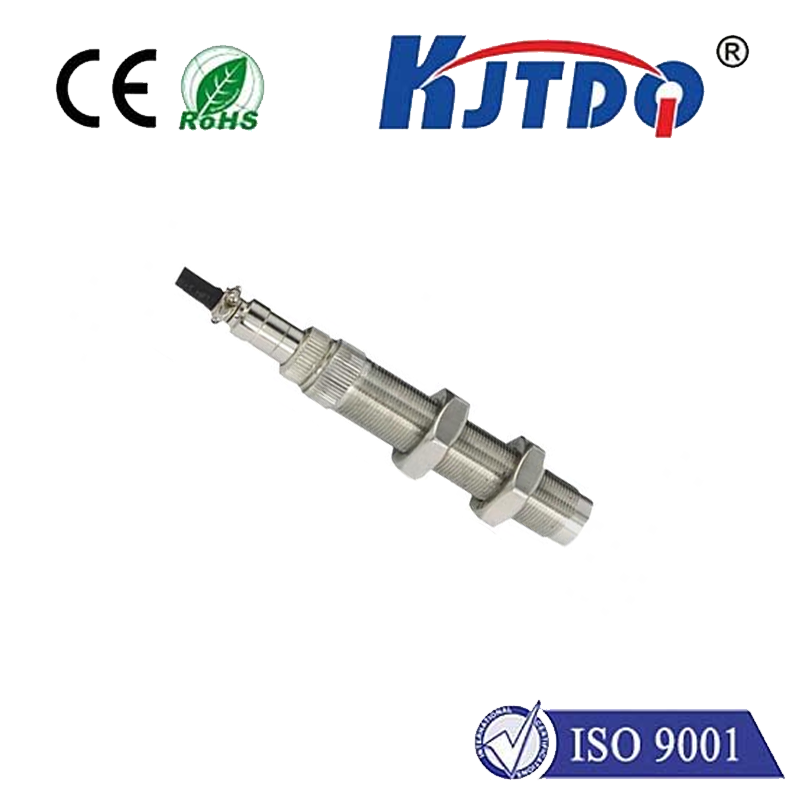
Installation and integration are streamlined with the E2B Series' design. Many models feature standardized housing sizes (e.g., M8, M12, M18, M30 threaded barrels) that fit into common industrial mounting brackets. LED status indicators provide immediate visual feedback on operational state and detection events, simplifying commissioning and troubleshooting. The sensors are also designed for easy wiring, with pre-wired connectors or quick-disconnect options available, saving valuable installation time on the factory floor.
When selecting a proximity sensor, factors such as the target material, required sensing distance, environmental conditions, and electrical interface are paramount. The E2B Series addresses these considerations with a comprehensive catalog, allowing specifiers to find an optimal match. For instance, inductive models are ideal for ferrous and non-ferrous metals, while capacitive models can detect plastics, wood, and liquids. The series also includes specialized versions with extended temperature ratings or enhanced resistance to welding spatter, making them suitable for even the most demanding foundry or metal fabrication settings.
In conclusion, the E2B Series proximity sensors represent a convergence of reliability, precision, and adaptability. Their robust design ensures consistent performance in harsh industrial atmospheres, while their technological features align with the trends toward connectivity and smart manufacturing. By providing accurate, non-contact detection, they enhance the safety, efficiency, and productivity of automated systems. For industries striving to optimize their operations and embrace the future of automation, integrating components like the E2B Series is not just an upgrade—it's a strategic step toward building more resilient and intelligent production ecosystems. Their proven track record in countless applications worldwide stands as a testament to their engineering excellence and vital role in the industrial landscape.