check

check

check

check

check

check
In the complex and demanding world of industrial automation, reliability and simplicity are not just desirable traits—they are essential. Among the myriad of components that keep production lines moving, sensors play a pivotal role. The 2-wire inductive proximity sensor stands out as a fundamental, robust, and incredibly efficient device for countless detection tasks. Its design philosophy centers on minimalism and maximum performance, making it a cornerstone in modern manufacturing, packaging, material handling, and automotive assembly.
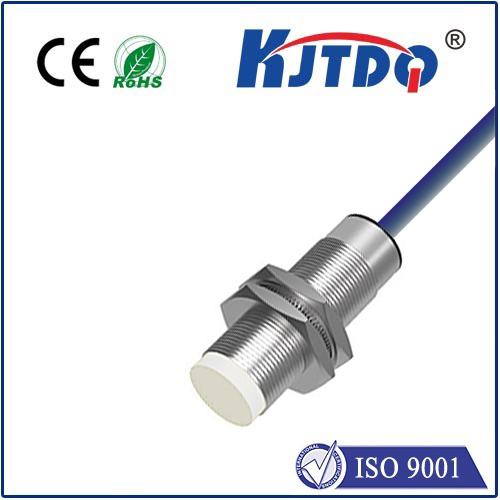
Unlike its 3-wire or 4-wire counterparts, the 2-wire inductive sensor integrates seamlessly into control circuits with remarkable ease. It requires only two connection wires: one for power and one to carry the switched signal. This design eliminates the need for a separate load power supply wire, simplifying wiring diagrams, reducing installation time, and minimizing potential points of failure. The sensor connects in series with the load, such as a PLC input, relay, or indicator lamp. When a metallic target enters its sensing range, the sensor switches its internal state, allowing current to flow and complete the circuit, thereby signaling the target's presence. This straightforward operation is its greatest strength.
The core technology behind this device is electromagnetic induction. The sensor's face contains an oscillator coil that generates a high-frequency electromagnetic field. When a ferrous or non-ferrous metal object (like steel, aluminum, brass, or copper) enters this field, eddy currents are induced on the surface of the target. These currents absorb energy from the oscillator, causing its amplitude to dampen or collapse. This change is detected by the sensor's evaluation circuit, which triggers a solid-state switch. The entire process is non-contact, meaning there is no physical wear on the sensor or the target, leading to exceptionally long service life and maintenance-free operation.
Key advantages of the 2-wire inductive proximity sensor are numerous. First is its wiring simplicity, which translates directly into lower installation costs and reduced cabinet space. Second is its inherent durability. Typically housed in robust metal or high-grade plastic bodies, these sensors are built to withstand harsh industrial environments, including exposure to coolants, oils, dust, and mechanical vibrations. Many models offer IP67 or higher ingress protection ratings, making them suitable for washdown areas. Furthermore, they provide high switching frequencies, allowing them to detect rapidly moving objects on high-speed production lines.
When selecting a 2-wire inductive sensor, several critical specifications must be considered. The sensing range, typically from 1 to 15 millimeters for standard models, must be appropriate for the application. The mounting style—flush, non-flush, or cylindrical—affects the sensing range and installation. Flush-mounted sensors can be installed embedded in metal without loss of function, while non-flush models offer longer ranges. The operating voltage range (commonly 10-30V DC or 20-250V AC) must match the control system. It is also vital to ensure the sensor's residual current or leakage current in the "off" state is low enough not to inadvertently activate the connected load, a characteristic inherent to 2-wire designs.
Applications are virtually limitless. They are used for simple tasks like part presence verification on a conveyor, counting metal bottles, or detecting the end position of a cylinder. In machine tools, they confirm the position of clamps or tool holders. In automated warehouses, they monitor the position of shuttle carts. Their reliability makes them ideal for safety interlocks on guards and doors. The simplicity of the 2-wire system is particularly valued in applications where space is constrained or where a large number of sensors are deployed, as the wiring savings are substantial.
In conclusion, the 2-wire inductive proximity sensor embodies the principle of achieving more with less. It offers a perfect blend of ruggedness, reliability, and straightforward integration. For engineers and maintenance personnel seeking a no-fuss, dependable solution for metallic object detection, it remains an indispensable tool. By reducing complexity at the connection point, it enhances overall system reliability, contributing to higher uptime and efficiency in automated processes worldwide. Its continued evolution with features like improved noise immunity and extended temperature ranges ensures it will remain a vital component in the industrial landscape for years to come.