check

check

check

check

check

check
In the rapidly evolving landscape of industrial automation and smart technology, the demand for components that offer both speed and accuracy has never been higher. Among these critical components, the high speed proximity sensor stands out as a fundamental enabler of efficiency and reliability. This device, often operating silently and unseen, is pivotal in countless applications, from manufacturing assembly lines to advanced robotics and automotive systems. Its primary function is to detect the presence or absence of an object within a specified range without any physical contact, doing so at remarkably high speeds.
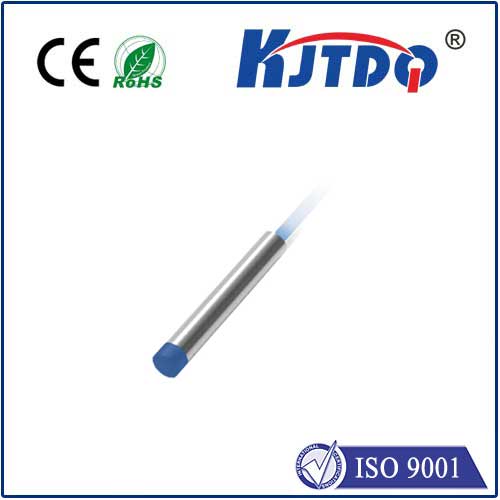
The core technology behind a high speed proximity sensor typically involves electromagnetic fields, capacitive changes, or ultrasonic waves. Inductive sensors, for instance, are widely used for detecting metallic objects. They generate an oscillating electromagnetic field. When a metallic target enters this field, it induces eddy currents within the target, which in turn dampens the sensor's oscillation. This change is detected and converted into a switch signal. The speed at which this detection and signal transmission occurs is what defines a sensor as "high-speed." Modern iterations can achieve response times in the microsecond range, allowing for the monitoring of objects moving at exceptionally high velocities. This capability is crucial in high-throughput environments where even a millisecond of delay can lead to production bottlenecks or quality control issues.
The integration of a high speed proximity sensor into a system brings multifaceted benefits. Firstly, it significantly enhances operational precision. In packaging machinery, for example, these sensors can accurately detect the position of items on a conveyor belt traveling at high speeds, ensuring precise timing for sorting, labeling, or boxing operations. This precision minimizes material waste and improves product consistency. Secondly, it boosts overall system efficiency. By enabling faster cycle times and reducing downtime associated with mechanical wear (since there is no physical contact), these sensors contribute directly to higher production rates and lower maintenance costs. In robotic arms used for pick-and-place tasks, high-speed sensors provide the real-time feedback necessary for swift and accurate movements, increasing the robot's operational speed and dexterity.
Furthermore, the robustness and durability of modern high speed proximity sensors make them suitable for harsh industrial environments. They are often designed with rugged housings that offer resistance to dust, moisture, oils, and mechanical impacts. This reliability ensures continuous operation in challenging conditions, from food processing plants with frequent washdowns to metalworking shops filled with conductive chips and coolants. The non-contact nature of their operation also eliminates concerns about sensor or target wear, leading to a longer service life and reduced replacement frequency.
The application scope of the high speed proximity sensor is vast and continually expanding. In the automotive industry, they are integral to automated production lines for tasks like verifying the presence of engine components or monitoring robotic welding arms. In the realm of consumer electronics, they facilitate the ultra-fast assembly of miniature circuit boards. Beyond traditional manufacturing, these sensors are key in emerging fields such as autonomous mobile robots (AMRs) within warehouses, where they provide essential collision avoidance and navigation data at high speeds. They also play a role in security systems, enabling high-speed door monitoring and access control.
When selecting a high speed proximity sensor for a specific application, several technical parameters require careful consideration. The sensing distance, or range, must be appropriate for the task. The response time, often listed in specifications, dictates how quickly the sensor can detect a change and output a signal. Environmental factors like temperature extremes and potential interference from other electrical equipment must also be accounted for. Additionally, the output type—whether it's a digital signal (PNP/NPN) or an analog signal—needs to be compatible with the host controller or PLC.
Looking ahead, the evolution of the high speed proximity sensor is closely tied to trends like Industry 4.0 and the Industrial Internet of Things (IIoT). Future sensors are expected to feature enhanced intelligence, with built-in diagnostics and the ability to communicate performance data directly to networked systems for predictive maintenance. This connectivity will allow for even finer optimization of entire production processes. Miniaturization is another ongoing trend, allowing these powerful sensors to be installed in increasingly compact machinery and devices.
In conclusion, the high speed proximity sensor is far more than a simple switch. It is a sophisticated, high-performance component that sits at the heart of modern automated systems. By delivering rapid, reliable, and non-contact detection, it empowers industries to achieve new levels of precision, speed, and operational efficiency. As technology advances, the capabilities and applications of these essential sensors will only continue to grow, solidifying their role as indispensable tools in the pursuit of smarter and more productive automation.