check

check

check

check

check

check
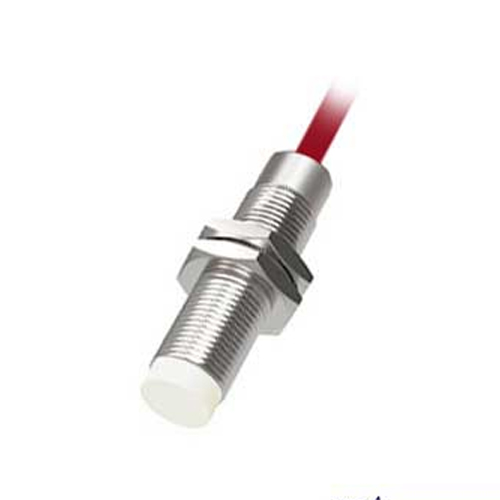
In the realm of industrial automation and electronic control, the precise detection of objects is paramount. Among the various sensor technologies available, the NPN 3-wire configuration stands out for its reliability and widespread application, particularly in scenarios where a "no" or "non-proximity" sensing state is a critical part of the logic. This article delves into the workings, advantages, and typical use cases of this specific sensor type, clarifying common points of confusion.
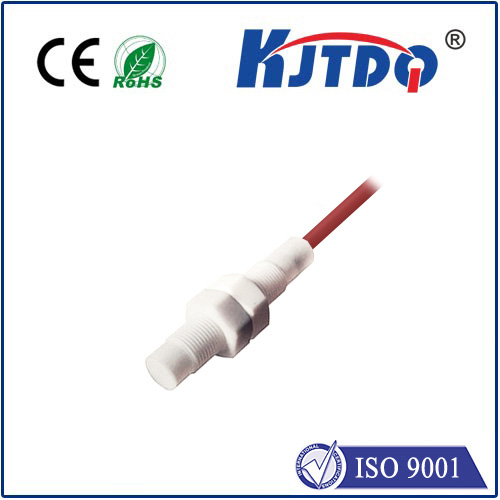
First, it's essential to break down the terminology. "NPN" refers to the type of transistor output used within the sensor. In an NPN sensor, the output acts as a switch to ground (negative voltage). When the sensor is active (detects a target), it connects the output wire to the ground, allowing current to sink into the sensor. This is often called a "sinking" output. The "3-wire" designation indicates the power and signal wiring: one wire for positive supply voltage (typically +12V or +24V DC), one wire for ground (0V), and one wire for the switched output signal. The phrase "no proximity sensor" or "normally open" (NO) describes the electrical state of the output when no target is present. In a "NO" configuration, the output circuit is open (off) when the sensor is not activated. It only closes (turns on, allowing current to flow) when a target enters its sensing range.
So, an NPN 3-wire NO proximity sensor remains inactive (output off) until it detects a metallic or other suitable object within its specified range. Upon detection, its internal NPN transistor switches, connecting the output signal line to ground, thus completing a circuit to a controller like a PLC (Programmable Logic Controller). This change in state from open to closed is the primary signal used for counting, positioning, or safety interlocking.
Why choose this specific configuration? The NPN sinking output is historically common and compatible with many PLC input modules designed to accept a sinking signal. The 3-wire setup provides a dedicated output line, offering a clear and stable signal compared to 2-wire sensors. The "Normally Open" logic is intuitive for many control applications where an action should be triggered specifically by the *presence* of an object. For instance, a machine cycle might only start when a part is confirmed in place (sensor activates, output closes).
A key area of application is in safety or monitoring circuits designed around a "fail-safe" principle. A "no proximity" state can be used to indicate a safe condition. For example, a sensor might monitor a guard door. When the door is properly closed (in proximity to the sensor), the output is active. If the door opens (no proximity), the output switches off, which can be programmed to halt machinery immediately. This use of the "no" state as the trigger for a safety stop is a critical design pattern.
Installation and wiring require attention. The brown wire is usually connected to the positive voltage supply, the blue wire to the ground, and the black wire is the NPN output signal. This black wire is connected to the load (e.g., a PLC input). The other side of that PLC input is connected to the positive supply. When the sensor activates, it sinks current from the PLC input, through the black wire, to ground, registering as an "ON" signal. It is crucial to ensure the power supply voltage matches the sensor's rating and that the load current does not exceed the sensor's switching capacity.
Troubleshooting often involves checking for power at the sensor, verifying the target is within range and material specifications, and using a multimeter to see if the output voltage on the black wire switches relative to ground when a target is presented. Understanding that an NPN NO output will show supply voltage when inactive (open circuit) and near 0V when active (connected to ground) is a fundamental diagnostic step.
In contrast to PNP (sourcing) or NC (Normally Closed) sensors, the choice depends entirely on the control system's requirements and the desired logic. NPN 3-wire NO sensors form a robust, well-understood backbone for countless detection tasks in packaging, material handling, assembly, and automated machinery. Their clear operational logic—silent until detection—makes them a reliable component in building efficient and safe automated systems. Engineers and technicians benefit from a solid grasp of this technology to select the right sensor for the job, ensuring seamless integration and operational reliability.