check

check

check

check

check

check
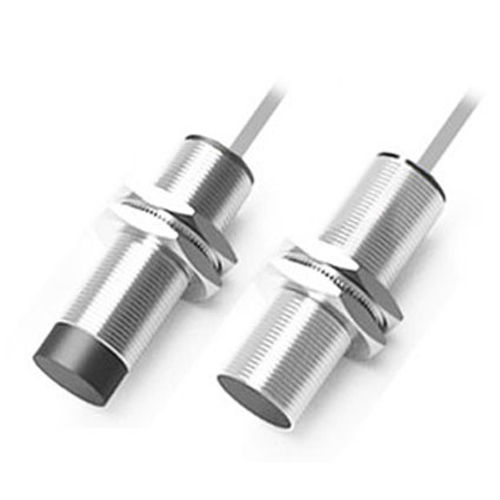
In the fast-paced world of industrial automation, precision and reliability are non-negotiable. Among the myriad of components that keep modern machinery humming, the 4mm M12 proximity sensor switch stands out as a critical player. This compact yet powerful device is engineered to detect the presence or absence of objects without physical contact, making it indispensable in applications ranging from assembly lines to robotic systems.
The 4mm sensing distance of this M12 inductive proximity sensor is a key feature that defines its utility. This short-range detection is ideal for tight spaces and high-precision tasks where accuracy is paramount. Whether it's counting small parts on a conveyor belt, verifying the position of a component in a CNC machine, or ensuring proper alignment in packaging equipment, the 4mm range offers the exact sensitivity needed. The M12 form factor, with its 12mm threaded cylindrical housing, provides a standardized and robust design that is easy to install and integrates seamlessly into existing industrial setups. Its compact size allows for mounting in confined areas where larger sensors would be impractical.
Durability is a hallmark of high-quality 4mm M12 proximity switches. Typically built with stainless steel or nickel-plated brass housings, they are designed to withstand harsh industrial environments. They are resistant to dust, moisture, oils, and coolants, often boasting an IP67 or higher ingress protection rating. This resilience ensures consistent performance in challenging conditions, from automotive manufacturing plants to food processing facilities, minimizing downtime and maintenance costs.
The operating principle is based on electromagnetic induction. The sensor generates an oscillating electromagnetic field from its face. When a metallic object—such as steel, aluminum, or brass—enters this field within the 4mm range, it causes a change in the oscillation amplitude. This change is detected by the sensor's internal circuitry, which then triggers a solid-state switch to change its output state. This non-contact method eliminates mechanical wear and tear, leading to a significantly longer operational lifespan compared to mechanical limit switches.
Wiring and output configuration are straightforward, contributing to its widespread adoption. The standard M12 connector, typically with 4 pins, offers various output types to match different control systems. Common options include NPN (sinking) and PNP (sourcing) transistor outputs, as well as analog variants for distance-proportional signals. The NPN type is often used in Asian and European markets, while PNP is popular in North America. This flexibility allows engineers to select the perfect model for their PLC (Programmable Logic Controller) or other control units without needing complex adapters.
When selecting a 4mm M12 proximity sensor, several technical specifications demand attention. The sensing object material is crucial; standard inductive sensors detect ferrous metals best, while all-metal versions are available for non-ferrous targets. The switching frequency, which can reach several kilohertz, determines how fast the sensor can detect objects passing by—a vital factor for high-speed production lines. Additionally, factors like voltage range (commonly 10-30V DC), temperature tolerance, and short-circuit protection should align with the application's specific demands.
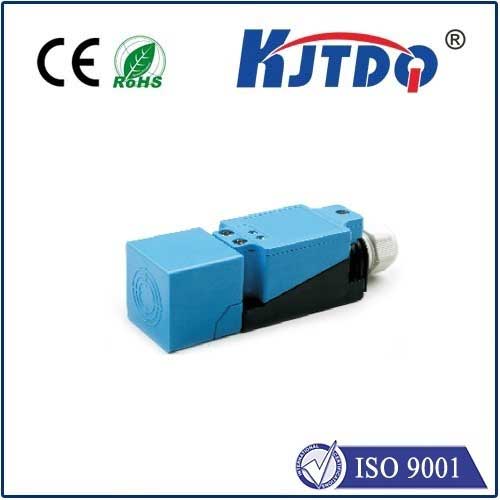
Installation best practices are simple but essential. Ensuring the sensor is mounted securely and aligned correctly with the target object is fundamental. It's also important to maintain the specified sensing distance and account for any lateral clearance needed from surrounding metal to prevent false triggering. For optimal performance in detecting very small objects, choosing a sensor with a reduced sensing face or a specialized flat-pack design can be beneficial.
The applications for this sensor are vast and varied. In electronics manufacturing, it precisely positions circuit boards. In automotive robotics, it confirms the grip of a robotic arm on a tiny fastener. In pharmaceutical packaging, it verifies the presence of a vial cap. Its reliability makes it a cornerstone for safety interlocks, position verification, and end-of-stroke detection.
Looking ahead, the integration of IO-Link communication into M12 proximity sensors is a growing trend. This smart sensor technology enables digital parameter setting, real-time diagnostics, and condition monitoring, paving the way for predictive maintenance and Industry 4.0 data-driven environments. While a standard 4mm M12 switch provides excellent basic functionality, these intelligent versions offer enhanced capabilities for the factories of the future.
In conclusion, the 4mm M12 proximity sensor switch is more than just a component; it is a testament to the precision engineering that drives modern industry. Its combination of compact size, robust construction, reliable non-contact sensing, and easy integration makes it a versatile and essential tool for engineers and technicians worldwide. By understanding its features and proper application, businesses can enhance efficiency, improve product quality, and build more resilient automated systems.