check

check

check

check

check

check
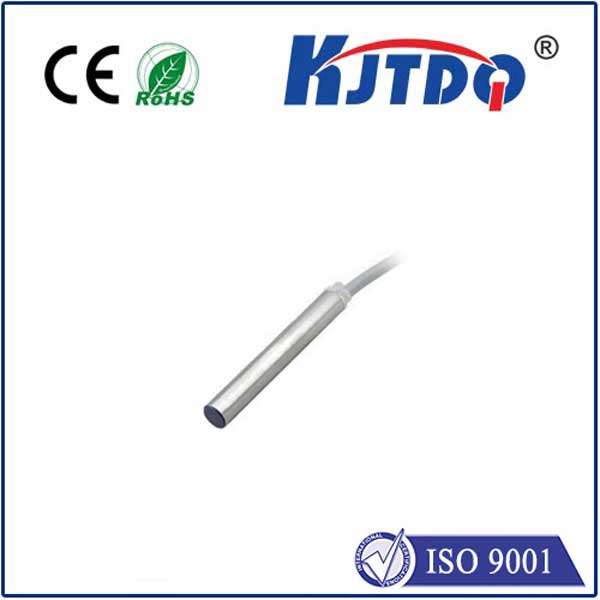
In industrial automation and machinery, achieving reliable, non-contact detection of metallic objects is crucial for efficiency, safety, and process control. Among the various sensing technologies available, the inductive proximity sensor stands out for its robustness and precision. Specifically, the 6mm sensing range variant represents a perfect balance between compact size and effective performance, making it an indispensable component in countless applications.
An inductive proximity sensor operates on a fundamental electromagnetic principle. It contains a coil wound around a ferrite core, which is part of an oscillator circuit. When an AC current passes through this coil, it generates an alternating electromagnetic field at the active face of the sensor. When a conductive metal object enters this field, eddy currents are induced on the surface of the object. These eddy currents draw energy from the sensor's oscillator, causing a change in its amplitude. The sensor's internal circuitry detects this amplitude change and triggers a solid-state switch, sending an output signal. This entire process happens without any physical contact, ensuring zero wear and tear on the sensor or the target.
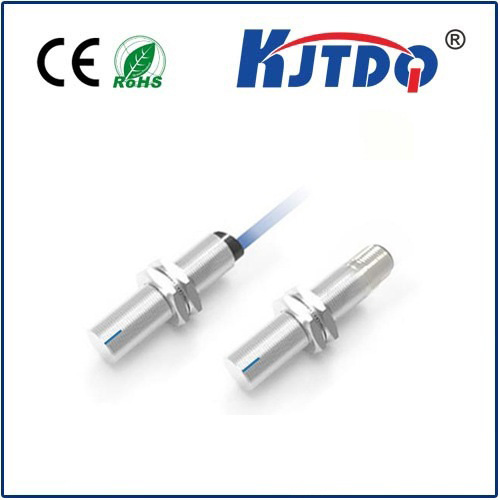
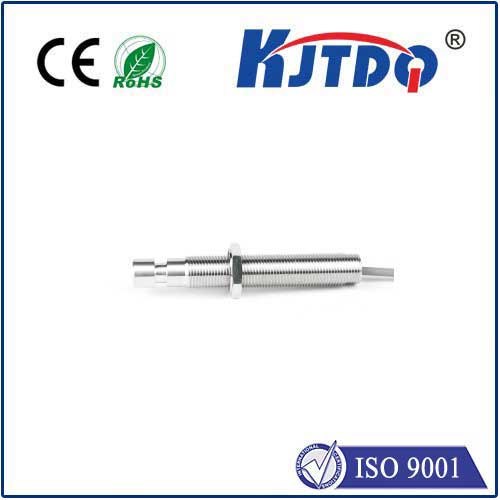
The 6mm nominal sensing distance is a key specification for this category. This range is ideal for applications where space is at a premium but reliable detection is non-negotiable. Common targets include small machine parts, fasteners, actuator positions, and metal flags on rotating shafts. The sensor's compact housing, often in cylindrical M8 or M12 formats, allows for easy integration into tight spaces on machine tools, assembly robots, conveyor systems, and packaging equipment. Despite its small size, a high-quality 6mm inductive sensor offers excellent repeatability, meaning it consistently detects an object at the same point every time, which is vital for precision automation.
Selecting the right 6mm inductive sensor involves considering several technical parameters beyond just the sensing range. The first is the target material. Standard sensors are typically tuned for mild steel and offer a nominal sensing distance (Sn) of 6mm. For other metals, a reduction factor applies; for instance, stainless steel might be detected at approximately 0.8 times Sn (around 4.8mm), while brass or aluminum might be 0.4-0.5 times Sn. It is essential to consult the manufacturer's datasheet for exact figures. The second critical factor is the output type. Common configurations include NPN (sinking) and PNP (sourcing) transistor outputs, as well as Normally Open (NO) or Normally Closed (NC) switching logic, which must match the control system's input card requirements.
Environmental robustness is another hallmark of these sensors. Most are rated IP67 or higher, making them resistant to dust ingress and capable of withstanding temporary immersion in water. This allows them to perform reliably in harsh industrial environments with exposure to coolants, oils, and metal chips. Furthermore, they are immune to ambient light, unlike optical sensors, and are unaffected by most non-metallic materials like plastic, wood, or liquids passing through their field. This ensures a very low false-trigger rate.
Installation and setup are straightforward but require attention to detail. For flush-mountable sensors, they can be installed level with a metal mounting bracket without a loss of sensing range. Non-flush models require a clear area around the sensing face to achieve their rated 6mm distance. Proper alignment with the target is also crucial for optimal performance. Users should always ensure the power supply voltage (commonly 10-30V DC) matches the sensor's specification and that the load current does not exceed its maximum rating.
From monitoring the position of a pneumatic cylinder to detecting the presence of a metal cap on a bottle, the applications for a 6mm inductive proximity sensor are vast. In CNC machines, they provide tool breakage detection or confirm workpiece clamping. In material handling, they count metal parts on a conveyor. Their speed and reliability make them perfect for high-cycle operations. When integrated into a system, they contribute significantly to predictive maintenance strategies by providing real-time data on machine component movement, helping to prevent unplanned downtime.
In conclusion, the inductive proximity sensor with a 6mm range is a workhorse of modern industrial sensing. Its combination of non-contact operation, compact design, material specificity, and environmental durability provides a reliable and cost-effective solution for precise metallic object detection. By understanding its operating principles, key selection criteria, and installation best practices, engineers and technicians can leverage this powerful tool to enhance automation system performance, improve product quality, and boost overall operational efficiency.