check

check

check

check

check

check
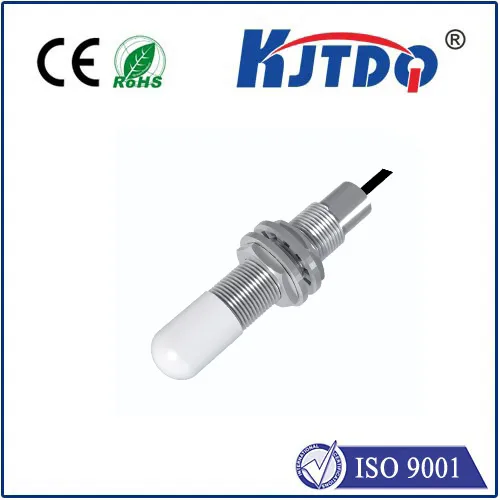
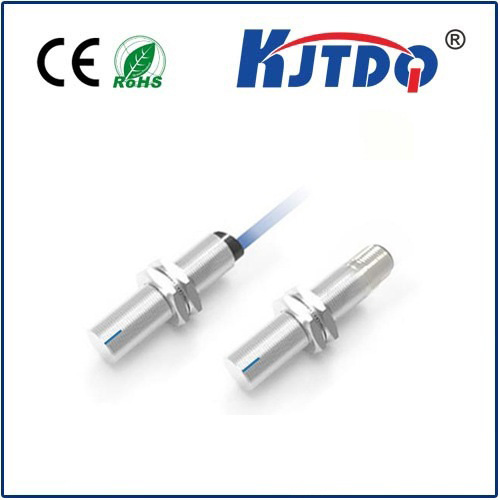
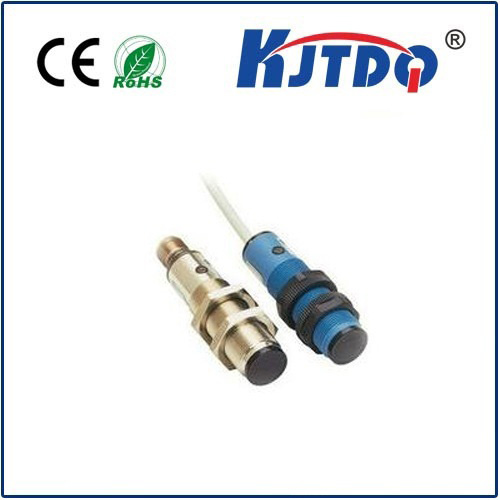
In industrial automation and electronic control systems, proximity sensors play a crucial role in non-contact detection. Among the various types available, NPN Normally Closed (NC) proximity sensors represent a specific and vital configuration for many applications. Understanding their detection principle, wiring, and practical use cases is essential for engineers and technicians.
An NPN NC proximity sensor is a three-wire solid-state electronic device. The "NPN" designation refers to the type of transistor output used in the sensor's switching circuit. In an NPN transistor, the load is connected between the positive supply voltage (Vcc or +V) and the collector of the transistor. The emitter is connected to the negative or ground (0V). The "NC" or Normally Closed terminology describes the default state of the sensor's output signal circuit when no target is present. In an NC configuration, the output circuit is closed, allowing current to flow when the sensor is in its idle state (no target detected). When a target enters the sensing range, the output circuit opens, stopping the current flow.
The detection mechanism typically relies on electromagnetic fields, capacitive changes, or ultrasonic waves, depending on the sensor technology (inductive, capacitive, or ultrasonic). For inductive NPN NC sensors, which are common for detecting metallic objects, an oscillating electromagnetic field is generated at the sensing face. When a metal target enters this field, it causes eddy currents that dampen the oscillation. This change is detected by the sensor's internal circuitry, which triggers the switching action of the NPN output transistor. For the NC version, this action opens the circuit between the output wire (usually black) and the negative/ground wire.
Wiring an NPN NC sensor correctly is fundamental. The three wires are typically brown, blue, and black. The brown wire connects to the positive DC supply voltage (e.g., +12V or +24V). The blue wire connects to the power supply's negative or ground (0V). The black wire is the signal output wire. In an NPN NC setup, when idle, the black wire is internally connected to the blue wire (ground/negative). This creates a closed circuit to the load, which must be connected between the positive supply and the black wire. When the sensor detects a target, the internal NPN transistor switches, disconnecting the black wire from ground, thus opening the circuit and turning the load "OFF". This "signal off when detecting" behavior is a key characteristic of an NC sensor and is chosen for safety or logic design reasons.
The choice between NPN NC and other configurations like PNP or Normally Open (NO) depends on the control system's requirements. NPN sinking outputs are traditionally common in certain regions and systems. The NC function is often selected for fail-safe applications. For instance, if a sensor is monitoring a safety guard door, using an NC configuration means that a cut wire, power loss, or sensor failure will cause the output circuit to open (mimicking the "target detected" state), which can be programmed to halt a machine, ensuring safety. This "broken wire detection" capability is a significant advantage.
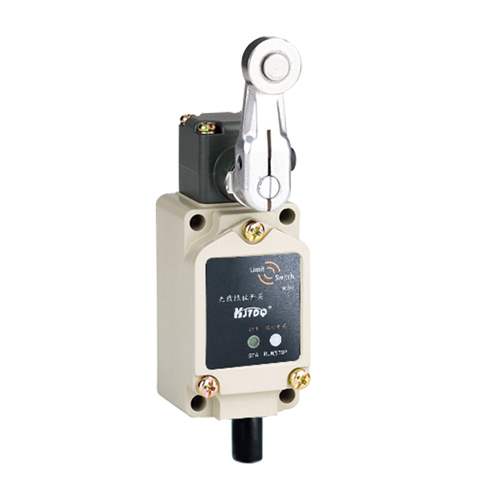
In practical applications, NPN NC proximity sensors are extensively used. On assembly lines, they can detect the absence of a metal component. If a part is missing (target not present), the NC circuit remains closed, sending a continuous signal to the controller to stop the line or trigger an alarm. In automated packaging, they can verify that a metallic seal is properly applied. In robotic arms, they serve as end-position limit switches. When the arm reaches its home position (target present at the sensor), the NC circuit opens, signaling the controller to stop the drive motor.
When integrating these sensors, considerations include sensing range, target material, supply voltage stability, and environmental factors like temperature, moisture, and electrical noise. Shielding is also important; shielded (flush-mountable) sensors can be embedded in metal without affecting operation, while unshielded sensors offer longer ranges. Regular testing and maintenance are recommended to ensure the NC fail-safe mechanism remains functional.
In conclusion, NPN NC proximity sensors provide a reliable and safe detection solution characterized by their sinking output and normally closed switching logic. Their operation, where detection opens the signal circuit, makes them ideal for critical monitoring and fail-safe conditions in industrial automation. Proper selection, wiring, and application understanding are key to leveraging their full potential for efficient and secure system design.