check

check

check

check

check

check
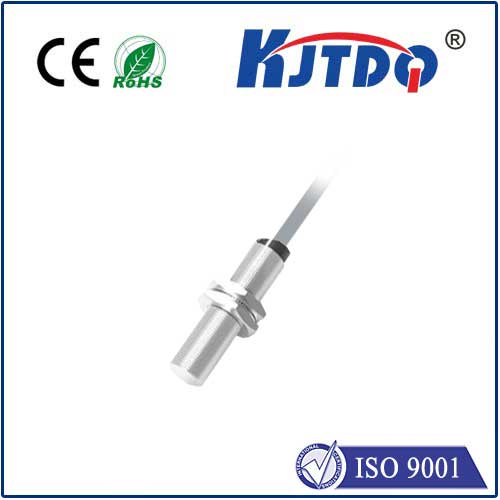
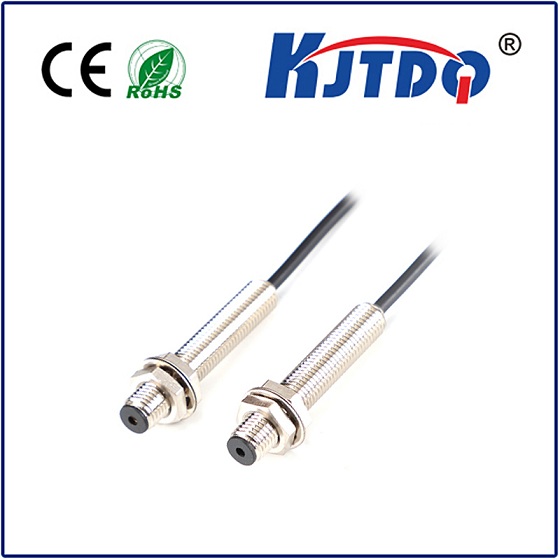
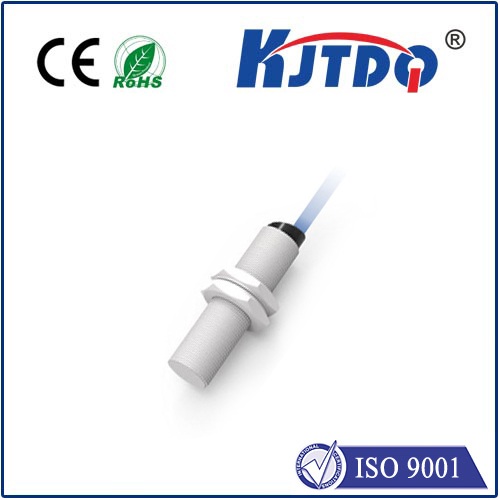
In the realm of industrial automation, where precision, reliability, and durability are non-negotiable, the inductive proximity sensor stands as a cornerstone technology. Specifically, the 12mm inductive proximity sensor, often designated with model identifiers like KJTDQ, represents a critical component for countless applications requiring non-contact detection of metallic objects. This article delves into the operational principles, key features, and diverse applications of this essential industrial device.
At its core, an inductive proximity sensor operates on the principle of electromagnetic induction. The sensor generates a high-frequency oscillating electromagnetic field from its active face. When a metallic target, such as steel, aluminum, or brass, enters this detection field, eddy currents are induced on the surface of the target. These eddy currents draw energy from the sensor's oscillator, causing a measurable change in the oscillation amplitude. The sensor's internal circuitry detects this change and triggers a solid-state switching output, signaling the presence of the object. This entire process occurs without any physical contact, eliminating mechanical wear and enabling high-speed operation.
The 12mm form factor refers to the diameter of the sensor's sensing face or housing. This size offers an optimal balance between detection range, physical robustness, and installation flexibility. A typical 12mm inductive sensor might offer a nominal sensing distance (Sn) of 4mm for mild steel, though this can vary based on the target material's properties and the specific sensor design. The compact size allows for installation in space-constrained environments while maintaining a sturdy build capable of withstanding industrial shocks and vibrations.
Key technical features define the performance and suitability of a 12mm inductive proximity sensor. First is its switching frequency, which dictates how quickly it can detect objects passing by. High-performance models can achieve frequencies in the kilohertz range, suitable for high-speed counting or positioning tasks. The output type is another crucial specification, commonly available as NPN (sinking) or PNP (sourcing) transistor outputs, or sometimes as a two-wire AC/DC version, allowing seamless integration with various programmable logic controllers (PLCs) and control systems.
Environmental resilience is paramount. Quality 12mm inductive sensors are built with robust housings, typically from nickel-plated brass, stainless steel, or high-grade PBT plastic. They boast high ingress protection ratings, such as IP67 or IP68, making them resistant to dust, oils, coolants, and temporary immersion in water. This durability ensures consistent operation in harsh manufacturing environments, from machine tools and assembly lines to food processing and outdoor machinery.
The application spectrum for a 12mm inductive proximity sensor like the KJTDQ series is vast. In automotive manufacturing, they are used for part presence verification on conveyor lines, detecting piston positions in cylinders, or ensuring robotic end-effectors are correctly positioned. In packaging machinery, they count metallic items, control filling levels by detecting metal containers, and verify cap placement. Within material handling, these sensors provide position feedback for linear actuators, detect pallets on conveyors, and serve as end-of-travel limit switches. Their ability to detect only metallic objects makes them immune to false triggers from non-metallic debris like dust, wood chips, or plastic shavings, a significant advantage in many settings.
When selecting a 12mm inductive proximity sensor, engineers must consider several factors beyond just size. The sensing distance relative to the target material is critical; for instance, the effective range for stainless steel is often less than for mild steel. The required mounting style—flush, non-flush, or embedded—affects the usable sensing distance. Flush-mounted sensors can be installed without a lateral clearance but have a shorter range, while non-flush models offer longer ranges but require space around the sensing face. Temperature range, voltage supply, and connection method (pre-wired cable or quick-disconnect) are also vital selection criteria.
Installation and maintenance best practices further enhance longevity and reliability. Ensuring proper alignment between the sensor face and the target path is essential for consistent detection. Maintaining the recommended gap between multiple sensors prevents mutual interference of their electromagnetic fields. While these sensors are virtually maintenance-free due to their non-contact nature, periodic checks for physical damage, buildup of metallic swarf on the sensing face, and verification of output signals are recommended as part of a preventive maintenance routine.
In conclusion, the 12mm inductive proximity sensor, exemplified by series like KJTDQ, is an indispensable workhorse in modern industrial control systems. Its non-contact operation, rugged construction, and precise detection capabilities for metallic objects make it a fundamental element for enhancing efficiency, safety, and automation intelligence. From simple presence detection to complex positional feedback in high-speed machinery, this sensor continues to be a reliable and cost-effective solution for engineers worldwide, driving productivity and precision on the factory floor.