check

check

check

check

check

check
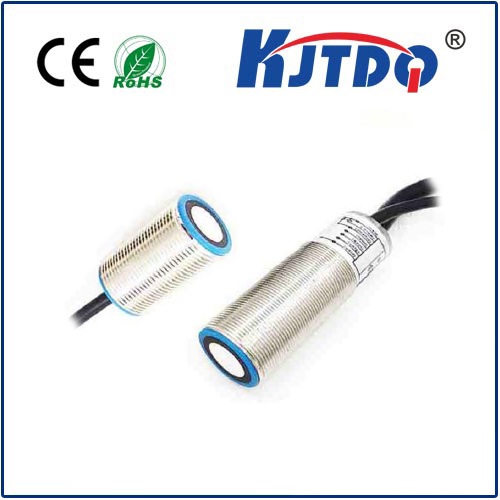
In the rapidly evolving landscape of industrial automation, the demand for reliable, long-range detection and precise distance measurement has never been greater. Ultrasonic proximity sensors, particularly those engineered for extended range capabilities, have emerged as a cornerstone technology, enabling smarter, safer, and more efficient operations across diverse sectors. These sensors operate on a simple yet powerful principle: they emit high-frequency sound waves beyond the range of human hearing and calculate the distance to a target by measuring the time it takes for the echo to return. This non-contact method proves invaluable in environments where physical contact is impractical, hazardous, or could damage delicate materials.
The defining advantage of a long-range ultrasonic sensor lies in its ability to perform accurately over considerable distances, often spanning several meters. This capability unlocks applications previously challenging for standard proximity sensors. In large-scale warehousing and logistics, for instance, these sensors facilitate precise inventory management by monitoring stock levels in high-bay racks or guiding automated guided vehicles (AGVs) through vast facilities without collision. Their performance remains largely unaffected by target color, transparency, or ambient light conditions—a significant edge over optical solutions—making them ideal for dusty, foggy, or poorly lit industrial settings.
Material handling systems greatly benefit from this technology. Sensors with long detection ranges can monitor the position of goods on extended conveyor belts, control crane hook heights in shipping yards, or ensure proper spacing between items on assembly lines. Their robustness allows them to function reliably despite the presence of airborne particulates, moisture, or temperature variations common in industrial environments. Furthermore, advancements in sensor design have led to improved signal processing algorithms, which enhance noise immunity and enable stable detection of even small or acoustically absorbent objects at a distance.
Beyond traditional manufacturing, long-range ultrasonic sensors are pivotal in smart agriculture for monitoring liquid levels in large silos, in parking management systems for vehicle detection in spacious lots, and in renewable energy for monitoring wind turbine blade clearance. Their versatility is a key driver of adoption. When selecting such a sensor, critical parameters include the maximum sensing range, beam angle, response time, output type (analog or digital), and environmental protection rating (IP67/IP69K for harsh conditions). Proper installation is also crucial; mounting the sensor correctly and minimizing acoustic interference from surrounding surfaces ensure optimal performance and longevity.
As Industry 4.0 continues to integrate cyber-physical systems, the role of long-range ultrasonic proximity sensors is set to expand. Their ability to provide consistent, accurate data feeds directly into IoT platforms and control systems, enabling predictive maintenance, real-time process optimization, and enhanced operational safety. By offering a dependable solution for challenging detection scenarios over extended areas, these sensors are not merely components but enablers of the next wave of automated intelligence, driving productivity and innovation where distance and reliability are paramount.