check

check

check

check

check

check
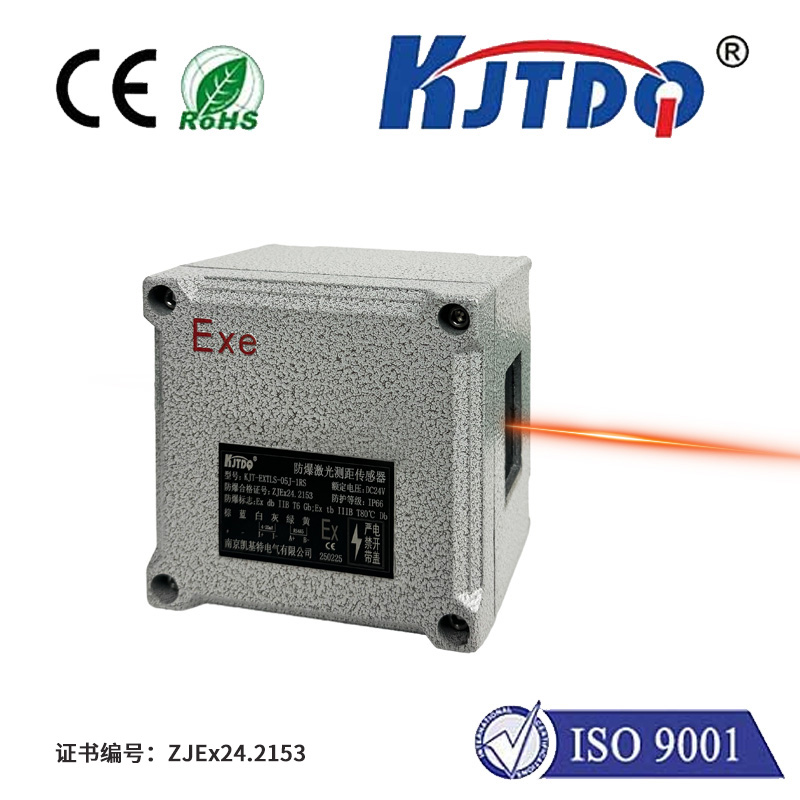
In the rapidly evolving landscape of industrial automation, the demand for reliable, non-contact detection over extended ranges has never been greater. This is where long-distance proximity sensors, a specialized category within the broader sensor family, are making a profound impact. Unlike their standard counterparts designed for close-range object detection, these advanced devices are engineered to identify the presence, absence, or position of objects from several inches to even meters away. The core technology enabling this capability often involves modulated infrared (IR) light, ultrasonic sound waves, or time-of-flight (ToF) principles, each offering unique advantages for challenging applications.
The primary advantage of a long-distance proximity sensor lies in its ability to create a larger safety and operational buffer. In material handling, such as on conveyor systems in warehouses or ports, these sensors can detect the approach of pallets or containers from a distance, allowing smoother control of sorting gates, robotic arms, and traffic flow, thereby preventing jams and collisions. This preemptive detection is crucial for maintaining high throughput and minimizing downtime. Furthermore, in automated guided vehicle (AGV) systems, long-range sensors act as the "eyes" for navigation and obstacle avoidance, ensuring safe and efficient movement in dynamic environments without the need for physical contact.
Safety systems represent another critical domain. Around heavy machinery, robotic work cells, or hazardous areas, establishing a reliable safety perimeter is paramount. Long-distance proximity sensors can be configured to create invisible protective fields or light curtains. If an object or person breaches this predefined zone, the sensor sends an immediate signal to halt the machinery, significantly reducing the risk of accidents. This non-intrusive safety solution is far more flexible and easier to implement than physical barriers, enhancing worker protection without impeding operational visibility or workflow.
The logistics and automotive industries are harnessing this technology for precise dimensioning and positioning. For instance, in loading bays, sensors can measure the height and width of incoming trucks or containers from a distance to ensure compatibility with dock doors. Within vehicle assembly lines, they verify the correct positioning of large sub-assemblies or guide robots for accurate windshield placement, where precision from a distance is essential to avoid damage. The robustness of these sensors is also a key feature; many are built with rugged housings rated IP67 or higher, making them resistant to dust, moisture, vibration, and extreme temperatures commonly found in industrial settings.
When selecting a long-distance proximity sensor, several factors must be considered. The required sensing range is the most obvious, but the detection object's properties—such as its color, material, surface texture, and size—are equally important, as they affect the sensor's reflectivity and response. Environmental conditions like ambient light (for optical sensors), dust, fog, or acoustic noise (for ultrasonic sensors) can influence performance and must be accounted for. Modern sensors often come with advanced features like adjustable sensing ranges, teach-in functions for easy calibration, and various output options (PNP/NPN, analog, IO-Link) for seamless integration into existing control systems like PLCs.
Looking ahead, the integration of long-distance sensing with Industrial Internet of Things (IIoT) platforms is set to unlock new potentials. Sensors equipped with smart diagnostics and predictive maintenance capabilities can communicate their health status and operational data, allowing for proactive system management and reduced unplanned outages. As machine vision and AI continue to advance, the fusion of precise long-distance proximity data with image analysis will lead to even more sophisticated and autonomous systems.
In conclusion, the long-distance proximity sensor is far more than a simple detection switch. It is a foundational component enabling smarter, safer, and more efficient industrial operations. By providing reliable, early-stage object detection without physical contact, it solves complex challenges in automation, safety, and logistics, paving the way for the next generation of intelligent factories and warehouses. For engineers and system integrators, understanding and leveraging this technology is key to building resilient and future-proof automated systems.