check

check

check

check

check

check
In industrial automation and machinery control, the ability to detect the presence or absence of an object without physical contact is paramount. This is where inductive proximity sensors, particularly those with an NPN output configuration, become indispensable components. An inductive proximity NPN sensor operates on the principle of electromagnetic induction to detect metallic targets with exceptional reliability, even in the harshest environments.
The core of an inductive sensor is a coil fed by an oscillator, generating a high-frequency electromagnetic field at its active face. When a metallic object enters this field, eddy currents are induced on the surface of the target. This causes a change in the oscillation amplitude within the sensor. An evaluation circuit detects this change and triggers a switching action in the solid-state output. The "NPN" designation refers to the type of transistor used in the output stage. In an NPN sensor, the output acts as a switch to ground (negative voltage). When the sensor is activated (target detected), the output terminal connects to the common ground (0V), allowing current to sink from the load into the sensor. This is also commonly known as a "sinking" output. This configuration is widely used and often interfaces directly with programmable logic controller (PLC) input modules designed for sinking signals.
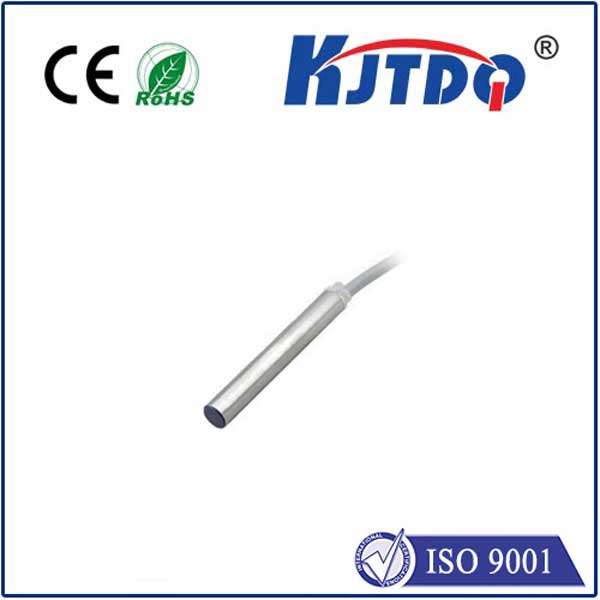
The advantages of choosing an inductive proximity NPN sensor are numerous. Their non-contact nature means there is no mechanical wear, leading to a virtually limitless mechanical lifespan. They are exceptionally robust, typically housed in stainless steel, nickel-plated brass, or rugged PBT plastic bodies, offering high resistance to vibrations, shocks, and ambient conditions including coolants, oils, and dust. They provide fast switching speeds, capable of detecting objects at frequencies up to several thousand times per second, which is crucial for high-speed counting or positioning applications. Furthermore, they are self-contained, require no external force to operate, and are immune to most environmental factors that affect optical or capacitive sensors.
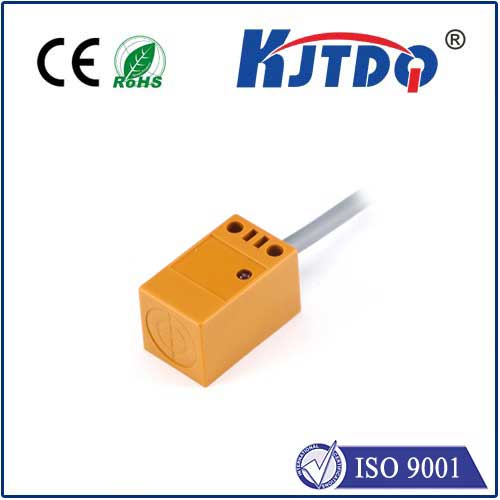
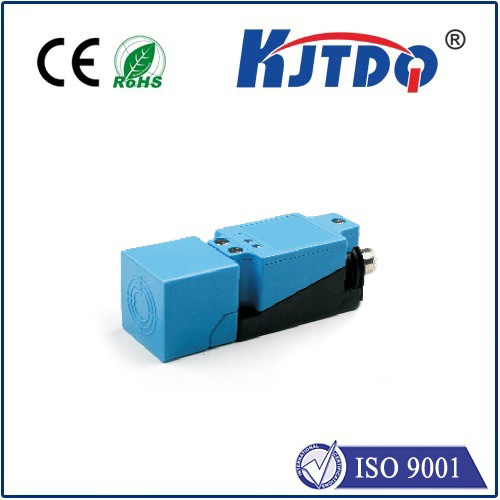
Selecting the right inductive NPN sensor requires consideration of several key parameters. The sensing distance, or nominal range (Sn), is critical and must be chosen based on the application, often derated for factors like target material (steel, aluminum, copper) and size. The housing style—barrel (cylindrical), rectangular, or ring-shaped—depends on the mounting constraints. The electrical specifications, such as operating voltage (commonly 10-30V DC) and output current, must match the control system's requirements. Environmental ratings, particularly the Ingress Protection (IP) code (e.g., IP67 for dust and temporary immersion protection), are vital for durability. For the NPN output, it is essential to verify the wiring: typically, the brown wire is connected to positive voltage (+V), the blue wire to common ground (0V), and the black wire is the switching NPN output.
These sensors find applications across every facet of industry. They are used for simple object detection on conveyor lines, precise position sensing of machine parts like cylinders (via sensing the piston magnet or a metal flag), high-speed counting of metal components, monitoring rotational speed by detecting gear teeth, and ensuring safety in automated systems by confirming the closure of metal guards or doors. Their reliability makes them the first choice for mission-critical detection tasks where failure is not an option.
Installation and maintenance are straightforward but crucial for optimal performance. Ensure the sensor is mounted securely to minimize vibration effects. Maintain the recommended clearance around the sensing face to prevent false triggers from the surrounding metal mounting structure, a factor known as "flush-mountability." For non-flush models, a lateral and axial clearance is mandatory. Regular checks should include verifying the cleanliness of the sensing face, inspecting the cable for damage, and confirming the electrical connections are tight and corrosion-free. A simple diagnostic test using the sensor's indicator LED (if equipped) can quickly confirm its operational status.
When compared to other output types like PNP (sourcing) or analog outputs, the NPN variant remains a global standard due to its compatibility with a vast array of control electronics, particularly in regions and systems where sinking inputs are the norm. Its simplicity and cost-effectiveness do not compromise its performance, making it a cornerstone of industrial sensing technology.
In conclusion, the inductive proximity NPN sensor is a fundamental, robust, and highly reliable solution for non-contact metal detection. Its design, centered on electromagnetic induction and a sinking NPN output, offers a perfect blend of durability, speed, and integration ease. Understanding its operating principle, key selection criteria, and application best practices empowers engineers and technicians to implement these sensors effectively, ensuring smooth, efficient, and uninterrupted operation of automated systems. For any application requiring the detection of metallic objects, from heavy machinery to precision assembly, the inductive NPN proximity sensor stands as a proven and trusted technology.