check

check

check

check

check

check
In the fast-paced world of industrial automation, precision, reliability, and durability are non-negotiable. Among the myriad of components that keep production lines moving, the inductive proximity sensor stands as a silent sentinel. Specifically, the M18 cylindrical form factor has become an industry standard, and understanding its capabilities is crucial for engineers and maintenance professionals. This guide delves deep into the world of the M18 inductive proximity sensor, exploring its working principle, key features, applications, and selection criteria.
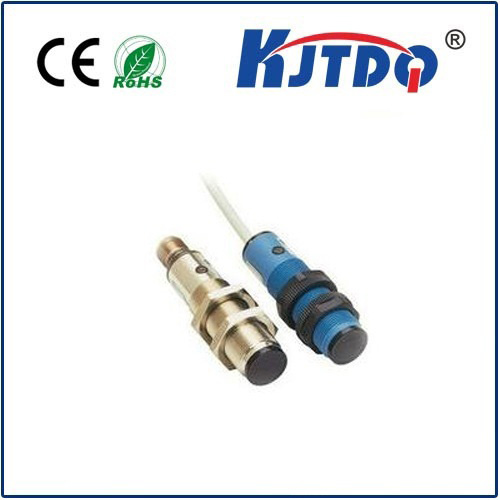
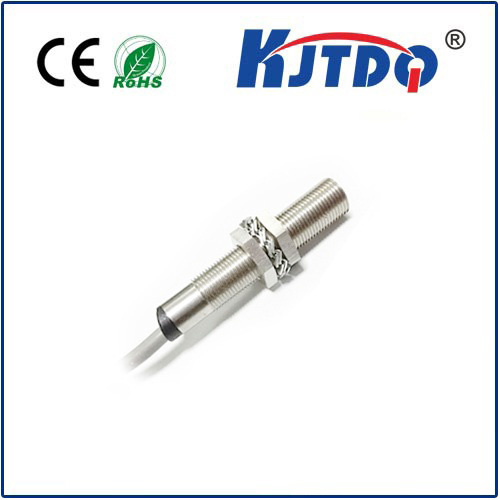
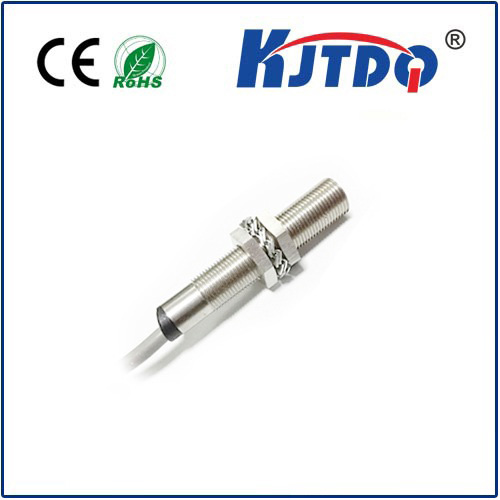
At its core, an inductive proximity sensor is a non-contact electronic device designed to detect the presence or absence of metallic objects without physical touch. The "M18" designation refers to its 18-millimeter threaded cylindrical housing, a common size that offers an excellent balance between sensing range, physical robustness, and ease of installation. The fundamental operating principle is based on electromagnetic induction. The sensor generates a high-frequency oscillating electromagnetic field from its active face. When a metallic target, such as steel, aluminum, or brass, enters this field, eddy currents are induced on the target's surface. This causes a change in the oscillation amplitude within the sensor's coil, which is detected by the internal circuitry. This change triggers a solid-state switch, sending a clear digital signal (ON/OFF) to the programmable logic controller (PLC) or other control systems.
The widespread adoption of the M18 inductive sensor is attributed to a host of compelling features. Its rugged metal or robust plastic housing, combined with an IP67 or higher ingress protection rating, makes it resistant to dust, oils, coolants, and temporary immersion, ideal for harsh manufacturing environments. These sensors are known for their high switching frequency, allowing them to detect objects at very high speeds, which is essential in packaging, sorting, and assembly lines. They offer exceptional repeat accuracy, meaning they provide consistent detection at the exact same point every time, ensuring process reliability. Furthermore, they are immune to ambient light, dirt (as long as it's non-metallic), and most environmental factors that plague other sensing technologies. The self-contained nature of a 3-wire DC (PNP or NPN) or 2-wire AC/DC model simplifies wiring and integration.
Typical applications for M18 inductive proximity sensors are vast and varied across industries. In automotive manufacturing, they are used for part presence verification on conveyor belts, robotic arm end-position detection, and checking for metal components in assemblies. In the food and beverage industry, stainless steel versions detect metal lids, cans, or machinery parts. They count products on high-speed lines, control the position of metal cylinders in pneumatic systems, and provide safety interlocks on machine guards by confirming doors are closed. Their ability to detect only metallic objects makes them perfect for applications where you need to ignore plastics, wood, or liquids.
Selecting the right M18 inductive sensor requires careful consideration of several parameters. First, determine the sensing distance. A standard M18 sensor typically offers a nominal range of 5mm or 8mm for mild steel. It is critical to note that the effective sensing distance can vary with different metals; for instance, aluminum and copper may reduce the range. Always consult the manufacturer's reduction factor specifications. Next, choose the output configuration: PNP (sourcing) or NPN (sinking) to match your PLC input card. The housing material is another key decision; nickel-plated brass is common, but stainless steel is necessary for corrosive or washdown areas. Finally, consider the electrical connection style—pre-wired cable, quick-disconnect connector, or terminal chamber—based on maintenance and installation preferences.
Installation and maintenance are straightforward but vital for optimal performance. Ensure the sensor is mounted securely using its locknut, avoiding over-tightening. Maintain the recommended lateral and axial clearance from other metal surfaces to prevent false triggering. For flush-mountable models, they can be embedded in metal, while non-flush types require a metal-free zone around the sensing face for their extended range. Regular checks should include cleaning the sensing face of any metallic debris buildup and verifying the output signal under operational conditions.
In conclusion, the M18 inductive proximity sensor is a cornerstone of modern industrial sensing. Its blend of rugged construction, non-contact operation, high-speed performance, and immunity to environmental challenges makes it an indispensable tool for automation engineers. By understanding its specifications and correctly applying it within a system, you can significantly enhance the efficiency, safety, and reliability of automated processes. For any application involving metallic object detection within a compact space, the M18 inductive sensor remains a top-tier, proven solution.