check

check

check

check

check

check
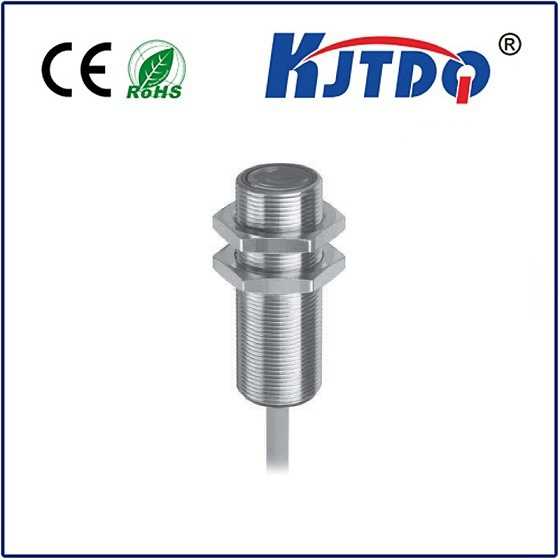
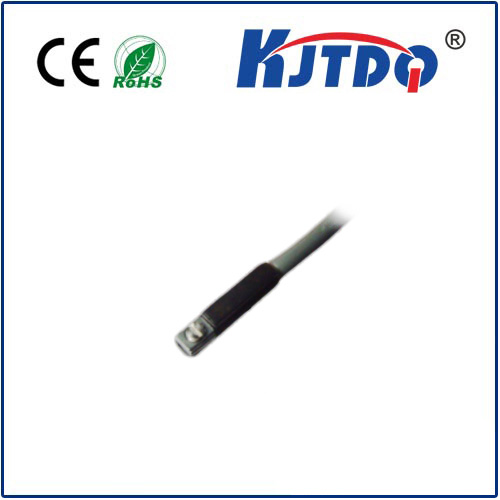
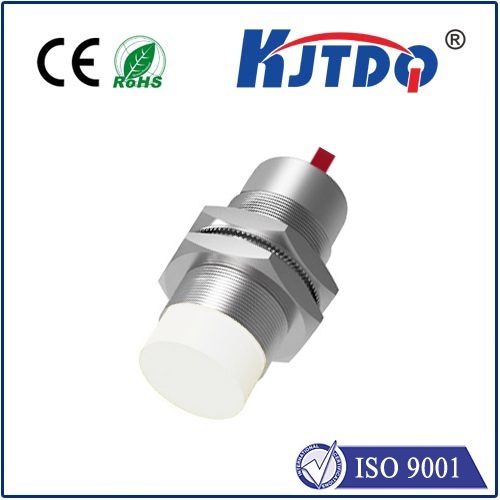
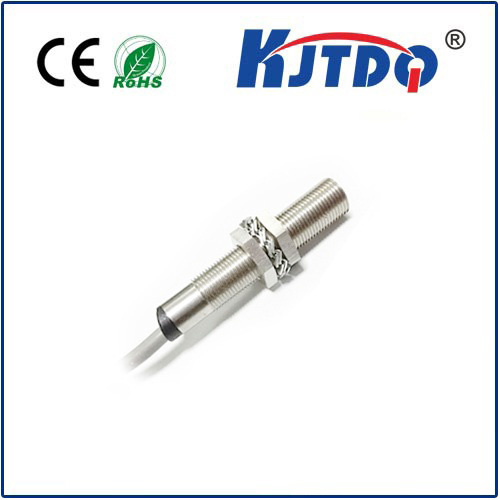
In the intricate world of industrial automation and machine control, the precise detection of objects is paramount. Among the various sensing technologies, proximity sensors stand out for their reliability and non-contact operation. A specific configuration that often raises questions is the proximity sensor with NPN output in a Normally Closed (NC) configuration. This article delves into the fundamentals, working principles, and practical applications of this specific sensor type, clarifying common points of confusion.
First, it's essential to break down the terminology. A proximity sensor is a device that detects the presence or absence of an object without physical contact, typically using electromagnetic fields, light, or sound. The NPN designation refers to the type of transistor used in the sensor's output circuit. In simple terms, an NPN output sensor switches the negative side (0V or ground) of the load. When active, it connects the load to ground, allowing current to flow from the positive supply, through the load, and into the sensor to ground. This is also commonly known as a "sinking" output.
The NC (Normally Closed) part describes the electrical state of the sensor's output when no target is present. A Normally Closed proximity sensor completes the circuit between its output wire and the common wire (often the negative/ground) when it is *not* detecting an object. When a target enters the sensing range, the output circuit "opens," breaking this connection. This is the inverse of a Normally Open (NO) sensor, which closes the circuit when activated.
Understanding the real-world signal behavior is crucial. For an NPN NC sensor:
* No Target Present: The output terminal is electrically connected to the ground (0V). In a typical PLC (Programmable Logic Controller) input module wired for NPN sensors, this would be read as a logic "1" or TRUE (because current can flow into the input point).
* Target Detected: The output circuit opens. The connection to ground is broken. The PLC input point sees a high impedance or "floating" state, which is typically interpreted as a logic "0" or FALSE.
This inverse logic is a common source of initial confusion for engineers and technicians accustomed to NO configurations. The choice between NO and NC is not arbitrary; it is a critical design decision for safety and functionality. Normally Closed (NC) configurations are often employed in safety-critical circuits or for fail-safe detection. The rationale is that a wire break or a loss of power in an NC sensor circuit will cause the output to open, mimicking the "target detected" state. This can trigger an alarm or a safe shutdown of machinery, preventing hazardous situations that might occur if a fault in an NO sensor went undetected.
Typical applications for NPN NC proximity sensors include:
* Safety Interlocks: Monitoring the position of safety guards. If the guard is opened (sensor not detecting it), the circuit opens, stopping the machine.
* Fault Detection in Material Handling: Detecting the absence of a material on a conveyor. If the material runs out (sensor sees no target), the open circuit signals a fault or triggers a refill sequence.
* End-of-Travel Limits: Used as limit switches where the normal, safe position of a machine part keeps the sensor activated (circuit open). An unexpected movement away from the part would close the circuit, indicating a problem.
When integrating an NPN NC sensor, careful attention must be paid to the wiring and the logic programming of the controller. The sensor must be powered with the correct DC voltage (e.g., 10-30V DC). The load (PLC input, relay coil) is connected between the positive supply voltage and the sensor's output wire. The common wire of the sensor is connected to the negative/ground. Always consult the sensor's datasheet for precise wiring diagrams and specifications.
In summary, a proximity sensor with NPN NC output is a specialized and invaluable component in control system design. Its "sinking" NPN output is compatible with a wide range of industrial controllers, while its Normally Closed operation provides an inherent layer of safety by designing for fault detection. By mastering the concepts of output types (NPN/PNP) and contact states (NO/NC), automation professionals can select the optimal sensor for reliability, safety, and seamless integration into complex industrial systems, ensuring both operational efficiency and enhanced personnel protection.