check

check

check

check

check

check
In the rapidly evolving landscape of industrial automation, the demand for reliable, precise, and durable sensing solutions is paramount. Among the myriad of components driving this technological revolution, the proximity switch sensor stands out as a fundamental element. These non-contact sensors have become indispensable in modern manufacturing, logistics, and assembly lines, ensuring seamless operations, enhancing safety, and optimizing productivity. This article delves into the core functionalities, diverse applications, and significant benefits of proximity switch sensors, illustrating why they are a cornerstone of automated systems.
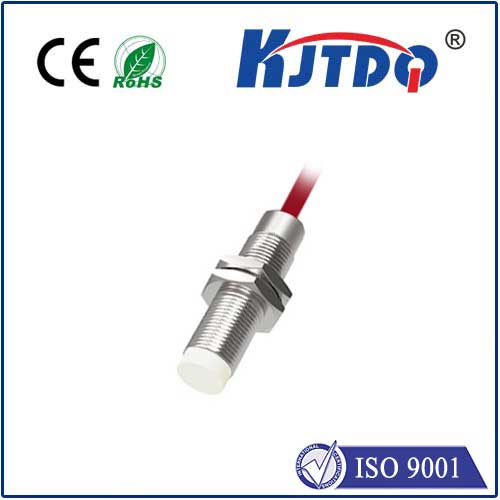
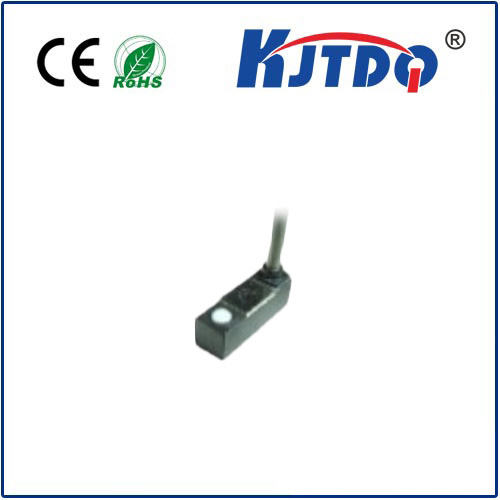
A proximity switch sensor is an electronic device designed to detect the presence or absence of an object within a specific range without any physical contact. It operates by emitting an electromagnetic field or a beam of electromagnetic radiation, typically infrared light, and then monitoring for changes in the field or return signal. When a target object enters the sensor's detection zone, it causes a disturbance or reflection, which the sensor interprets as a detection event. This triggers an output signal, usually a switch closure or an electronic pulse, that can be used to control machinery, count items, or signal a programmable logic controller (PLC). The primary advantage of this non-contact method is the elimination of wear and tear, leading to exceptional longevity and reduced maintenance costs compared to mechanical limit switches.
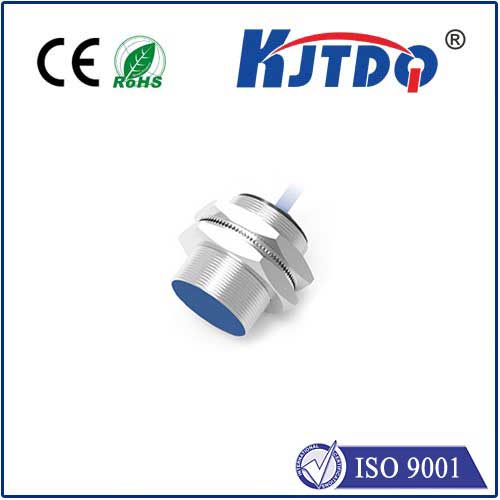
The technology behind these sensors is primarily categorized into three types: inductive, capacitive, and photoelectric. Inductive proximity sensors are the most common in industrial settings. They generate an oscillating electromagnetic field and are exclusively used to detect metallic objects, such as steel, aluminum, or copper. Their robustness makes them ideal for harsh environments with dust, oil, or coolant fluids. Capacitive proximity sensors, on the other hand, can detect both metallic and non-metallic materials, including liquids, plastics, and wood. They work by sensing changes in capacitance caused by the presence of any material that alters the dielectric constant of the space between the sensor and the target. Photoelectric sensors utilize a light transmitter and receiver to detect objects. They offer the longest sensing ranges and are perfect for detecting small or transparent items on fast-moving production lines.
The integration of proximity switch sensors into automated systems delivers transformative benefits. Firstly, they significantly enhance operational efficiency. By providing high-speed, accurate detection, they enable precise positioning of robotic arms, automated sorting of products, and reliable quality control checks. For instance, in an automotive assembly plant, inductive sensors ensure engine blocks are correctly positioned before machining, while photoelectric sensors verify the presence of all components on a circuit board. Secondly, they contribute substantially to workplace safety. By enabling non-contact detection, they allow machinery to operate only when a part is correctly positioned or a safety guard is closed, preventing accidents and equipment damage. This is crucial in press machines, automated doors, and material handling equipment.
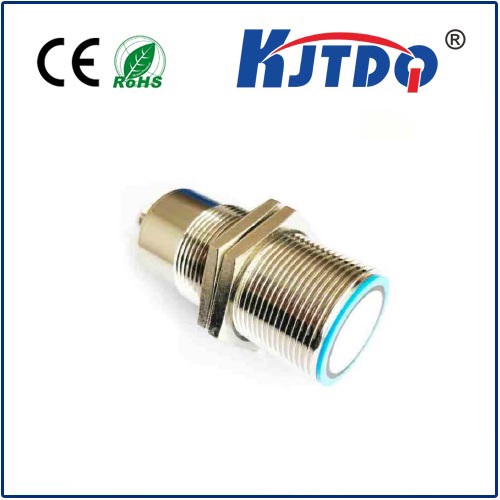
Moreover, the durability of proximity sensors translates into remarkable cost savings. Their solid-state design, often housed in rugged stainless steel or nickel-plated brass bodies, withstands extreme temperatures, vibrations, and exposure to chemicals. This resilience minimizes downtime for repairs and replacements, ensuring continuous production flow. The simplicity of their installation and the availability of various form factors—like cylindrical, rectangular, or ring-shaped sensors—allow for flexible integration into virtually any machine design. Modern sensors also feature advanced diagnostics, such as LED status indicators and short-circuit protection, simplifying troubleshooting and system maintenance.
From packaging lines monitoring bottle caps to CNC machines controlling tool position, the applications are virtually limitless. In food and beverage processing, capacitive sensors detect liquid levels in containers without contamination. In the pharmaceutical industry, they ensure precise counting and packaging of pills. The logistics sector relies on them for parcel dimensioning and automated guided vehicle (AGV) navigation. As Industry 4.0 and the Industrial Internet of Things (IIoT) advance, smart proximity sensors with IO-Link communication are becoming prevalent. These sensors not only provide switch signals but also transmit valuable data, such as temperature readings, device health status, and parameter settings, to central control systems for predictive maintenance and data-driven optimization.
In conclusion, the proximity switch sensor is far more than a simple detection device; it is a critical enabler of precision, safety, and intelligence in automated industrial environments. Its ability to perform reliably under demanding conditions while interfacing seamlessly with complex control systems makes it an irreplaceable component. As automation continues to deepen across all sectors, the evolution of sensor technology—with a focus on miniaturization, smarter connectivity, and enhanced sensing capabilities—will further solidify its role. For any operation seeking to improve efficiency, reduce costs, and future-proof its processes, investing in high-quality proximity sensing solutions is not just an option but a strategic imperative for sustained competitive advantage.