check

check

check

check

check

check
In the world of industrial automation, precision, reliability, and durability are non-negotiable. For applications demanding accurate non-contact detection of metallic objects, the inductive proximity sensor with an 8mm sensing distance stands as a cornerstone technology. This guide delves into the core principles, key advantages, and diverse applications of this essential component, explaining why it remains a top choice for engineers and system integrators worldwide.
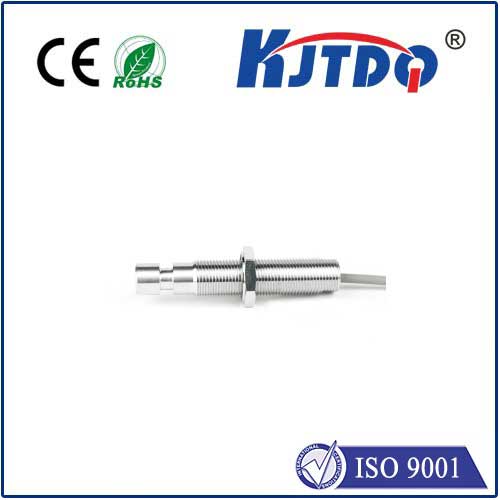
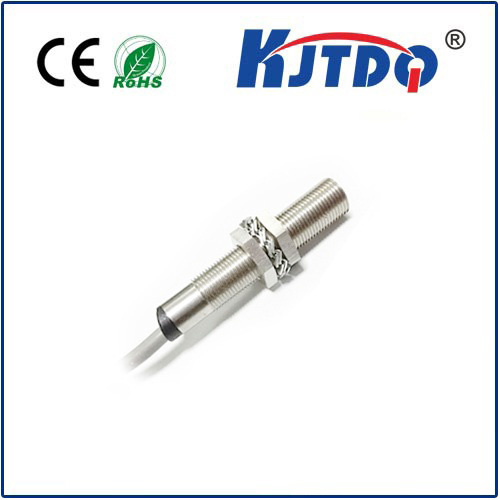
At its heart, an inductive proximity sensor is a solid-state electronic device. It operates by generating an electromagnetic field from its sensing face. When a metallic target—such as steel, aluminum, copper, or brass—enters this field, eddy currents are induced within the target. The sensor detects the resulting change in the oscillation amplitude or frequency within its internal coil circuit. This detection triggers a solid-state output switch, sending a clear signal to a programmable logic controller (PLC) or other control system without any physical contact. The "8mm" specification refers to its nominal sensing range, meaning it can reliably detect a standard mild steel target at a distance of up to 8 millimeters.
The 8mm inductive sensor offers a compelling blend of features that make it indispensable. First and foremost is its exceptional reliability. With no moving parts to wear out and a fully encapsulated design, it is immune to dust, oil, coolant, and other harsh contaminants common in industrial environments like machine tools, packaging lines, and automotive assembly plants. This robustness translates to minimal maintenance and a long operational lifespan, reducing total cost of ownership. Its high switching frequency allows for the detection of very fast-moving objects or small parts on high-speed conveyors. Furthermore, these sensors are inherently self-contained, requiring no external reflectors or separate receivers, simplifying installation and alignment.
When selecting an 8mm inductive proximity sensor, several technical specifications are critical. The sensing range is typically defined for a standard 1mm-thick square of mild steel. It's crucial to note that the effective range can vary with different metals; for instance, aluminum may reduce the range by approximately 40-50%. The housing material, often nickel-plated brass, stainless steel, or PBT plastic, must be chosen based on the environmental conditions (e.g., chemical exposure, washdown requirements). Output types are another key decision: NPN (sinking) or PNP (sourcing) transistor outputs are standard, with 2-wire, 3-wire, and 4-wire (analog or IO-Link) configurations available for different wiring setups. The IP (Ingress Protection) rating, such as IP67 or IP69K, indicates the level of protection against solids and liquids.
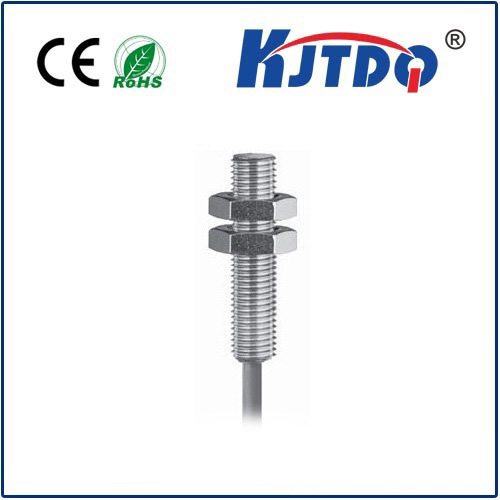
The applications for an 8mm inductive proximity sensor are vast and varied across industries. In manufacturing, they are used for precise end-of-stroke detection on cylinders, verifying the presence or absence of metal parts in fixtures, and counting metallic products on a line. In robotics, they provide accurate position feedback for grippers and arms. They can monitor rotational speed by detecting gear teeth or keyways on a shaft. In automated assembly, they ensure components are correctly positioned before a welding or fastening operation. Their compact size, particularly in tubular form factors like M8 or M12, allows for installation in tight spaces where other sensor types would not fit.
To ensure optimal performance, proper installation and consideration are vital. The sensor should be mounted securely to prevent vibration from affecting its position. It is important to account for the "blind zone" directly in front of the sensing face where detection is not possible. For flush-mountable models, they can be installed embedded in metal without affecting performance, while non-flush models require a clear area around the sensor. Always consult the manufacturer's datasheet for specific mounting distances, temperature ranges, and electrical connection details to guarantee system integrity and safety.
In conclusion, the inductive proximity sensor 8mm is a testament to elegant, effective engineering. It solves the fundamental challenge of reliable metallic object detection in a compact, tough, and maintenance-free package. By understanding its operating principle, key specifications, and application best practices, engineers can leverage this versatile tool to enhance machine efficiency, improve process control, and build more resilient automated systems. Its continued evolution with smart features like IO-Link connectivity further ensures its relevance in the increasingly data-driven landscape of Industry 4.0.