check

check

check

check

check

check
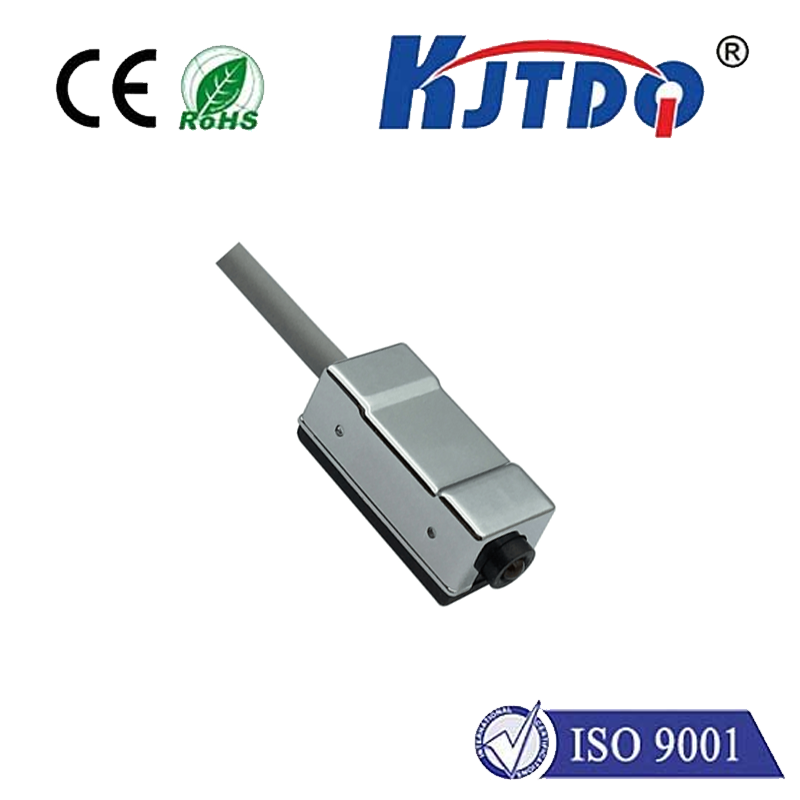
In the rapidly evolving landscape of industrial automation and smart device integration, the demand for reliable, precise, and efficient sensing technology has never been higher. Among the myriad of components that power modern machinery and electronics, proximity sensors stand as critical enablers of non-contact detection. The TL-W5MC1 emerges as a noteworthy contender in this space, designed to meet rigorous application demands with its robust performance characteristics. This guide delves into the core functionalities, typical applications, and key advantages of this specific sensor model, providing a comprehensive overview for engineers, procurement specialists, and technology integrators.
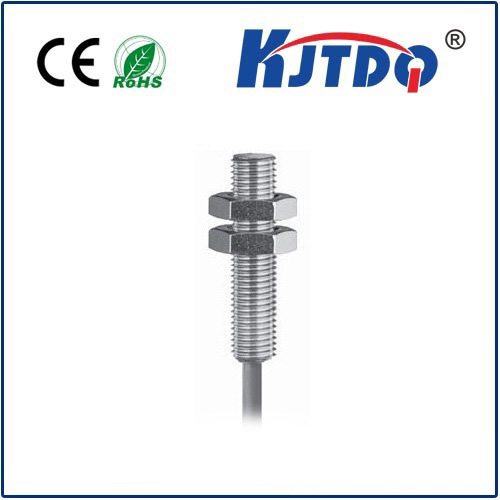
At its heart, the TL-W5MC1 is an inductive proximity sensor. This technology operates on the principle of electromagnetic induction. The sensor generates an oscillating electromagnetic field from its sensing face. When a metallic target object enters this field, eddy currents are induced within the metal. This causes a change in the oscillation amplitude within the sensor's internal circuit, which is then detected and converted into a switching signal. The "TL-W5MC1" designation typically follows industry-standard coding, where details about sensing distance, housing style, output type, and connection method are embedded. For precise specifications, always refer to the official manufacturer's datasheet, but common features of such models include a compact cylindrical housing, shielded design for flush mounting, and either PNP (sourcing) or NPN (sinking) transistor outputs.
The defining feature of any proximity sensor is its rated operating distance, or sensing range. The TL-W5MC1 is engineered for a specific nominal range, often in the millimeter scale, such as 5mm or 8mm, ensuring accurate detection without physical contact. This non-contact operation is its primary benefit, leading to virtually wear-free performance, high switching frequency, and exceptional longevity compared to mechanical limit switches. It is immune to environmental factors like dust, oil, and moisture (given appropriate IP ratings like IP67), making it suitable for harsh industrial environments. The sensor provides a consistent digital on/off signal, ideal for straightforward detection tasks like counting, positioning, end-position monitoring, or speed measurement.
Practical applications for the TL-W5MC1 are vast and span multiple industries. In automated manufacturing and assembly lines, it is indispensable for detecting the presence or absence of metal parts, verifying if a component is correctly positioned before a robotic arm proceeds with its task. Within the packaging industry, these sensors monitor fill levels by detecting metal lids or containers on high-speed conveyors. They are also integral to CNC machining centers, where they serve as tool changers or workpiece position verifiers. Beyond heavy industry, such sensors find roles in consumer electronics for lid detection or in automotive systems for gear position sensing. The reliability of the TL-W5MC1 in providing a precise trigger signal makes it a fundamental building block for system control and safety interlocks.
Selecting the right sensor involves careful consideration of several parameters beyond just the model number. The target material is paramount; inductive sensors like the TL-W5MC1 are optimized for ferrous metals like steel and iron, with reduced range for non-ferrous metals like aluminum or copper. The operating voltage (commonly 10-30V DC) must match the control system's supply. The output configuration (PNP or NPN) must be compatible with the PLC or controller input module. Environmental conditions dictate the required ingress protection (IP) rating. Furthermore, factors like temperature range, short-circuit and reverse polarity protection, and LED status indicators contribute to operational robustness and ease of installation and troubleshooting.
Installation and wiring are straightforward but require attention to detail for optimal performance. For shielded (flush-mountable) types like the TL-W5MC1, they can be installed flush in a metal bracket without affecting the sensing range. Maintaining the specified gap between multiple sensors prevents mutual interference. Wiring should follow the manufacturer's diagram precisely, connecting the brown wire (typically +V), blue wire (0V), and black wire (output signal) to the correct terminals. Ensuring a stable power supply and proper grounding minimizes electrical noise, which could cause false triggering.
In conclusion, the TL-W5MC1 proximity sensor represents a mature and highly effective solution for non-contact metal detection across a diverse spectrum of industrial and technological applications. Its design prioritizes accuracy, durability, and seamless integration into control systems. By understanding its operating principle, key specifications, and application requirements, engineers and technicians can leverage this component to enhance automation efficiency, improve machine safety, and ensure process reliability. As automation continues to advance, the role of dependable sensors like the TL-W5MC1 will remain fundamentally crucial, acting as the reliable eyes of machinery in an increasingly automated world.