check

check

check

check

check

check
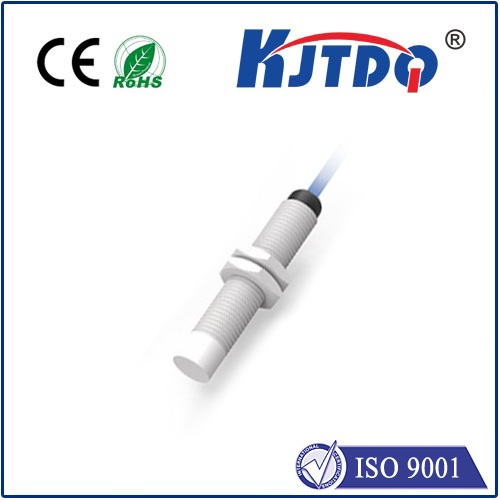
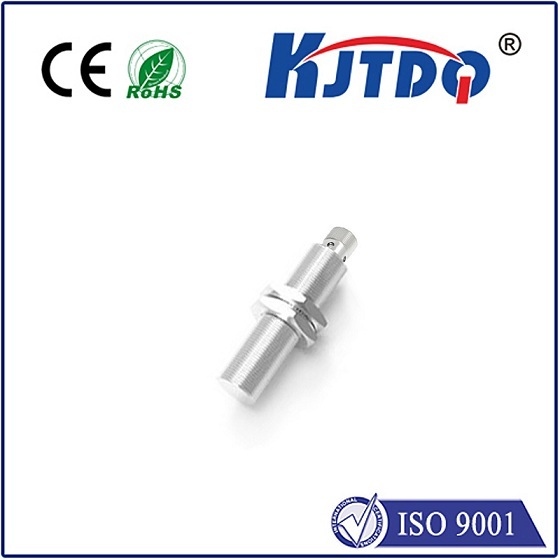
In the world of industrial automation, precision and reliability are non-negotiable. Among the myriad of components that keep production lines humming, the PNP NC proximity sensor stands out as a fundamental yet critical element. This guide delves into the specifics of this sensor type, explaining its operation, key advantages, and ideal applications to help you make an informed decision for your systems.
First, let's break down the terminology. "PNP" refers to the type of output transistor. In a PNP sensor, the output wire switches to a positive voltage when it detects a target. Think of it as "switching positive." The "NC" stands for Normally Closed. In its default state without a target present, the electrical circuit inside the sensor is closed, allowing current to flow. When a target enters the sensing range, the circuit opens, interrupting the current. This behavior is the opposite of a NO (Normally Open) sensor. Combining these features, a PNP NC sensor provides a positive signal when idle and stops that signal upon detection.
Why choose this specific configuration? The benefits are rooted in safety and fail-safe design. A PNP NC proximity sensor is often employed in safety-critical applications. If a wire breaks or the sensor loses power, the circuit opens, mimicking the detection state. This "fail-safe" feature can trigger an immediate machine shutdown or alarm, preventing potential hazardous situations. This makes it a preferred choice for guarding applications, emergency stop monitoring, and processes where an interruption in signal must indicate a problem.
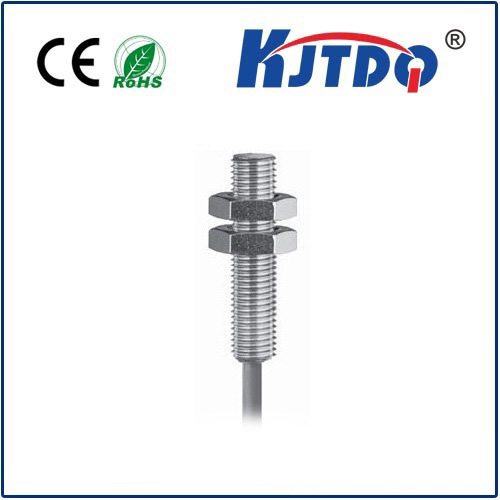
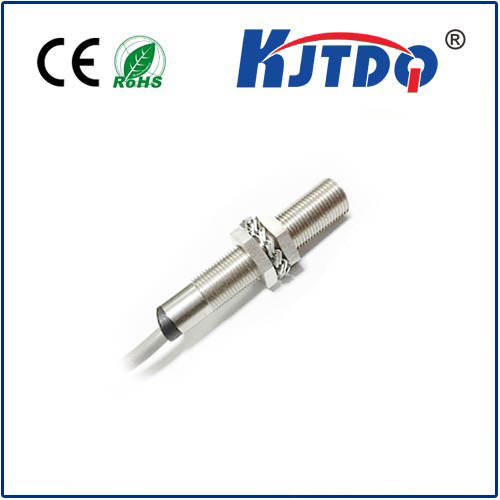
The sensing technology itself is typically inductive, meaning it detects metallic objects without physical contact. A high-frequency electromagnetic field emanates from the sensor's face. When a metal target enters this field, eddy currents are induced, causing a change in the field's oscillation. The sensor's circuitry detects this change and triggers the switching action. This non-contact operation eliminates mechanical wear and tear, ensuring a long operational life even in harsh environments filled with dust, oil, or coolant.
When selecting a PNP NC proximity sensor, several technical specifications demand attention. The sensing range is paramount, typically a few millimeters for standard cylindrical models. Ensure the target material (usually ferrous metals like steel or non-ferrous like aluminum) is compatible, as the sensing distance varies. The housing material, often nickel-plated brass or stainless steel, must withstand the environmental conditions, including temperature extremes, moisture, and chemical exposure. The electrical specifications, such as supply voltage (commonly 10-30V DC) and output current, must match your control system's requirements.
Installation and wiring are straightforward. A standard three-wire configuration is used: brown wire for positive supply voltage (+V), blue wire for negative/common (0V), and black wire as the switched output. For a PNP NC sensor, when no target is present, the black wire is connected to the positive supply internally. Upon detection, this connection is broken. Always refer to the manufacturer's datasheet for precise wiring diagrams and ensure proper shielding in electrically noisy environments to prevent false triggering.
Real-world applications for PNP NC inductive proximity sensors are extensive. They are indispensable in automated assembly lines for part presence verification. A missing component opens the circuit, halting the cycle. In robotics, they provide precise end-of-arm tooling position feedback. Within packaging machinery, they count metallic items on conveyor belts. Their fail-safe nature is crucial in metal stamping presses to confirm that a guard is securely in place before activation. The robustness of these sensors also makes them suitable for heavy machinery and automotive manufacturing plants.
Troubleshooting common issues involves a methodical approach. If a machine fails to start, use a multimeter to check if the sensor is receiving the correct supply voltage. Next, measure the output signal between the black and blue wires. With no target present, you should read the supply voltage (e.g., 24V). When a target is introduced, this voltage should drop to near zero. If these readings are incorrect, the sensor may be misaligned, the sensing face may be dirty, or the sensor itself may be damaged. Remember, in a Normally Closed configuration, the expected signal behavior is the inverse of a more common Normally Open sensor, which can be a source of confusion.
In conclusion, the PNP NC proximity sensor is a specialized, reliability-focused component. Its Normally Closed, fail-safe output characteristic provides an essential layer of safety and diagnostic capability in complex automated systems. By understanding its operating principle, advantages, and application scenarios, engineers and technicians can effectively integrate these sensors to enhance both the safety and efficiency of their operations. For detection tasks where failure must lead to a safe state, the PNP NC configuration remains an intelligent and trusted choice.