check

check

check

check

check

check
In the rapidly evolving landscape of industrial automation, the demand for reliable, precise, and durable sensing solutions has never been higher. Among the myriad of components that keep modern machinery running smoothly, proximity sensors play a pivotal role. The M3-B3 proximity sensor stands out as a prime example of engineering excellence, designed to meet the rigorous demands of contemporary manufacturing, packaging, and material handling systems. This guide delves into the core features, operational principles, and practical applications of this critical device, offering valuable insights for engineers and procurement specialists.
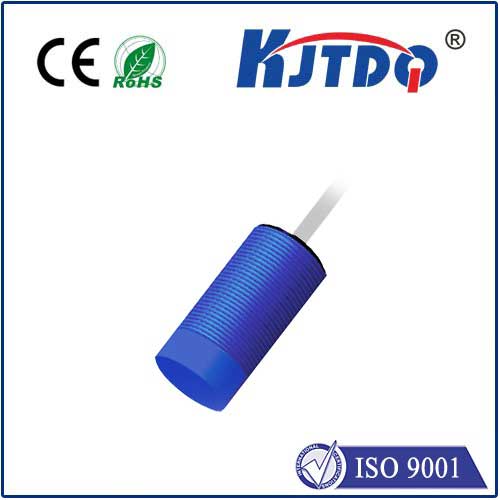
At its heart, the M3-B3 is a non-contact inductive proximity sensor. It operates on a fundamental electromagnetic principle: the sensor generates a high-frequency oscillating electromagnetic field from its sensing face. When a metallic target object enters this detection field, eddy currents are induced on the target's surface. This causes a change in the oscillation amplitude within the sensor's internal coil circuit. The sensor's sophisticated circuitry detects this change and triggers a solid-state switching output, signaling the presence of the object without any physical contact. This non-contact nature is its greatest asset, eliminating mechanical wear and tear and ensuring a long operational lifespan even in high-cycle applications.
The designation "M3" typically refers to its compact cylindrical housing with an 3mm diameter, while "B3" often indicates specific electrical characteristics, such as a 3-wire DC configuration (Brown for V+, Blue for V-, Black for output) and a normally open (NO) or normally closed (NC) switching logic. This standardized form factor and wiring make it exceptionally easy to integrate into existing control panels and machinery. Key performance specifications that define the M3-B3 include its sensing range, which is precisely calibrated for small metallic parts, often around 1-2mm. It boasts a high switching frequency, allowing it to detect objects passing at very high speeds—a critical feature for production lines. Furthermore, it is built to withstand common industrial hazards, featuring high immunity to electrical noise, voltage fluctuations, and short-circuit protection. Many models are also sealed to IP67 standards, making them resistant to dust ingress and capable of withstanding temporary immersion in water, thus ensuring reliability in harsh environments.
The practical applications of the M3-B3 proximity sensor are vast and varied. On automated assembly lines, it is indispensable for part presence verification, ensuring a component is in the correct position before a robotic arm performs a weld or an insertion. In CNC machining centers, these sensors are used for tool tip detection and workpiece positioning, guaranteeing machining accuracy. Within packaging machinery, they count products on conveyor belts, detect fill levels, and control the sealing process. They also play a crucial role in safety systems, acting as interlock sensors on machine guards to prevent operation when a door is open. Their small size allows them to be installed in tight spaces where larger sensors cannot fit, providing design flexibility for machine builders.
Selecting and installing the M3-B3 requires attention to detail. The first consideration is the target material; standard inductive sensors like the M3-B3 are optimized for ferrous metals like steel and iron. For non-ferrous metals like aluminum or copper, the effective sensing range is reduced, and specialized versions may be required. The mounting environment is equally important. While robust, the sensor should be installed away from strong electromagnetic interference sources like large motors or frequency drives. For flush-mounted installation in metal, the specified sensing distance is guaranteed. If non-flush mounted, the usable range increases, but careful attention must be paid to avoiding side-by-side sensor interference by maintaining adequate spacing between units.
In conclusion, the M3-B3 proximity sensor represents a cornerstone of modern industrial sensing. Its blend of compact design, robust construction, precise non-contact detection, and ease of integration makes it a versatile and reliable choice for countless automation challenges. From enhancing production speed and quality to ensuring operational safety, this sensor is a silent yet powerful workhorse on the factory floor. For engineers seeking to optimize machine performance and reliability, understanding and effectively implementing the M3-B3 is a step toward achieving greater efficiency and precision in any automated system.