check

check

check

check

check

check
In the rapidly evolving landscape of industrial automation and consumer electronics, the demand for reliable, non-contact sensing solutions has never been higher. Among the various technologies available, the proximity capacitive sensor stands out as a cornerstone of modern precision engineering. This sophisticated device operates on a fundamental principle: it detects the presence or absence of a target object by measuring changes in capacitance. Unlike mechanical switches or optical sensors, it requires no physical contact and is largely unaffected by surface conditions like dust, oil, or color, making it exceptionally robust in diverse environments.
The core mechanism involves an electrode that generates an electrostatic field. When an object enters this field, it alters the dielectric properties, causing a measurable change in capacitance. This change is then processed by the sensor's internal circuitry to trigger a specific output. This simple yet powerful principle enables applications ranging from detecting liquid levels through non-metallic containers to enabling touch-sensitive interfaces on consumer devices. The versatility of capacitive sensing is a key driver behind its widespread adoption.
One of the most significant advantages of proximity capacitive sensors is their ability to sense through non-conductive materials. This unique capability allows for completely sealed designs, protecting the sensing element from harsh industrial environments containing moisture, chemicals, or particulate matter. For instance, in food and beverage processing, sensors can detect product levels inside plastic or glass containers without any penetration, maintaining strict hygiene standards. Similarly, in automotive assembly lines, these sensors ensure precise positioning of components even when obscured by protective films or casings.
Furthermore, the technology offers remarkable sensitivity and resolution. Modern proximity capacitive sensors can detect minute changes, allowing for the recognition of very small objects or precise measurement of material thickness. This high sensitivity is crucial in industries like semiconductor manufacturing, where nanometer-level precision is non-negotiable. The development of advanced signal processing algorithms has also minimized false triggers, enhancing reliability in complex electromagnetic environments common in factories.
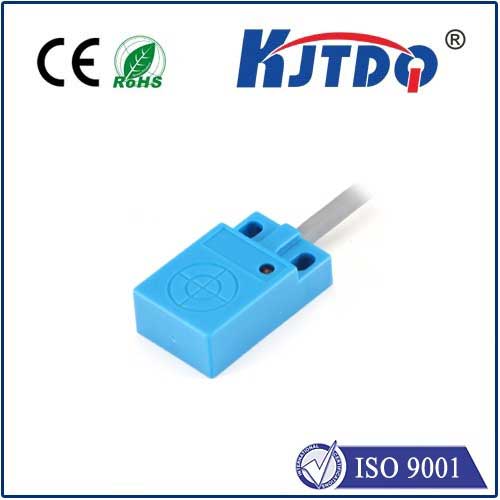
The integration of the KJTDQ series represents a notable advancement in this field. Engineered for enhanced stability and extended sensing ranges, this series addresses common challenges such as temperature drift and interference from adjacent metals. Its robust design ensures consistent performance in applications from precision machine tools to interactive public kiosks. The implementation of such specialized components allows system designers to push the boundaries of what's possible in automation and user interface design.
Looking toward the future, the convergence of proximity capacitive sensing with the Internet of Things (IoT) and artificial intelligence is opening new frontiers. Smart sensors can now not only detect presence but also classify materials or monitor process conditions in real-time, feeding valuable data into predictive maintenance systems. This evolution transforms the sensor from a simple switch into an intelligent node within a larger data-driven ecosystem.
In conclusion, the proximity capacitive sensor is far more than a simple component; it is an enabling technology that underpins innovation across countless sectors. Its non-contact nature, material penetration capability, and evolving intelligence make it indispensable for creating safer, more efficient, and more intuitive systems. As technology continues to advance, the principles of capacitive sensing will undoubtedly remain at the heart of developing smarter interactions between machines and their environment.