check

check

check

check

check

check
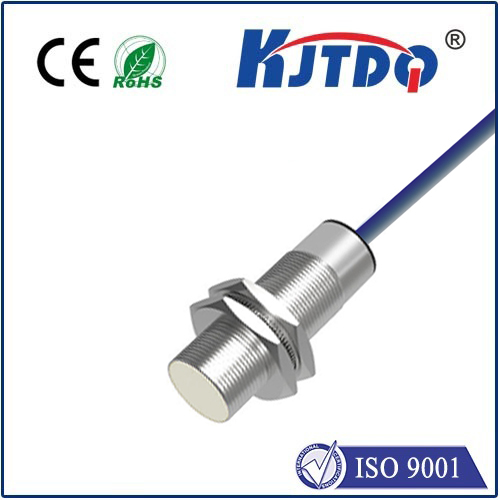
In the complex and demanding world of industrial automation, precision and reliability are non-negotiable. Among the myriad of sensing technologies available, the analog inductive proximity sensor stands out as a cornerstone for countless applications requiring accurate, continuous distance or position measurement. Unlike its digital counterpart that simply provides an on/off signal, an analog inductive sensor offers a variable output signal—typically a voltage or current—that changes proportionally with the distance to the target. This continuous data stream is invaluable for processes where nuance matters, such as monitoring material thickness, controlling tension in webs, or precisely positioning machinery components.
The core operating principle is elegantly robust. The sensor contains an oscillator circuit that generates a high-frequency electromagnetic field at its active face. When a metallic target enters this field, eddy currents are induced on the target's surface. These currents draw energy from the oscillator, causing a change in its amplitude. The sensor's internal circuitry then converts this change into a smoothly varying analog output signal. The strength of the signal is directly related to the distance between the sensor and the target, allowing for precise measurement within its defined sensing range. This technology is inherently resilient, capable of functioning effectively in harsh industrial environments filled with dust, oil, coolant, and vibrations that would compromise optical or capacitive sensors.
The advantages of implementing analog inductive proximity sensors are substantial. They provide real-time, continuous feedback, enabling sophisticated control systems to make immediate adjustments. This leads to improved product quality, reduced material waste, and enhanced process efficiency. Their solid-state construction, with no moving parts, ensures exceptional longevity and minimal maintenance requirements. Furthermore, they are largely immune to environmental factors like ambient light, non-conductive dust, or moisture, making them suitable for foundries, machining centers, and assembly lines. The analog output can be easily integrated with Programmable Logic Controllers (PLCs), data acquisition systems, and industrial meters, forming the sensory backbone of modern Industry 4.0 setups.
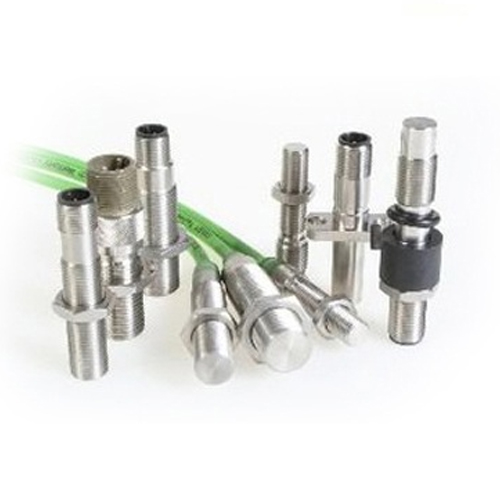
Selecting the right analog inductive sensor requires careful consideration of several key parameters. The sensing range is paramount, and it's crucial to note that the effective linear range for analog output is often a portion of the nominal switching distance. Target material also significantly influences performance; while ferrous metals like steel yield the longest sensing distances, non-ferrous metals like aluminum or copper require specific sensor models or result in a reduced range. The output type must match the control system's input—common options include 0-10V, 4-20mA (a current loop known for noise immunity), or even PWM signals. Environmental ratings, such as IP67 or IP69K for water and dust resistance, and the sensor's housing material (e.g., stainless steel for corrosive settings) are critical for ensuring reliable operation.
From roll diameter monitoring in paper mills to gap control in robotic welding, the applications are diverse. They are used to control the fill level of metallic powders in silos, measure the wear on machine tool bits indirectly, and ensure precise alignment in automated guided vehicles. Their role in predictive maintenance is growing, where the analog trend of a signal can indicate gradual machine wear before a catastrophic failure occurs.
In conclusion, the analog inductive proximity sensor is far more than a simple switch. It is a versatile and robust measurement tool that delivers the critical data needed for precise, efficient, and intelligent industrial control. By providing a continuous window into the physical relationship between machine and target, it empowers engineers to build smarter, more responsive, and more reliable automated systems. For any application involving metallic objects where distance is a key variable, the analog inductive sensor remains an indispensable and trusted solution.