oem laser distance sensor
- time:2025-09-11 04:23:57
- Click:0
OEM Laser Distance Sensors: The Engine Behind Precise Measurement in Your Products
Imagine navigating a complex warehouse autonomously, ensuring construction blueprints translate flawlessly to reality, or guaranteeing consistent quality on a high-speed production line. Underpinning these feats is a fundamental need: knowing exactly how far away something is. That’s where OEM laser distance sensors step in, not as standalone gadgets, but as the critical, invisible components seamlessly integrated into the smarter machines and systems shaping our world. Choosing the right OEM solution is key to unlocking precision, efficiency, and innovation in countless applications.
Beyond the Basics: What Makes an OEM Sensor Different?
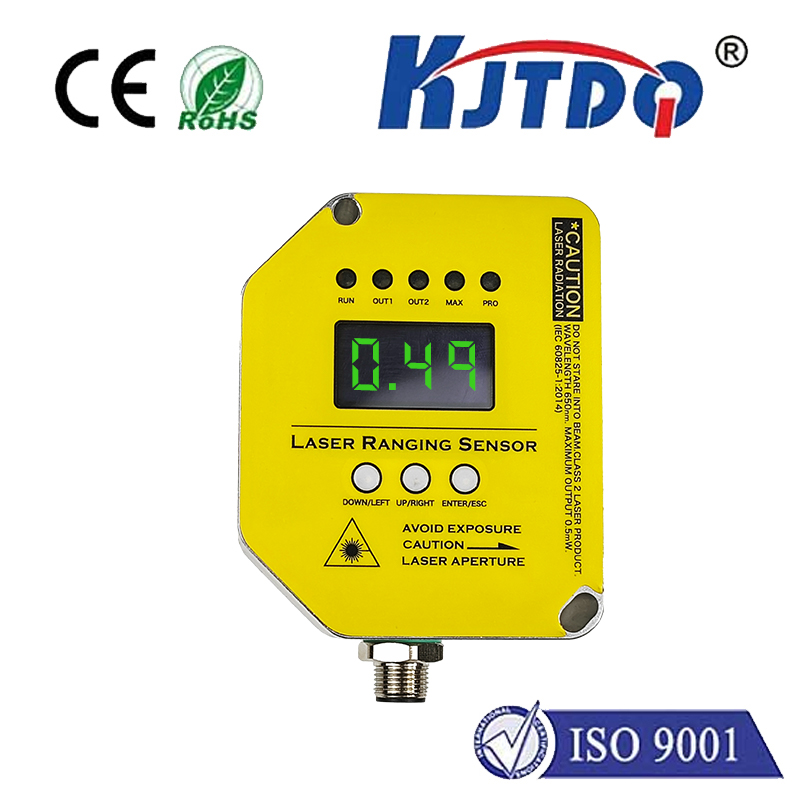
While a consumer laser tape measure gives a quick distance readout, an OEM laser distance sensor is designed for a vastly different purpose: to be the eyes of another device. Manufacturers integrate these compact yet powerful modules into their own products – robots, industrial equipment, surveying tools, autonomous vehicles, safety systems, and much more. Think of them as the essential building blocks for adding contactless, high-precision ranging capabilities.
The core technology relies on Time-of-Flight (ToF) measurement. The sensor emits a focused, typically invisible infrared or visible laser pulse. This pulse travels to the target object, reflects off its surface, and returns to the sensor. Sophisticated circuitry precisely measures the elapsed time between emission and reception. Since the speed of light is constant, calculating the distance (Distance = (Speed of Light x Time)/2) becomes remarkably accurate. Alternative methods like phase-shift measurement offer high precision at shorter ranges and are also common in OEM modules.
Why Choose OEM Laser Sensors? Integration is Key
The true power of OEM laser distance sensors lies in their seamless integration potential. They are designed with engineers and product developers in mind:
- Compact Form Factor: Engineered to fit within tight spaces inside host equipment, minimizing footprint.
- Standardized Interfaces: Featuring common communication protocols like UART (TTL/RS232), I2C, SPI, or analog outputs (0-10V, 4-20mA), ensuring easy connection to microcontrollers, PLCs, or embedded systems.
- Robust Performance: Built to withstand demanding industrial environments, often featuring IP ratings for dust and water resistance, wide operating temperature ranges, and immunity to vibration.
- Customization Potential: Reputable OEM sensor manufacturers often offer degrees of customization – varying range specifications, beam divergence, output formats, power requirements, or even specialized optics – to perfectly match the application’s needs.
- Cost-Effectiveness: By providing a core ranging function without unnecessary housings or displays, OEM modules offer a highly optimized solution for volume integration, driving down the overall system cost.
Deciphering the Specs: What Truly Matters for Integration
Selecting the right OEM laser distance sensor requires careful consideration of several critical parameters beyond just maximum range:
- Measurement Range & Minimum Distance: Knowing the operational distances your application requires is fundamental. Can the sensor measure objects very close to it?
- Accuracy & Resolution: How precise must the measurement be? Accuracy defines how close the reading is to the true distance. Resolution is the smallest detectable change in distance.
- Update Rate/Speed: How quickly does the sensor provide new distance readings? Crucial for high-speed automation or dynamic tracking (e.g., robotic arms, level control).
- Beam Characteristics: Laser Class, Beam Divergence (how much the beam spreads), and Spot Size at different distances significantly impact performance on small objects, rough surfaces, or in bright ambient light.
- Environmental Suitability: Consider Operating Temperature Range, Ingress Protection (IP Rating) against dust/water, resistance to ambient light interference, and target surface properties (color, reflectivity, material).
- Power Requirements & Output Interface: Voltage requirements and communication protocol (UART, I2C, analog) must be compatible with your host system.
Powering Innovation: Diverse Applications of OEM Laser Sensors
The versatility of OEM laser distance sensors drives innovation across numerous fields:
- Industrial Automation & Robotics: Precise positioning of robot arms, palletizing, bin picking, conveyor belt monitoring, fill-level control in tanks/silos, and quality inspection (e.g., checking dimensions or presence).
- Construction & Surveying: Integrated into total stations, layout tools, machine control systems (e.g., excavators, graders), and handheld distance meters for accurate site measurement.
- Material Handling & Logistics: Warehouse automation (AGV navigation, inventory management), docking systems, forklift assistance, and package dimensioning.
- Agriculture & Forestry: Yield monitoring, terrain mapping for autonomous tractors, forestry inventory measurement.
- Security & Safety: Perimeter intrusion detection, anti-collision systems for automated guided vehicles (AGVs) or cranes, personnel safety barriers near hazardous machinery.
- Consumer & Professional Devices: Embedded in drones for altitude hold and obstacle avoidance, laser rangefinders (hunting/golf), smart appliances.
- Emerging Tech: Integral to autonomous vehicles (LiDAR systems heavily rely on laser ranging principles) and various IoT applications requiring spatial awareness.
Integrating Successfully: Key Considerations
Successfully leveraging OEM laser distance sensors involves more than just selecting a module:
- Define Requirements Rigorously: Be crystal clear on your application’s needs: range, accuracy, speed, environment, target surfaces, power budget.
- Partner with Experts: Engage reputable OEM sensor manufacturers early. Discuss your needs; their application engineering support is invaluable.
- Prototype & Test: Thoroughly test prototype modules in your actual application environment with representative targets and conditions.
- Optics & Mounting: Consider how mounting position, angle, vibration, and potential protective windows (with proper material/coating) might affect performance. Ensure the laser beam has a clear path to the target.
- Software Integration: Ensure your host system firmware/software is ready to parse the sensor’s output data reliably and efficiently. Handle error conditions gracefully.
- Regulatory Compliance: Verify the laser class meets safety regulations (like FDA/CDRH in the US, IEC 60825 globally) for your target markets and application.
The Future is Measured
As technology relentlessly advances, OEM laser distance sensors continue to evolve. We see trends towards even higher accuracy and resolution, faster measurement speeds enabling real-time control in increasingly dynamic scenarios, miniaturization for integration into ever-smaller devices, reduced power consumption critical for portable and battery-operated applications, and enhanced robustness for the harshest industrial environments. Smart sensors with onboard processing capabilities for filtering or basic decision-making are also emerging.
From optimizing factory floors to guiding autonomous vehicles and ensuring construction precision, OEM laser distance sensors are the unassuming workhorses delivering the critical spatial data that drives modern innovation. By understanding their capabilities, specifications, and integration nuances, engineers and product developers can harness this powerful technology to build the smarter, more efficient solutions of tomorrow. Choosing the optimal customizable laser sensor isn’t just about measuring distance; it’s about measuring success.