check

check

check

check
check
check
check
check

check

check
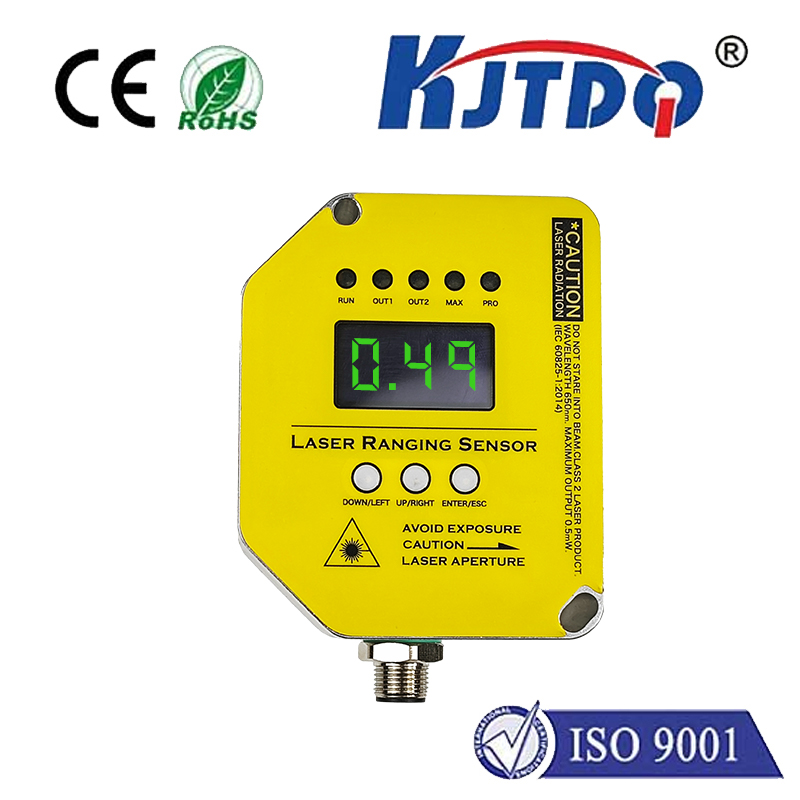
In today's fast-paced world of automation, robotics, and smart technology, the demand for accurate, reliable, and instantaneous distance measurement has never been greater. Enter the online laser rangefinder sensor, a sophisticated device that has revolutionized how machines perceive and interact with their environment. Unlike traditional measurement tools, these sensors provide continuous, real-time data, enabling seamless integration into automated systems for unparalleled control and efficiency.
At its core, an online laser rangefinder sensor operates on the time-of-flight principle. It emits a focused laser pulse towards a target. The sensor then precisely measures the time it takes for the pulse to reflect back to its receiver. Using the constant speed of light, the sensor's internal processor calculates the distance with exceptional accuracy. This process happens thousands of times per second, providing a constant stream of precise distance data. The "online" aspect is crucial; it means the sensor is continuously connected to a control system—like a PLC, industrial computer, or robotic controller—feeding live data for immediate decision-making and action.
The applications for this technology are vast and transformative. In industrial automation, online laser sensors are the eyes of robotic arms, guiding them for precise picking, placing, and assembly tasks. They ensure consistent quality in manufacturing by monitoring product dimensions on conveyor belts in real-time. In logistics and warehousing, they enable automated guided vehicles (AGVs) and autonomous mobile robots (AMRs) to navigate complex environments safely, avoiding obstacles and optimizing storage space by accurately measuring pallet sizes and rack availability. The construction and surveying industries leverage them for machine control, ensuring graders and excavators operate at exact elevations and distances, significantly reducing rework.
Furthermore, these sensors play a pivotal role in emerging fields. In smart agriculture, they monitor crop growth and guide automated harvesting equipment. For security and traffic management, they can monitor vehicle speeds and distances at critical points. Their non-contact nature makes them ideal for measuring delicate, hot, or moving objects where physical contact is impossible or undesirable.
Choosing the right online laser rangefinder sensor requires careful consideration of several key specifications. Range is paramount; sensors are available from short-range (a few centimeters) for intricate assembly to long-range (hundreds of meters) for outdoor applications. Accuracy and resolution determine the smallest detectable distance change, critical for high-precision tasks. Measurement rate or frequency dictates how quickly the sensor updates its data, essential for tracking fast-moving objects. Environmental robustness is also vital; look for sensors with high Ingress Protection (IP) ratings for dust and water resistance, and robust housing to withstand vibration and temperature fluctuations common in industrial settings.
The integration process is typically streamlined. Modern online laser rangefinder sensors offer various digital communication interfaces like IO-Link, Ethernet/IP, PROFINET, Modbus TCP, or analog outputs. This allows for easy connection to most industrial networks, enabling plug-and-play functionality with sophisticated data exchange capabilities. Advanced models come with software suites for easy configuration, allowing users to set measurement windows, output filtering, and alarm thresholds directly from a computer or even a smartphone.
The benefits of deploying these sensors are clear and compelling. They drive increased productivity by enabling faster, error-free automated processes. They enhance product quality through consistent, precise measurement and inspection. They improve safety by allowing machines to operate with spatial awareness, preventing collisions. Ultimately, they contribute to significant cost savings by reducing material waste, minimizing downtime, and eliminating the need for manual measurement.
As Industry 4.0 and the Internet of Things (IoT) continue to evolve, the role of the online laser rangefinder sensor will only expand. Its ability to provide precise, real-time spatial data is fundamental to creating intelligent, responsive, and autonomous systems. From the factory floor to the open field, this technology is not just measuring distance—it's building the foundation for a more efficient, automated, and data-driven future. For engineers and system integrators seeking to add a layer of precision intelligence to their projects, understanding and utilizing online laser rangefinder sensors is no longer an option but a necessity for staying competitive.