check

check

check

check
check
check
check
check

check

check
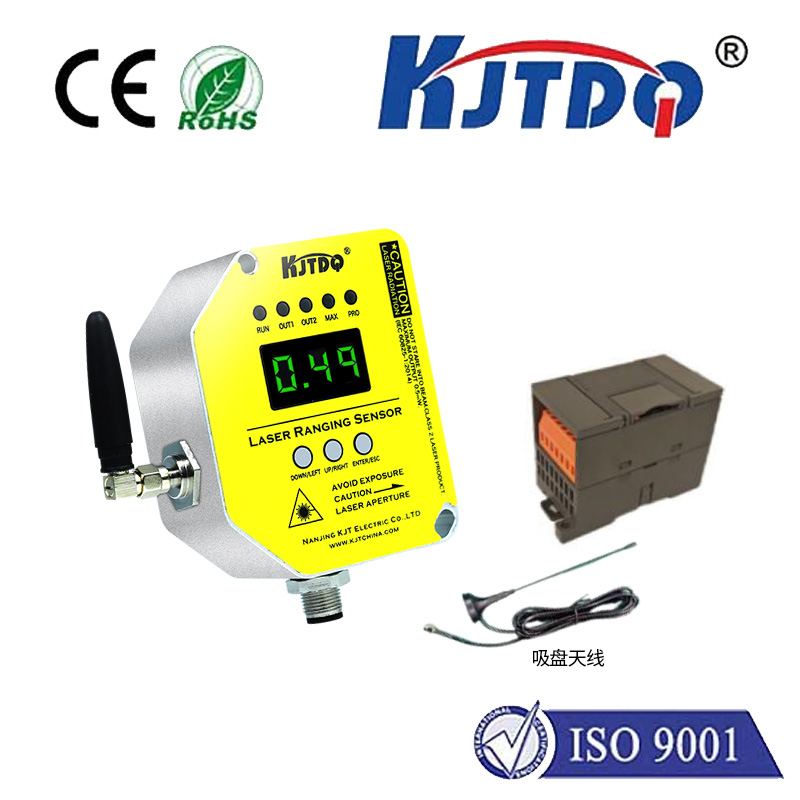
In the demanding world of industrial automation and quality control, achieving micron-level accuracy is not just a goal; it's a fundamental requirement. Traditional measurement setups often involve separate sensors, amplifiers, and complex wiring, leading to potential signal degradation, increased installation time, and vulnerability to electrical noise. This is where the amplifier-integrated laser displacement sensor emerges as a transformative solution, consolidating critical components into a single, robust unit.
The core innovation of the amplifier-integrated design lies in its seamless unification. The high-precision laser sensor head and the sophisticated signal processing amplifier are housed within one compact enclosure. This integration eliminates the need for external amplifier units and the lengthy, sensitive analog cables that connect them. By processing the measurement signal directly at the source, the system dramatically reduces noise interference that can plague long cable runs in electrically noisy factory environments. The result is a remarkably stable and clean signal, translating directly to higher measurement reliability and repeatability.
For engineers and system integrators, the benefits are immediately tangible. Installation is simplified from a multi-step process to a straightforward task: mount the sensor, connect the power and digital communication cable, and configure. This plug-and-play approach slashes setup time and reduces potential points of failure. The compact form factor allows for installation in space-constrained applications where a sensor-amplifier separate system would be impossible to fit. Furthermore, with only a single device to calibrate and maintain, lifecycle costs are significantly lowered.
The application scope for these integrated sensors is vast and growing. In electronics manufacturing, they perform critical tasks such as measuring the coplanarity of Ball Grid Array (BGA) components or the precise height of solder paste. Within the automotive sector, they ensure the exact gap and flushness between body panels, contributing to both quality and aerodynamic performance. In precision machining, they provide real-time feedback for controlling tool wear and verifying part dimensions against tight tolerances. Their high-speed response capability also makes them ideal for dynamic measurements, such as monitoring vibration on rotating machinery or checking the runout of high-speed spindles.
Modern amplifier-integrated laser displacement sensors are equipped with advanced digital intelligence. They feature built-in multi-point teaching functions, allowing users to easily set reference planes, tolerances, and complex measurement logic directly through a simple teach pendant or software interface. Many models offer programmable switching outputs and analog voltage/current outputs simultaneously, providing maximum flexibility for integration into PLCs or data acquisition systems. Communication protocols like IO-Link are becoming standard, enabling detailed parameter setting, advanced diagnostics, and condition monitoring data extraction, paving the way for predictive maintenance strategies.
When selecting an amplifier-integrated laser displacement sensor, several key specifications demand attention. The measuring range, which dictates the minimum and maximum distance the sensor can accurately measure, must suit the application. Resolution, or the smallest detectable change in distance, determines the fineness of measurement. Linear accuracy, often the most critical spec, defines the maximum deviation from the true value across the entire range. Finally, the spot size of the laser beam influences the sensor's ability to measure small features or uneven surfaces. A smaller spot allows for more precise targeting but may require more precise fixturing.
The evolution towards Industry 4.0 and smart factories further underscores the value of this integrated technology. As a self-contained, intelligent node on the network, an amplifier-integrated sensor provides not just raw measurement data but also processed information about its own health and performance. This facilitates centralized monitoring and data-driven decision-making, moving beyond simple inspection to comprehensive process optimization.
In conclusion, the amplifier-integrated laser displacement sensor represents a significant leap forward in metrology technology. By combining precision optics, advanced electronics, and digital intelligence into a single, ruggedized package, it delivers unparalleled accuracy, reliability, and ease of use. For industries striving to enhance quality, boost productivity, and embrace digital transformation, adopting this integrated sensing solution is a clear and strategic step toward a more efficient and precise future.