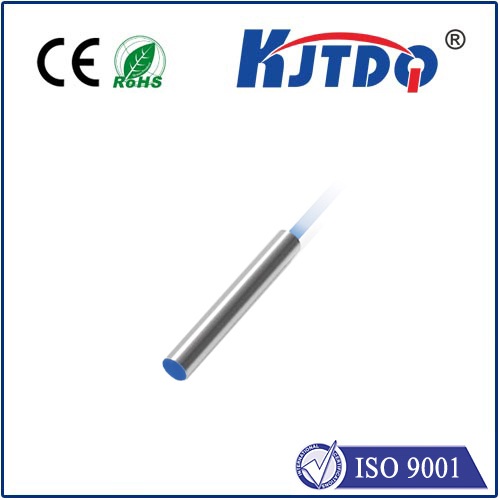
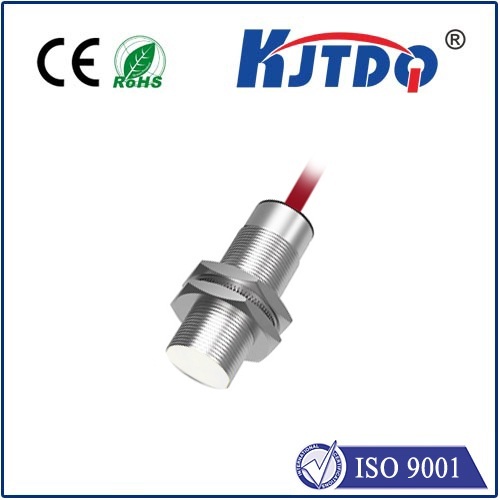
programmable limit switch
- time:2025-08-03 02:11:17
- Click:0
Beyond the Flip: How Programmable Limit Switches Are Revolutionizing Automation Control
The familiar clunk of a traditional mechanical limit switch triggering a machine stop is a sound deeply ingrained in manufacturing. For decades, these reliable devices acted as simple sentinels, enforcing fixed physical boundaries. But what happens when your process needs more than just a binary “stop/go”? What if you need intelligence at the edge, adaptable control, and rich feedback? Enter the Programmable Limit Switch (PLS) – not just an evolution, but a fundamental shift in how we approach positioning, control, and safety in industrial automation.
Imagine a production line suddenly needing a quick changeover for a new product variant. With traditional mechanical switches, technicians scramble, loosening mounts, physically repositioning switches, and testing – a process prone to error and costly downtime. Now, envision an engineer simply accessing a configurable interface, adjusting setpoints, logic, or outputs via software, and validating the change within minutes. This is the tangible power of the PLS. It transforms a basic position-sensing device into a smart node on the factory floor network.
What Exactly is a Programmable Limit Switch?
At its core, a Programmable Limit Switch is a transducer that detects the position or movement of a target (like a machine carriage or valve stem). But unlike its mechanical or basic electronic predecessors, it incorporates a microprocessor and sophisticated firmware. This “brain” allows users to define multiple setpoints, configure complex output logic, and often set parameters like hysteresis, counting functions, or even velocity/direction sensing – all without touching a screwdriver. Think of it as replacing a simple light switch with a smart home controller specifically designed for critical motion control.
The Leap from Mechanical to Smart Sensing
Traditional limit switches served admirably but had inherent limitations:
- Fixed Functionality: One switch, one point, one action (typically NC/NO contact). Changing its function meant physical adjustment or replacement.
- Limited Diagnostics: Failure was often only apparent when the machine malfunctioned.
- Single Threshold: Determining position between extremes required multiple switches and complex wiring.
- Susceptibility: Mechanical contacts wear out; physical adjustments drift over time.
Programmable limit switches overcome these constraints through intelligent configurability:
- Multiple Setpoints: A single PLS can define numerous preset positions within its sensing range. Need slow-down points, stop points, and start positions? Configure them all in one unit.
- Flexible Output Logic: Define precisely how the outputs behave. Should Output 1 be high when between Setpoint A and B, but low otherwise? Should it latch? Should it pulse on approach? Program it. This logic flexibility enables complex sequences without extra relays or PLC code.
- Adjustable Parameters: Fine-tune sensitivity (hysteresis), filter noise, set counting thresholds, or even monitor target speed – all parameters are software-defined.
- Enhanced Diagnostics: Many PLS units provide feedback on signal strength, alignment, internal status, or predictive maintenance alerts, enabling proactive maintenance.
- Network Integration: While standalone models exist, modern PLS units often feature industrial communication protocols (Ethernet/IP, PROFINET, EtherCAT, IO-Link). This allows for remote configuration, monitoring, and seamless integration of position data into the broader control system for centralized visibility.
- Increased Precision & Reliability: Utilizing non-contact sensing technologies (like magnetostrictive, inductive, or laser), PLSs offer high repeatability and long life, free from mechanical wear.
Where Programmable Limit Switches Shine: Key Applications
The versatility of PLS technology makes it invaluable across diverse industries:
- Material Handling & Logistics: Precise positioning of cranes, hoists, automated guided vehicles (AGVs), and shuttle systems for palletizing, depalletizing, and sorting. Defining safe zones and slow-down areas is effortless.
- Hydraulic & Pneumatic Control: Accurate position feedback for cylinders, valves, and actuators in presses, injection molding machines, and heavy machinery. Monitoring rod position for stroke control or end-of-travel.
- Assembly & Robotics: Ensuring components are correctly positioned before joining operations; guiding robotic arms to precise points; verifying fixture status.
- Packaging Machinery: Controlling the position of form-fill-seal jaws, cutters, and product transfer mechanisms with high repeatability.
- Test & Measurement Equipment: Defining test start/stop positions; triggering data acquisition at specific points along a linear or rotary path.
- Energy (Wind/Solar): Monitoring blade pitch angle in wind turbines or tracking solar panel positioning systems.
The Compelling Benefits: Why Make the Switch?
Adopting programmable limit switches delivers significant advantages:
- Reduced Downtime & Faster Changeovers: Reprogramming setpoints electronically takes minutes versus hours of mechanical adjustment. Operational agility skyrockets.
- Lower Total Cost of Ownership: Fewer physical switches needed; reduced wiring complexity; less spare parts inventory; minimized downtime costs.
- Enhanced Flexibility & Scalability: Easily adapt machines for new products or processes. Adding new control points is often just a configuration change.
- Improved Process Accuracy & Quality: Consistent, precise positioning reduces scrap and improves product uniformity.
- Advanced Diagnostics: Predictive capabilities and remote monitoring enable condition-based maintenance, preventing unexpected failures.
- Simplified Integration: Modern communication protocols streamline connectivity with PLCs, HMIs, and SCADA systems.
The programmable limit switch isn’t merely a replacement; it’s a strategic upgrade. By embedding intelligence directly at the point of sensing, it unlocks new levels of control precision, operational flexibility, and diagnostic insight. For forward-thinking industries looking to optimize production, enhance quality, and embrace the future of automation, moving beyond the flip to the configurable power of the PLS is no longer just an option – it’s the intelligent path forward.