check

check
check

check
check

check
Imagine a high-speed production line where robotic arms move with lightning speed, assembling intricate components. Ensuring a drill bit is perfectly positioned before machining, confirming a metal panel is present before welding, or detecting the precise position of a cylinder – all these critical tasks happen repeatedly, reliably, and contactlessly. The unsung hero enabling such precision detection in confined spaces? Often, it’s the M8 inductive sensor. This compact marvel is a cornerstone of modern industrial automation, offering robust, non-contact sensing where space is at a premium.
Understanding the “Inductive Sensor M8” Designation
Let’s break down the term. Inductive sensors operate on the principle of electromagnetic induction. Inside the sensor head lies an oscillator coil that generates a high-frequency alternating electromagnetic field. When a ferrous (iron-based) or non-ferrous (like aluminum, brass, copper) metallic target enters this field, it induces eddy currents within the target. These eddy currents cause a measurable change (typically a reduction) in the amplitude of the oscillator’s oscillation. An internal circuit detects this change and switches the sensor’s output state – from “OFF” to “ON” or vice-versa.
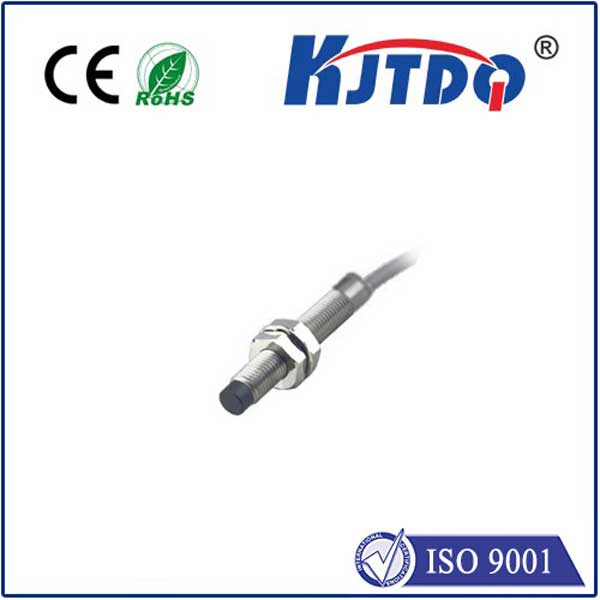
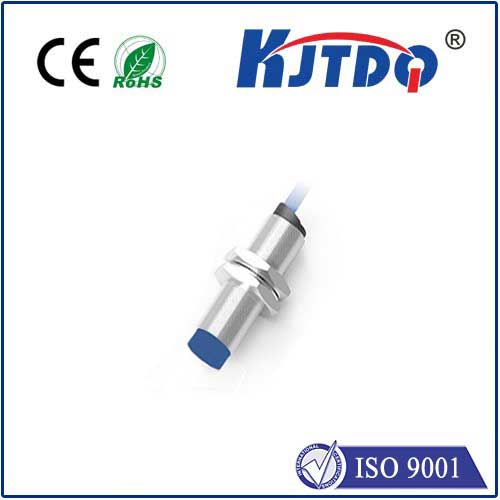
The “M8” designation refers specifically to the standardized thread size and cylindrical housing diameter of the sensor. M8 sensors have an impressive 8mm outside diameter thread (M8 x 1.0 mm pitch is common), making them significantly smaller than the also prevalent M12 and M18 versions. This compact form factor is their defining characteristic and primary advantage.
Why Size Matters: The Core Advantage of M8 Inductive Sensors
In the densely packed world of machinery, control panels, and robotic work cells, space is a critical commodity. Larger sensors, like M18s, simply cannot fit into tight mounting locations or sense targets in cramped corners. The ultra-compact M8 design solves this problem elegantly. Their miniature size allows for installation in locations previously inaccessible, enabling smarter machine design and finer-grained control over processes. Design engineers gain greater flexibility to integrate detection points exactly where needed.
Technical Capabilities: Punching Above Their Weight
Don’t let their small stature fool you. M8 inductive sensors deliver impressive performance:
Key Applications: Where the M8 Shines
The compact M8 sensor finds its niche in countless demanding applications:
Selecting and Deploying M8 Inductive Sensors Effectively
Choosing the right inductive proximity sensor M8 involves several key considerations:
Installation requires attention to mounting torque (avoid over-tightening the small threads!) and ensuring the target approaches the sensing face correctly. Maintaining the specified operating voltage is critical for longevity and reliable operation.
The Compact Indispensable: Why M8 Sensors Endure
In the relentless drive for miniaturization and efficiency, the M8 inductive sensor has proven its immense value. Its ability to deliver robust, contactless, and reliable metal detection within an incredibly small footprint makes it an irreplaceable component in modern automation. From ensuring the precision of microscopic assembly robots to verifying the positions of components in high-speed packaging lines, these compact sensors are fundamental to the smooth, accurate, and efficient operation of countless industrial processes. When space is tight, but performance cannot be compromised, the M8 inductive proximity sensor is often the perfect solution, quietly ensuring quality and productivity one metallic detection at a time.