check

check

check

check
check
check
check
check

check

check
Imagine a component silently embedded within your car’s engine, ensuring precise valve timing for optimal power and efficiency. Picture a robotic arm in a factory, assembling intricate electronics with micron-level accuracy, never physically touching the components. Envision quality control on a production line, flawlessly detecting tiny imperfections in metal parts hurtling past at blinding speed. Behind these feats of modern engineering often lies a quiet workhorse: the inductance sensor.
Far more than just electrical components, inductance sensors are masters of non-contact detection and measurement. They operate on the fundamental laws of electromagnetism, harnessing the principle of inductive coupling to “sense” the presence or characteristics of conductive targets without ever making physical contact. This unique capability makes them invaluable across countless industries, driving automation, enhancing precision, and improving reliability.
How Does the Magic Happen? Core Principles Explained
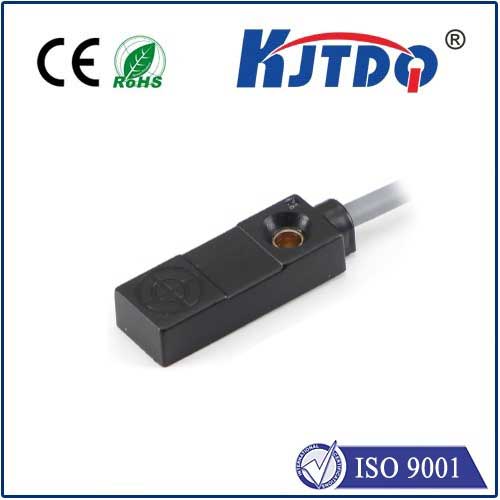
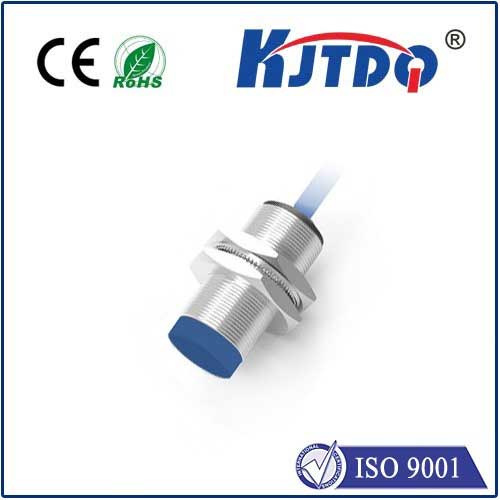
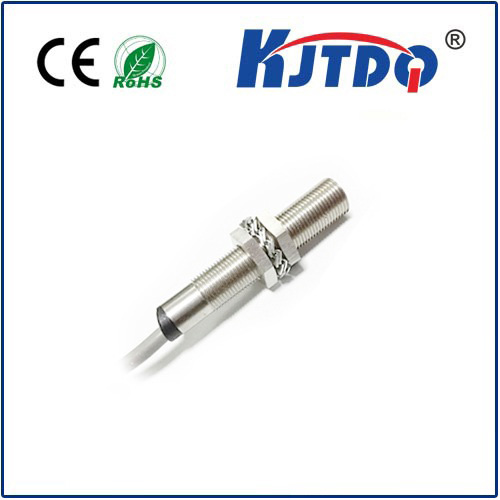
At the heart of an inductance sensor (also commonly called an inductive proximity sensor) lies a coil of wire wound around a ferromagnetic core. When an alternating current (AC) flows through this coil, it generates a constantly changing, oscillating magnetic field radiating outwards from the sensor face, as governed by Faraday’s Law.
When a conductive target (typically metal – ferrous metals like iron or steel are most responsive, but non-ferrous metals like aluminum, brass, or copper also work) enters this dynamic magnetic field, something crucial occurs: eddy currents are induced within the target material itself.
These swirling eddy currents create their own opposing magnetic field. This secondary magnetic field interacts with the primary field generated by the sensor’s coil. The key effect is a change in the inductance (L) – essentially, the coil’s ability to store energy in its magnetic field – and a corresponding change in the impedance (Z) of the sensor’s oscillating circuit.
The sensor’s sophisticated built-in electronics constantly monitor this impedance. When the change caused by the target reaching the specified sensing distance exceeds a predefined threshold, the sensor triggers its output signal. This output is typically a simple, robust on/off switch (though specialized versions exist for analog position measurement – see LVDT/RVDT below).
Key Types and Their Superpowers
While the core operating principle remains consistent, inductance sensors come in various configurations tailored to specific needs:
Why Choose Inductance Sensing? Compelling Advantages
The widespread adoption of inductance sensors is no accident. They offer a compelling set of strengths crucial for demanding industrial and automotive environments:
Where They Shine: Ubiquitous Applications
The versatility of inductive sensing technology places these sensors into action almost everywhere you look in industry and beyond:
Considerations and Limitations: Knowing the Boundaries
While immensely powerful, inductance sensors aren’t a universal solution. Key considerations include:
The Invisible Enabler: Driving Progress Forward
From the humming assembly lines building smartphones to the precision engineering inside modern vehicles and the reliable operation of heavy machinery, inductance sensors work silently and reliably. Their ability to provide non-contact, robust, and precise detection of metallic objects under challenging conditions makes them an indispensable automation technology.
Understanding the principles of inductive coupling and eddy current detection allows engineers to harness their capabilities effectively, designing systems that are faster, more reliable, and more accurate. As technology marches forward, demanding ever greater precision and resilience, the fundamental robustness and simplicity of inductance sensing ensure this technology will continue to be a vital “unseen force” shaping our automated world