check

check

check

check
check
check
check
check

check

check
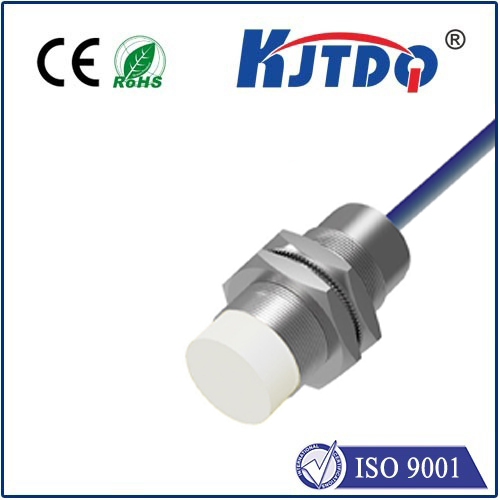
Unlocking Precision: The Vital Role of Proximity Sensors in Metal Detection In the realm of industrial automation and modern manufacturing, the demand for accuracy and efficiency is paramount. One technology that stands at the forefront of this quest is the proximity sensor for metal detection. These sophisticated devices play a crucial role in various applications, from ensuring product quality to enhancing safety measures. Let’s delve into the significance, functionality, and benefits of proximity sensors specifically designed for metallic objects. Understanding Proximity Sensors: A Brief Overview Proximity sensors are electronic devices that detect the presence or absence of an object within a certain distance without physical contact. They operate based on principles such as electromagnetic fields, capacitive coupling, or optical reflection, depending on the type. For metal detection, inductive proximity sensors are predominantly used. These sensors generate an electromagnetic field that interacts with metallic objects, triggering a signal when a change in the field is detected due to the presence of metal. The Mechanics Behind Metal Detection When it comes to proximity sensors tailored for metal detection, their operation revolves around the principle of induction. An AC current flowing through a coil inside the sensor creates an electromagnetic field. As a metallic object approaches this field, eddy currents are induced within the metal, which in turn alters the impedance of the coil. This change is meticulously measured by the sensor’s electronics, converting it into an electrical signal that indicates the object’s proximity. The sensitivity and range of these sensors can be fine-tuned to suit specific application requirements. Applications Driving Efficiency