check

check

check

check
check
check
check
check
check

check
In the realm of industrial automation, robotics, and consumer electronics, the demand for reliable, compact, and precise sensing solutions is ever-present. Among the various technologies available, proximity sensors play a pivotal role in non-contact detection, object positioning, and safety applications. A specific variant gaining significant traction is the 15mm sensing distance proximity sensor, a device engineered to offer optimal performance in space-constrained environments where precision is paramount.
The core functionality of a proximity sensor with a 15mm range revolves around its ability to detect the presence or absence of an object within a very specific, short field. This fixed sensing distance is not arbitrary; it represents a carefully calibrated sweet spot. It is sufficiently long to allow for practical installation and tolerance in assembly, yet short enough to prevent unintended triggering from background objects or environmental noise. This makes the 15mm sensor exceptionally reliable in dense mechanical assemblies, on conveyor lines with closely spaced items, or within the internal mechanisms of printers, vending machines, and automated dispensers.
Technologically, these sensors are predominantly based on inductive or capacitive principles. Inductive 15mm proximity sensors are the workhorses for detecting metallic objects. They generate an electromagnetic field, and when a metal target enters this field within the 15mm range, it causes a change in oscillation, which the sensor's circuitry detects and converts into a switch signal. Their robustness, resistance to environmental factors like dust and oil, and long operational life make them indispensable in manufacturing and automotive applications. For instance, they are perfect for verifying the position of a metal component in an assembly jig or counting metallic parts on a high-speed line.
Conversely, capacitive 15mm sensors are versatile detectives. They can sense a wide variety of materials, including metals, plastics, liquids, powders, and even human skin. They work by measuring changes in capacitance caused by the presence of any material that alters the electrical field around the sensor's face. This capability is crucial in industries like packaging, food and beverage, and chemical processing. A capacitive 15mm sensor can reliably detect the level of liquid in a non-metallic container, the presence of a plastic bottle cap, or the position of a cardboard box on a palletizer, all within its precise 15mm window.
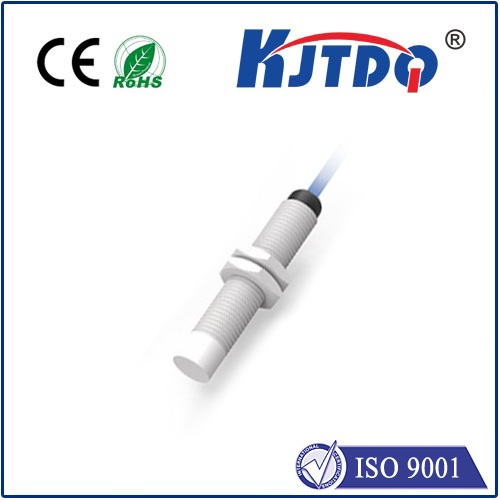
The integration of a 15mm sensing distance into modern designs offers several compelling advantages. First and foremost is space savings. Their typically compact cylindrical or rectangular housings can be installed in tight locations where larger-sensing-range sensors would not fit. This miniaturization supports the trend towards more streamlined and dense machinery. Secondly, precision is enhanced. The short, fixed range minimizes the chance of sensing objects beyond the intended target area, leading to fewer false positives and higher system accuracy. This is critical in complex robotic pick-and-place operations or precision assembly tasks.
Furthermore, reliability under challenging conditions is a hallmark. Many 15mm proximity sensors are built with rugged housings rated for IP67 or higher, protecting them from water and dust ingress. They are designed to withstand industrial vibrations, temperature variations, and electrical interference, ensuring consistent performance. The output is typically a clean digital signal (PNP/NPN or NO/NC) that interfaces seamlessly with Programmable Logic Controllers (PLCs), microcontrollers, and other industrial control systems.
When selecting a 15mm sensing distance proximity sensor, key specifications beyond the range itself must be considered. The target material dictates the choice between inductive and capacitive types. The switching frequency determines how fast the sensor can detect objects passing by, a vital factor for high-speed automation. Housing material (often nickel-plated brass or stainless steel) and thread size (like M8 or M12) are important for mechanical integration and environmental resistance. Lastly, output configuration and supply voltage compatibility with the existing control system are essential for seamless operation.
In conclusion, the 15mm sensing distance proximity sensor, such as the KJTDQ series, is far more than just a component; it is a precision instrument for modern automation. It delivers a perfect balance of compact size, reliable short-range detection, and environmental durability. By enabling accurate, non-contact sensing in the tightest of spaces, it empowers engineers to design smarter, more efficient, and more reliable machines and systems across a vast spectrum of industries, from intricate electronic manufacturing to robust material handling.