check

check

check

check
check
check
check
check
check

check
In the fast-paced world of industrial automation, efficiency and reliability are paramount. Downtime is not just an inconvenience; it represents a significant loss in productivity and revenue. This is where the innovative design of the quick disconnect proximity sensor comes into play, revolutionizing how sensors are integrated and maintained within complex systems. Unlike traditional wired sensors that require tools and time for installation or replacement, the quick disconnect variant offers a plug-and-play solution that dramatically reduces maintenance windows and simplifies system reconfiguration.
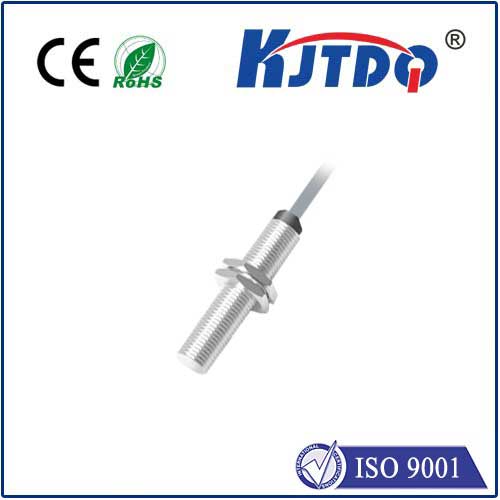
The core advantage of a quick disconnect proximity sensor lies in its connector system. Typically featuring a robust, sealed connector—often meeting IP67 or higher ratings for dust and water ingress protection—it allows for the sensor body to be swiftly detached from its cable harness without the need for screwdrivers, wire strippers, or electrical tape. This design is a game-changer for applications in harsh environments like automotive assembly lines, food and beverage processing, and material handling, where sensors are frequently exposed to vibration, moisture, and physical impact. When a sensor fails or needs calibration, technicians can simply unplug the old unit and plug in a new one, often in a matter of seconds, minimizing line stoppage.
Beyond maintenance, the quick disconnect feature enhances flexibility in system design and prototyping. Engineers can easily swap sensor types (inductive, capacitive, or photoelectric) with different sensing ranges or output configurations to test and optimize a process. This modularity future-proofs installations, allowing for easy upgrades without rewiring entire control panels. The sensors themselves maintain all the critical functionalities of standard proximity sensors: non-contact detection of metallic or non-metallic objects, high switching frequencies, and exceptional repeat accuracy. The quick disconnect mechanism does not compromise these core sensing performances; instead, it adds a layer of practical utility.
When selecting a quick disconnect proximity sensor, several factors are crucial. The connector type must be standardized and compatible with existing cabling in the facility to ensure interchangeability. The mechanical robustness of both the sensor housing and the connector latch is vital to withstand industrial wear and tear. Electrical specifications, such as voltage rating (e.g., 10-30V DC) and output type (PNP/NPN), must align with the control system. Furthermore, the sensing face material should be suitable for the application—stainless steel for corrosive environments or PTFE-coated for sticky substances.
Implementing these sensors leads to tangible operational benefits. Reduced Mean Time To Repair (MTTR) directly boosts Overall Equipment Effectiveness (OEE). Inventory management becomes simpler, as a stock of pre-wired sensor bodies can be kept on hand without needing to stock complete, fixed-cable units. Training requirements for maintenance staff are also lowered due to the simplicity of the connection process. In essence, the quick disconnect proximity sensor transforms a critical but potentially problematic component into a streamlined, serviceable asset. It embodies the shift towards more agile, modular, and maintainable industrial IoT (IIoT) ecosystems, where every second of uptime counts and every component is designed for seamless integration and replacement.