check

check

check

check

check

check
In the demanding world of industrial automation, reliability is non-negotiable. Machinery operates in environments filled with dust, moisture, vibration, and extreme temperatures. Standard sensors often fail under such conditions, leading to costly downtime and maintenance. This is where the heavy duty inductive sensor proves its indispensable value. Engineered for resilience, these sensors are the silent guardians of continuous production, offering unparalleled durability and precision where it matters most.
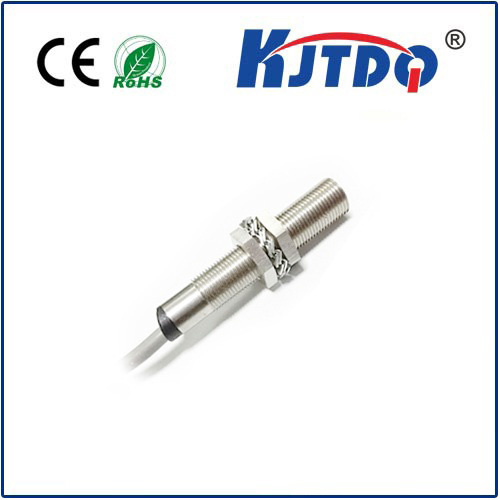
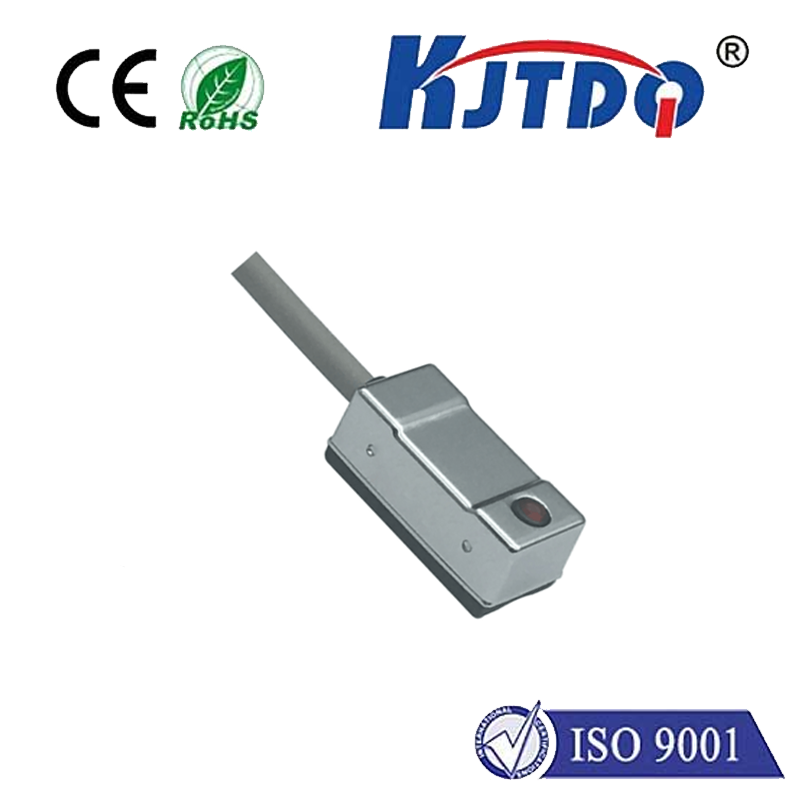
Unlike their standard counterparts, heavy duty inductive sensors are built with a specific purpose: to withstand punishment. Their defining characteristic is a robust housing, typically constructed from stainless steel (like V4A/AISI 316L) or nickel-plated brass. This armor protects the internal electronics from physical impacts, corrosive chemicals, and high-pressure washdowns common in food processing, foundries, or offshore applications. Many models achieve IP67, IP68, or even IP69K ratings, guaranteeing complete protection against dust ingress and prolonged immersion in water. This rugged exterior is not just a shell; it's a promise of longevity.
The core technology remains the proven inductive principle. The sensor generates an electromagnetic field from its active face. When a metallic target (ferrous or non-ferrous, depending on the sensor type) enters this field, it causes a change in oscillation amplitude. This change is detected by the internal circuitry, which then triggers a solid-state switching signal. The heavy duty variant enhances this reliable principle with superior components. Wide-temperature-range electronics ensure stable operation from -25°C to +70°C or beyond. Advanced ASIC (Application-Specific Integrated Circuit) technology provides immunity to electromagnetic interference (EMI) and voltage spikes, preventing false triggers from nearby motors or welding equipment.
The applications for these workhorses are vast and critical. In automotive manufacturing, they reliably detect piston positions in welding robots, unaffected by flying sparks and metal debris. In lumber and sawmill operations, they count logs on conveyors, impervious to wood dust and harsh weather. In material handling, they monitor the position of heavy crane hooks or shipping containers. A key advantage is their non-contact operation. Since there is no physical touch with the target, there is no mechanical wear, ensuring a virtually limitless mechanical lifespan compared to mechanical limit switches. This translates directly to reduced replacement costs and higher system availability.
Selecting the right heavy duty inductive sensor requires careful consideration of several parameters. Sensing distance is crucial; it must be chosen with a safety margin to account for mechanical tolerances and target variations. The housing shape—barrel-style (M8, M12, M18, M30) or rectangular—depends on the mounting constraints. Output configuration (PNP/NPN, NO/NC) must match the control system's PLC input card. For particularly challenging environments, look for features like weld-field immunity (for spot welding areas), chemical resistance certifications, or extended temperature models. Proper installation is also key; ensuring the correct mounting, adequate clearance around the sensor, and using shielded cables in high-noise environments will maximize performance.
The integration of heavy duty inductive sensors is a strategic investment in operational efficiency. Their upfront cost is often higher than standard sensors, but the Total Cost of Ownership (TCO) is significantly lower. By preventing unplanned stoppages, minimizing maintenance interventions, and protecting against catastrophic machine damage, they pay for themselves many times over. They form the reliable backbone of the Industrial Internet of Things (IIoT), providing the consistent, high-integrity data necessary for predictive maintenance and smart factory analytics.
Ultimately, in the relentless environment of modern industry, equipment must be tougher than the challenges it faces. Heavy duty inductive sensors embody this principle. They deliver the same accurate, fast detection as standard sensors but from within a fortress of durability. For engineers and plant managers seeking to eliminate sensor failure as a variable in their production equation, specifying heavy duty inductive sensors is not just an option—it is a fundamental requirement for building resilient, efficient, and competitive automated systems. Their robust signal ensures that the pulse of production never skips a beat.