check

check

check

check

check

check
In the rapidly evolving landscape of industrial automation, the quest for greater efficiency, precision, and safety is unending. At the heart of this technological advancement lies a critical component often overlooked yet indispensable: the proximity sensor. These devices serve as the silent sentinels of automated systems, providing the essential data that drives intelligent decision-making without physical contact. Their role in modern manufacturing, packaging, material handling, and robotic applications is pivotal, forming the foundational layer of the Internet of Things (IoT) and Industry 4.0 initiatives.
A proximity sensor operates by emitting an electromagnetic field or a beam of electromagnetic radiation, typically infrared or ultrasonic, and then monitoring for changes in the field or return signal. When an object enters its detection range, it perturbs this field, and the sensor generates an output signal. This non-contact detection capability is its primary advantage. It eliminates mechanical wear and tear associated with limit switches, allows for high-speed operation, and functions reliably in harsh environments where dirt, oil, or moisture would compromise physical contact switches.
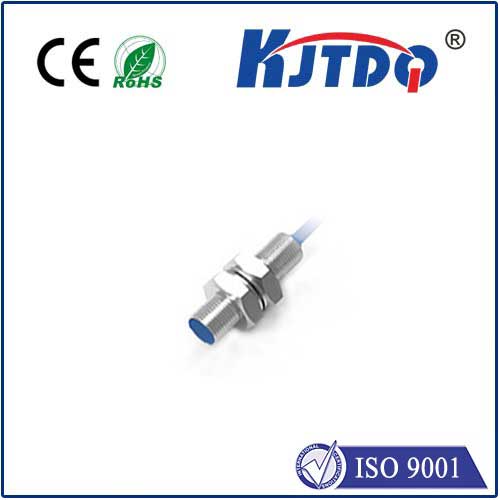
Several key technologies dominate the proximity sensor market, each suited to specific applications. Inductive proximity sensors are the workhorses for detecting metallic objects. They generate an oscillating electromagnetic field, and when a metal target enters this field, it induces eddy currents, causing a change in oscillation amplitude that triggers detection. These sensors are incredibly robust, ideal for machine tools, automotive assembly lines, and metal stamping presses. Capacitive proximity sensors, on the other hand, can detect both metallic and non-metallic materials like plastics, wood, liquids, and granules. They sense changes in capacitance caused by the presence of any material that alters the dielectric constant of the space between the sensor and the target. This makes them perfect for level detection in tanks, packaging lines handling bottles, or detecting presence of materials on conveyor belts.
For longer-range detection or applications requiring precise distance measurement, photoelectric and ultrasonic sensors come into play. Photoelectric sensors use a light emitter and receiver to detect objects, excelling in clean environments for counting, positioning, and inspection tasks. Ultrasonic sensors use sound waves, making them excellent for detecting transparent objects, liquid levels, or in environments with airborne contaminants like dust or smoke, where optical sensors might fail.
The integration of proximity sensors into automated systems yields transformative benefits. The most significant is enhanced operational efficiency. By providing real-time, reliable data on object presence, position, and sometimes even composition, these sensors enable seamless coordination between machines. A robotic arm can precisely pick and place components because a sensor confirms the part's arrival. A conveyor system can sort packages because sensors identify their size and position. This minimizes downtime, reduces product jams, and optimizes production flow.
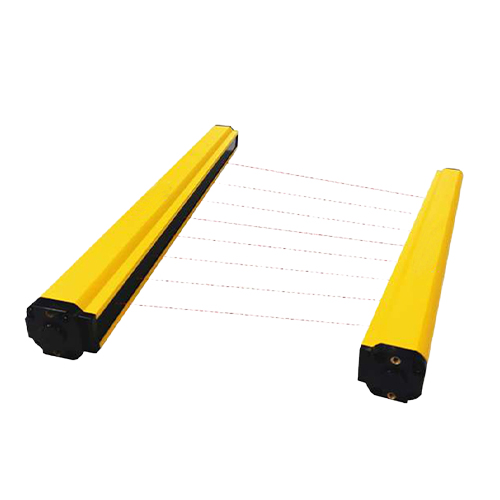
Safety is another paramount contribution. Proximity sensors are integral to safety light curtains and area guarding systems. They can create an invisible protective zone around dangerous machinery, instantly halting operation if a worker breaches the zone, preventing accidents. In automated guided vehicles (AGVs), they act as collision avoidance systems, ensuring safe navigation in dynamic warehouse environments.
Furthermore, the data from networked proximity sensors feeds into higher-level control systems like PLCs (Programmable Logic Controllers) and SCADA (Supervisory Control and Data Acquisition) systems. This data is crucial for predictive maintenance. By monitoring sensor performance and output trends, engineers can anticipate failures before they occur, scheduling maintenance during planned stoppages rather than reacting to costly, unplanned breakdowns. This predictive approach is a cornerstone of smart factory concepts.
When selecting a proximity sensor for an automation project, several factors must be considered. The sensing range, target material, environmental conditions (temperature, pressure, exposure to chemicals), required output type (digital or analog), and housing design are all critical. For instance, a cylindrical inductive sensor might be perfect for detecting a metal piston in a hydraulic press, while a flat-pack capacitive sensor would be better suited for monitoring the fill level of a glue reservoir.
Looking ahead, the future of proximity sensing is intertwined with miniaturization, increased intelligence, and wireless connectivity. Sensors are becoming smaller, allowing for installation in tighter spaces. They are also gaining onboard diagnostic capabilities and the ability to communicate via IO-Link or wireless protocols, providing not just a simple on/off signal but detailed status information about their own health and the process they are monitoring. This evolution will further blur the line between simple sensing and sophisticated measurement, driving automation to new levels of autonomy and efficiency.
In conclusion, the humble proximity sensor is far more than a simple switch. It is a fundamental enabling technology for automation. By providing reliable, non-contact detection, it enhances efficiency, ensures safety, enables predictive maintenance, and supplies the critical data that fuels intelligent industrial systems. As automation continues to advance, the innovative development and strategic deployment of proximity sensors will remain a key factor in achieving operational excellence and competitive advantage in the global industrial arena.